AI medical scribes in the NHS: guidance, safety and how they work
Search for "AI medical scribe" in the UK and the top results are not vendors. They are NHS England guidance documents, integrated care board pages and medical journal articles. That tells you something important: the conversation about AI scribes in the NHS is being led by clinicians, policymakers and researchers, not by marketing departments. This article explains what the guidance says, how the technology works, and what safety questions NHS teams are asking.
What is an AI medical scribe?
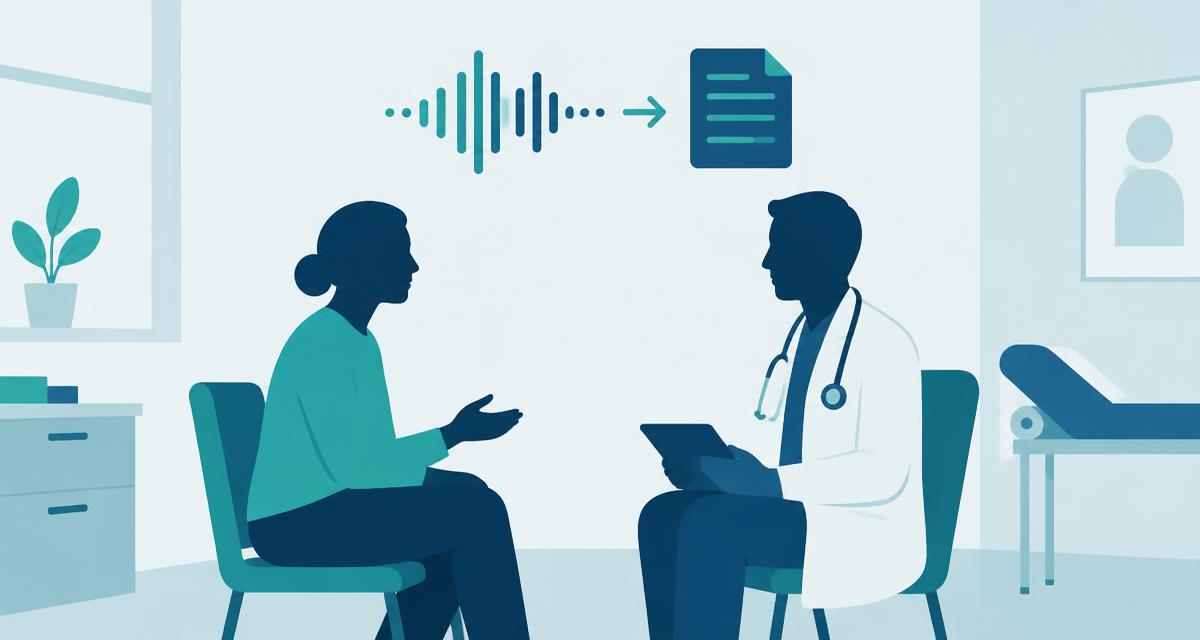
An AI medical scribe is software that listens to a clinical consultation and drafts the clinical note automatically. Instead of typing during or after the appointment, the clinician reviews and approves a note that the AI has already structured. The clinician remains responsible for the final record.
Most modern AI scribes use what is known as ambient voice technology: the system listens passively to the natural conversation rather than requiring the clinician to dictate. This is sometimes called ambient listening or ambient scribing.
What does NHS guidance say?
NHS England has published guidance on AI-enabled ambient scribing products, and several integrated care boards have issued their own advice for GP practices. The common themes are consistent:
- Clinical safety first. Products should be assessed against clinical safety standards, including DCB0129 and DCB0160, with a named clinical safety officer.
- The clinician stays in control. AI scribes draft notes; they do not make clinical decisions. Every note must be reviewed and approved by the clinician before it enters the record.
- Patient consent and transparency. Patients should know when ambient listening is in use, and practices should be able to explain how recordings and transcripts are handled.
- Data protection. GDPR applies in full. NHS organisations increasingly expect zero data retention: audio and transcripts should not be stored by the vendor once the note is produced.
- Procurement and assurance. Frameworks such as DTAC (the Digital Technology Assessment Criteria) help trusts evaluate products before deployment.
How does ambient voice technology work?
The workflow is straightforward:
- The clinician starts the scribe at the beginning of the consultation, with the patient's knowledge.
- The system listens to the conversation and transcribes it in real time.
- AI identifies the clinically relevant content: history, examination findings, assessment and plan.
- A structured draft note is produced in seconds.
- The clinician reviews, edits if needed, and approves the note.
The NHS consultations these systems address are conducted in English. Some scribes, including Ozana AI Scribe by Doctoria™, are additionally available in more than 80 languages for healthcare providers in non-English-speaking countries.
What are the safety questions NHS teams ask?
From our work with NHS organisations, the same questions come up repeatedly:
- Accuracy. Does the note reflect what was actually said? Human-in-the-loop review is the safeguard: nothing enters the record without clinician sign-off.
- Hallucination. Can the AI invent content? Well-designed scribes ground every sentence in the transcript, and the review step catches anything that slips through.
- Data storage. Where does the audio go? A zero data storage architecture, where recordings and transcripts are processed in memory and discarded, removes most of the risk.
- Equity. Does it work across accents and speaking styles? This is an active area of evaluation, and teams should test with their own patient population.
Why this matters now
Documentation consumes a significant share of clinician time, and it is a recognised contributor to burnout. NHS guidance does not discourage AI scribes; it sets out how to adopt them safely. That is a meaningful signal: the question for NHS teams is no longer whether ambient voice technology has a role, but how to choose and deploy it responsibly.
Doctoria™ develops Ozana AI Scribe, an ambient AI scribe built for UK healthcare with zero data storage, human-in-the-loop review and alignment with NHS clinical safety standards. Learn more about Ozana AI Scribe or request a demo.