Reducing Clinical Admin for GPs: A 2026 Strategy for Primary Care
With recent 2026 data showing that 43% of UK GPs have already adopted ambient intelligence, the focus has shifted from mere adoption to the actual efficacy of reducing clinical admin for GPs. For many practitioners, the reality remains a taxing cycle of late-evening documentation and a cognitive load that consumes nearly 30% of the working day. You likely find that the constant switching between patient care and clerical tasks creates a persistent digital drag, often leading to burnout and a compromised work-life balance.
We understand that maintaining clinical accuracy whilst managing an increasing volume of complex cases requires more than just faster typing or incremental workflow changes. This article provides a grounded, evidence-based strategy for 2026, demonstrating how technological solutions can help you reclaim two to three hours of your day. We will examine the integration of Doctoria AI Scribe to automate the generation of SOAP notes and clinical coding, ensuring your professional focus remains on the patient rather than the administrative screen.
Key Takeaways
- Understand the mechanics of digital drag and how cumulative clerical tasks within the EPR diminish clinical capacity.
- Learn evidence-based methods for reducing clinical admin for GPs through protocol-led filing and MDT integration.
- Explore how Doctoria AI Scribe automates the generation of structured SOAP notes from natural patient dialogue.
- Discover strategies to reclaim up to three hours of the working day whilst maintaining high standards of clinical accuracy.
- Identify the technological shifts necessary to eliminate late-evening documentation and restore work-life balance.
The State of Clinical Admin: Addressing Digital Drag in 2026
Digital drag is the cumulative time lost to clerical tasks within Electronic Patient Records (EPR). It represents the friction between clinical intent and technical execution. Since 2005, the nature of general practice has transformed from managing acute, single-issue consultations to overseeing complex multimorbidity cases. This evolution has significantly increased the data volume required for every patient interaction. By 2026, the administrative burden has reached a critical point where it often dictates the pace of the clinical day.
The primary drivers of this burden include:
- SOAP notes: Detailed documentation of subjective and objective findings.
- Referral letters: Drafting complex clinical justifications for secondary care.
- Clinical coding: Ensuring accurate data entry for QOF and population health management.
This workload doesn't simply disappear at the end of a shift. It manifests as "pyjama time," where clinicians complete documentation late into the night, often consuming 30% of their working day. Reducing clinical admin for GPs is no longer a matter of convenience; it's a necessity for professional sustainability. Effective clinical administration should support the clinician, not anchor them to a workstation.
The Impact of Cognitive Load on Patient Safety
Excessive administrative tasks narrow the "empathetic window" during a consultation. When a GP is preoccupied with navigating EPR menus, their ability to process subtle patient cues diminishes. This cognitive overload directly impacts safety. Administrative fatigue is a documented precursor to documentation errors, as the mental energy required for accurate clinical coding is depleted by repetitive clerical actions.
Quantifying the Cost of Manual Documentation
The financial implications of manual documentation are substantial. High-value GP time is frequently diverted to low-value clerical work, representing a systemic inefficiency. This imbalance is a primary driver of the current recruitment and retention crisis, as seen in the loss of 470 full-time equivalent GP partners in the last year alone. Addressing this through Doctoria Summarisation is the only viable path forward for primary care infrastructure.

Practical Strategies for Reducing General Practice Admin
Traditional approaches to workload management often involve hiring General Practice Assistants (GPAs). Whilst this can offload certain tasks, it frequently introduces a new layer of supervisory responsibility that requires significant GP time. A more sustainable strategy for reducing clinical admin for GPs focuses on systemic automation and the delegation of routine tasks to multidisciplinary teams (MDTs) through protocol-based frameworks.
Establishing clear protocols for filing normal test results and managing routine correspondence allows administrative staff to handle high-volume, low-risk data without direct clinician intervention. This shift ensures that the GP only enters the clerical loop when clinical judgment is strictly required. Transitioning from manual transcription to digital dictation solutions further accelerates this process by removing the delays associated with physical media and manual data entry.
Optimising EPR Workflows
Effective use of Electronic Patient Records (EPR) like SystmOne and EMIS requires more than basic data entry. Clinicians should utilise advanced templates and keyboard shortcuts to standardise documentation. Adopting "document once" principles prevents the redundant duplication of clinical data across different sections of the record, ensuring that information flows logically through the system without manual re-entry.
The Role of Digital Dictation and Philips SpeechLive
The move from analogue tapes to secure, cloud-based digital dictation represents a significant leap in operational efficiency. Philips SpeechLive facilitates a faster turnaround for complex referral letters by allowing clinicians to dictate and upload files instantly from any location. This system maintains a secure, encrypted data flow that aligns with modern clinical standards. For practices looking to modernise their documentation, exploring digital dictation solutions provides a reliable path toward reclaiming lost time.
Implementing AI Scribe Technology for Long-Term Efficiency
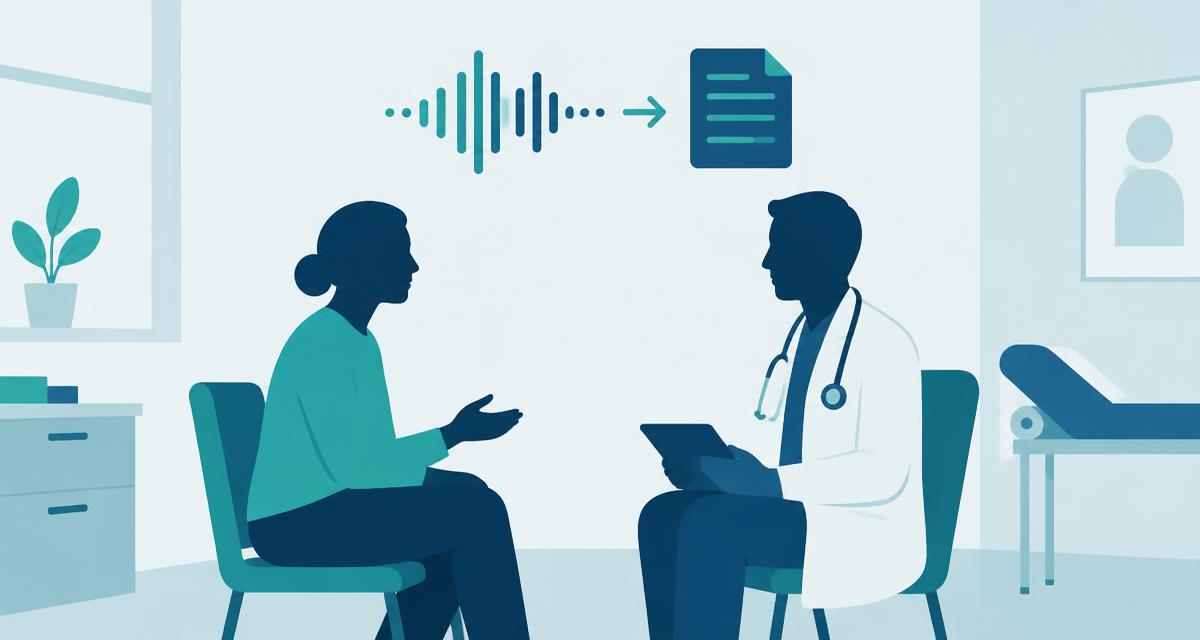
Doctoria AI Scribe represents a shift from reactive data entry to ambient intelligence. Unlike traditional dictation, this technology operates in the background during a live consultation. It captures the natural dialogue between clinician and patient, identifying relevant medical entities and translating them into structured SOAP notes. This approach is central to reducing clinical admin for GPs, as it removes the need for manual keyboard entry whilst the patient is in the room.
By eliminating the clerical barrier, clinicians can restore the empathetic focus mentioned earlier. The GP's attention returns to diagnostic accuracy and patient rapport rather than a screen. Ambient documentation serves as a vital infrastructure component in 2026, directly addressing the "pyjama time" phenomenon by ensuring that notes are finalised immediately after the consultation ends. This integration supports a healthier work-life balance whilst maintaining high standards of clinical record keeping.
Step-by-Step: From Consultation to Structured Note
- Consent and activation: The GP obtains patient consent and activates the ambient voice technology via a secure interface before the consultation begins.
- Entity identification: As the conversation progresses, the AI identifies key clinical concerns, symptoms, and proposed plans without requiring the GP to stop and type.
- Validation: A structured clinical summary is generated instantly for the GP to review, edit, and validate before it is committed to the EPR system.
Ensuring Security and NHS Compliance
Implementing new technology within primary care requires a radical commitment to security. Doctoria AI Scribe adheres strictly to GDPR and current NHS data privacy standards. Choosing a cloud-based AI infrastructure allows NHS Trusts to benefit from rapid updates and high-level encryption whilst maintaining total data sovereignty. For a deeper analysis of these systems, refer to our guide on automated medical documentation for doctors. This transition is not just about efficiency; it's about providing a safe, compliant environment for both clinicians and patients whilst reducing clinical admin for GPs across the network.
Modernising Documentation for a Sustainable Workforce
The transition toward ambient intelligence is the most viable path for reducing clinical admin for GPs in 2026. By addressing digital drag through systemic automation and protocol-led MDT integration, practices can mitigate the cognitive load that currently drives clinician burnout. We've seen that the shift from manual typing to automated SOAP note generation doesn't just save time; it restores the essential human element of the consultation.
Doctoria AI Scribe provides a secure, validated infrastructure for this transition. Supported by Innovate UK funding and specialised for UK clinical terminology, the solution is designed to integrate seamlessly with existing primary care workflows. It ensures that clinical documentation is accurate, compliant, and completed in real-time, allowing you to reclaim your evenings and focus on patient care.
Discover how Doctoria AI Scribe reduces clinical admin for GPs
The future of primary care depends on infrastructure that supports the clinician. By adopting these evidence-based strategies, you can achieve a more sustainable practice and a better work-life balance.
Frequently Asked Questions
How much time can a GP realistically save using an AI scribe?
A GP can realistically reclaim between two and three hours of their working day by implementing ambient documentation tools. This time is reclaimed by eliminating the need for manual data entry and late-evening documentation sessions. By automating the generation of SOAP notes, the system ensures that the administrative workload is completed in real-time during the clinical session.
Is AI-generated clinical documentation safe and accurate enough for NHS standards?
AI-generated documentation is safe and accurate when implemented within a clinician-validated framework. Doctoria AI Scribe is built to align with NHS data privacy standards and GDPR requirements. The GP remains the final authority, reviewing and validating every summary before it enters the patient record; this ensures that clinical accuracy is never compromised by the automation process.
Do patients feel comfortable with ambient voice technology in the consultation room?
Patients generally feel comfortable with ambient voice technology when they are informed about its benefits for their care. Obtaining verbal consent before activation is a standard protocol that maintains trust. Many patients report a better experience because the GP is able to maintain eye contact and focus on the conversation rather than being distracted by typing into the EPR.
Does reducing clinical admin actually improve GP retention rates?
Addressing administrative burden is a proven strategy for improving retention amongst the primary care workforce. Reducing clinical admin for GPs helps mitigate the chronic stress associated with high-volume clerical tasks and "pyjama time." When clinicians feel supported by efficient infrastructure, they are less likely to experience burnout, which directly supports the long-term stability of the practice.