Automated Medical Documentation for Doctors: The Definitive 2026 Guide
A pilot study within the NHS recently recorded a 51.7% reduction in clinical documentation time, a figure that signals a fundamental shift in how UK healthcare operates. For many practitioners, the integration of automated medical documentation for doctors is no longer a futuristic concept but a necessary infrastructure for survival. You're likely part of the 81% of NHS staff who support using AI to alleviate the administrative burden that currently consumes over three hours of your daily schedule.
It's exhausting to finish a long shift only to face a mountain of evening admin, often whilst battling the cognitive fatigue that follows back-to-back consultations. This guide demonstrates how Doctoria AI Scribe® and our integrated solutions can return your focus to 'eyes-on' patient care whilst ensuring total compliance with the latest DTAC and DCB0129 standards. We'll explore the 2026 regulatory landscape, the transition to ambient voice technology, and the practical steps to eliminate your documentation backlog for good.
Key Takeaways
- Understand the evolution from manual entry to ambient data capture, where AI scribing, dictation, and summarisation synthesise to create a seamless clinical record.
- Distinguish between the active input of digital dictation and the passive capture of ambient scribing to select the most efficient modality for your specific consultation style.
- Navigate the critical requirements for GDPR and UK ICO compliance to ensure that your implementation of automated medical documentation for doctors prioritises patient data security.
- Optimise clinical workflows by integrating real-time interpretation and automated summarisation, streamlining the process from initial consultation to the final discharge summary.
- Discover how the Doctoria® partnership with Philips provides the professional-grade infrastructure needed to reduce operational risk and eliminate administrative backlogs.
What is Automated Medical Documentation for Doctors?
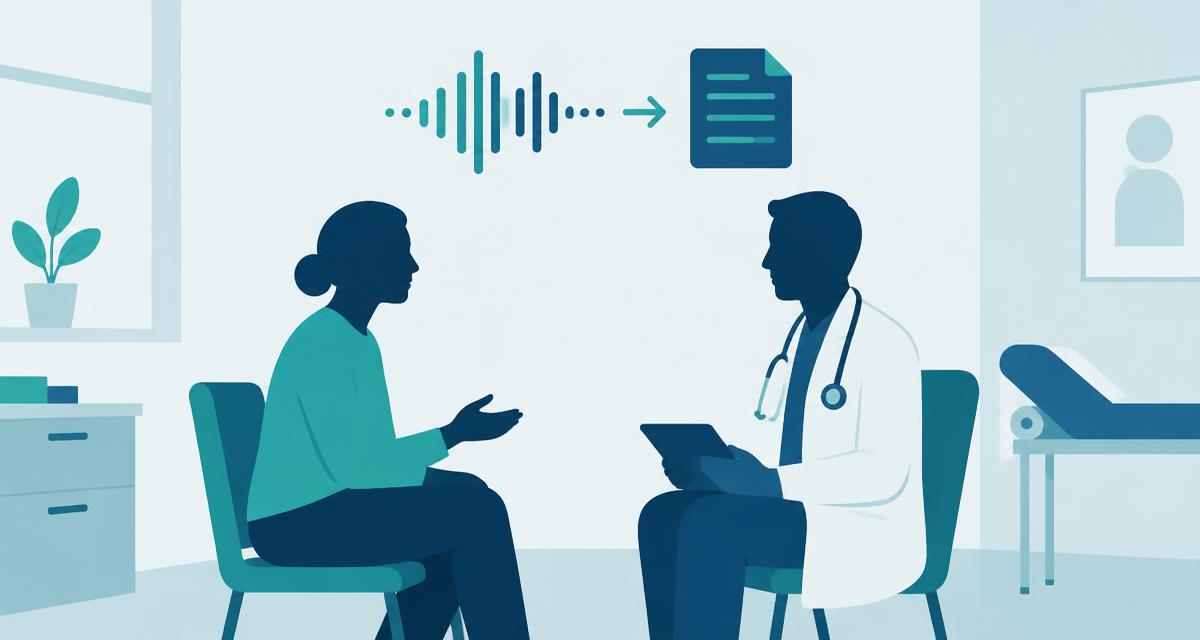
Automated medical documentation for doctors represents a fundamental technological synthesis. It integrates ambient AI scribing, digital dictation, and intelligent summarisation into a single, cohesive clinical workflow. By 2026, the transition from manual, keyboard-reliant data entry to 'ambient' capture has become the baseline for high-performing UK practices. This shift prioritises the human element of the consultation, allowing the software to operate as a silent, invisible observer that manages the complex administrative burden. The current healthcare landscape demands this evolution. With patient complexity rising and clinical resources stretched, the traditional model of note-taking is no longer sustainable. Understanding What is Clinical Documentation Improvement (CDI)? helps illustrate why accuracy and structured data are vital for modern patient safety and systemic efficiency.
The Core Components of Clinical Automation
Doctoria AI Scribe® utilises ambient technology to capture natural dialogue between a clinician and patient in real-time. This isn't simple transcription. It's a sophisticated data flow that filters irrelevant conversation whilst retaining critical clinical markers. Doctoria Summarisation then processes this raw audio into structured clinical records, such as SOAP notes or discharge summaries. For moments requiring active input, Doctoria Solutions for Digital Dictation, developed together with Philips, provides professional-grade voice recognition. These components work in tandem to ensure no clinical detail is lost during the transition from voice to text.
Why UK Doctors are Adopting Automation in 2026
The 'pajama time' phenomenon, where doctors spend hours at home finishing clinical notes, has reached a breaking point. Automation addresses this directly by eliminating the evening admin backlog. Recent NHS pilot data suggests a 51.7% reduction in documentation time, which translates to hours of recovered personal time each week. This newfound flexibility allows clinicians to manage life outside the hospital more effectively, whether that involves family or seeking specialist financial guidance from Mortgages for Doctors. Beyond individual wellbeing, these tools ensure note standardisation across multidisciplinary teams (MDTs). High-quality, consistent records reduce the risk of miscommunication during handovers, directly enhancing patient safety. This infrastructure is now a vital component of the UK's 'AI-first' medical strategy, aimed at reducing operational risk and clinician burnout across both the NHS and private sectors.
The Technology: How AI Scribes vs. Digital Dictation Work
Distinguishing between active and passive data entry is essential for understanding the current state of automated medical documentation for doctors. Digital dictation remains an active modality. The clinician consciously directs their voice into a device to record specific findings. In contrast, ambient scribing is a passive capture method. It records the natural dialogue between doctor and patient without requiring the clinician to interrupt the flow of care. Both technologies serve distinct purposes within a high-stakes clinical environment, but their goal is identical: the reduction of operational overhead.
Ambient Voice Technology: The Invisible Assistant
Modern ambient solutions utilise advanced microphone arrays to capture multi-party conversations whilst effectively filtering environmental background noise. During the transcription phase, the system de-identifies sensitive data, ensuring the primary transcript focuses on clinical relevance rather than personal identifiers. This alignment with UK government initiatives on AI ensures that technology serves to enhance, rather than compromise, the privacy of the consultation room. Ambient voice technology acts as a secure, invisible infrastructure that converts raw clinical dialogue into structured medical data without human intervention.
Digital Dictation and Voice Recognition
While ambient technology is ideal for consultations, traditional digital dictation remains vital for structured reporting in specialties like radiology or pathology. The technology has evolved from simple speech-to-text into context-aware 'speech-to-meaning' systems. These platforms understand medical syntax and automatically map spoken words to specific fields within an EPR. Through the Doctoria® and Philips partnership, clinicians access high-fidelity audio capture hardware that ensures the highest possible accuracy for complex medical terminology. This hardware integration is critical for maintaining the integrity of the data flow into the patient record.
The synthesis of these inputs relies on Large Language Models (LLMs) to perform Doctoria Summarisation. These models extract pertinent clinical facts to generate SOAP notes or discharge summaries. However, safety remains the priority. A 'human-in-the-loop' approach is mandatory. Clinicians must validate every AI-generated note before it is finalised. This ensures that the doctor remains the ultimate authority on the patient's record. If you're looking to modernise your workflow, exploring integrated clinical automation solutions can provide the necessary infrastructure to reduce operational risk safely.

Clinical Safety and Data Governance in the UK
Safety serves as the primary metric for any clinical infrastructure. When implementing automated medical documentation for doctors, operational speed must never compromise the integrity of patient data. The Doctoria® framework operates as a tech-forward guardian, ensuring that every byte of information adheres to the stringent requirements of UK GDPR and the Information Commissioner's Office (ICO). This commitment isn't merely about regulatory compliance. It's about maintaining the sacred trust of the patient-clinician relationship through a radical commitment to security.
Meeting NHS Trust Security Standards
The procurement of medical software in the UK is governed by the Digital Technology Assessment Criteria (DTAC). This framework evaluates clinical safety, data protection, and technical security. Many clinicians worry that cloud-based systems are inherently less secure than legacy on-site servers. This is a misconception. Modern cloud infrastructure allows for real-time security patches and robust encryption that legacy systems often lack. Doctoria® ensures total data sovereignty by processing all information within UK-based data centres. Data is encrypted using AES-256 at rest and TLS 1.3 in transit, providing a multi-layered defence against unauthorised access.
Clinical Accuracy and the Risk of 'Hallucinations'
General-purpose AI models often prioritise fluency over factual accuracy, which can lead to 'hallucinations'. In a medical context, this risk is unacceptable. Specialised medical LLMs, such as those powering Doctoria Summarisation, are trained on structured clinical datasets to recognise medical syntax and nomenclature accurately. These models are designed to be evidence-based and logical. However, technology should assist, not replace, clinical judgement. A clinician-led review remains a mandatory step before any note is finalised in the patient record. This safety-first approach is why our development is supported by Innovate UK, focusing on creating safety-critical AI that clinicians can rely on.
The most common objection, whether AI can be trusted with sensitive data, is addressed through radical transparency and rigorous testing. By prioritising clinical safety standards like DCB0129 and DCB0160, we ensure that the automated medical documentation for doctors is as reliable as the professionals who use it. If your trust is evaluating new systems, reviewing our security and compliance protocols is a vital first step in the procurement process. Our goal is to provide a safe, validated choice for administrators and policy-makers alike.
Integrating Automation into Daily Clinical Workflows
The transition from a high-pressure clinic to a completed record often creates a significant administrative bottleneck. Automated medical documentation for doctors addresses this by mapping the entire patient journey from the initial greeting to the finalised discharge summary. By removing the need for simultaneous typing, the technology reduces the cognitive load on the clinician, allowing for a more focused and diagnostic approach. This systemic improvement ensures that the documentation process is an integrated byproduct of the consultation rather than a separate, time-consuming task.
The Consultation: From Eyes-on-Screen to Eyes-on-Patient
Effective implementation begins with informed consent. Clinicians introduce the Doctoria AI Scribe for Healthcare as a secure digital assistant that ensures every detail of the conversation is captured accurately. This transparency builds trust and allows the patient to feel heard. The system captures nuanced symptoms and patient behaviour that might be missed during manual entry. When doctors remain present and maintain eye contact throughout the consultation, patient trust and reported satisfaction levels increase significantly. This eyes-on-patient approach restores the humanistic core of medicine whilst maintaining a high-fidelity data flow.
Post-Consultation: Summarisation and Comms
The efficiency gains continue once the patient leaves the room. Doctoria Summarisation can distill complex, multi-year patient histories into a concise 30-second brief for the clinician. This capability is particularly vital for multidisciplinary team (MDT) meetings where rapid information retrieval is essential. Referral letters, which traditionally take up to 15 minutes to draft, are generated in approximately 15 seconds. These summaries are not just for clinicians; the system can also produce patient-friendly versions to improve treatment adherence and health literacy.
Inclusive care is further supported by Doctoria Real-time Interpretation for Healthcare. This feature breaks down language barriers by providing medical-grade interpretation in over 100 languages. It ensures that non-English speaking patients receive the same standard of care and documentation as native speakers. For practices serving diverse UK demographics, this is a critical infrastructure requirement for safety and equity. If you are ready to optimise your clinical workflow, our integrated tools provide the necessary scale for modern healthcare demands.
The Doctoria® Advantage: Safety-First Documentation
Doctoria® operates as more than a software provider; it is a vital infrastructure partner for modern clinical environments. By adopting automated medical documentation for doctors, you aren't just installing a tool. You're securing a long-term strategy to reduce operational risk. Our unique partnership with Philips provides professional-grade hardware for Doctoria Solutions for Digital Dictation, ensuring that audio capture meets stringent clinical standards. This hardware-software synergy is backed by Innovate UK funding, a badge of trust that validates our commitment to safety-critical medical AI.
Why Leeds-based Doctoria® is the Choice for UK Healthcare
Based in Leeds, Doctoria® understands the specific nuances of the British healthcare system. We don't offer generic, one-size-fits-all solutions. Our implementation teams are based in the UK, providing local support that aligns with NHS Trust requirements and local governance protocols. The technology is designed by healthcare professionals, for healthcare professionals. This humanistic core ensures that the AI serves the clinician's needs without disrupting the empathetic nature of patient care. We prioritise the doctor's experience as much as the data's accuracy.
Getting Started: Enterprise Deployment and ROI
NHS Trusts evaluating the Return on Investment (ROI) of AI scribing often focus on time recovery. With ambient technology saving between two and three minutes per consultation, the cumulative impact on clinic throughput and staff retention is substantial. Moving from a pilot phase to full-scale enterprise deployment requires a structured approach. We provide the governance frameworks and technical support needed to onboard medical teams effectively whilst maintaining total data privacy. This ensures a smooth transition from manual overhead to automated efficiency.
The future of clinical work relies on reducing the administrative burden that currently hinders patient care. By integrating Doctoria AI Scribe for Healthcare and Doctoria Summarisation, you can restore the focus to your patients. The transition is straightforward, and the benefits to clinician mental health are immediate. To begin your journey towards a more sustainable workflow, you can Explore Doctoria’s AI Healthcare Suite and discover the full range of our clinical infrastructure solutions.
Restoring the Clinical Focus
The adoption of automated medical documentation for doctors marks a definitive end to the era of administrative burnout. By transitioning to ambient data capture and intelligent summarisation, clinicians can finally reclaim the time lost to manual entry. This shift is not just about efficiency; it is about safety and institutional trust. As an Innovate UK funded organisation and a strategic partner to Philips, Doctoria® provides the robust infrastructure required for high-stakes healthcare environments. Our systems are fully ISO 27001 and GDPR compliant, ensuring that your data remains secure whilst you focus on patient outcomes.
Integrating these tools into your practice reduces cognitive fatigue and restores the human element of the consultation. It is a necessary evolution for any healthcare provider facing the complexities of 2026. You don't have to manage the administrative burden alone. Book a demo of the Doctoria® AI Documentation Suite to see how our safety-first technology can transform your daily workflow. Returning to 'eyes-on' patient care is no longer a distant goal; it is a current reality.
Frequently Asked Questions
Is automated medical documentation GDPR compliant for UK doctors?
Compliance is the foundational layer of our infrastructure. Automated medical documentation for doctors must adhere to UK GDPR and Data Protection Act 2018 standards by processing all data within UK-based centres. Doctoria® ensures that information is encrypted at rest and in transit, whilst ephemeral processing means audio data is typically deleted once the clinical summary is finalised. This alignment with the Digital Technology Assessment Criteria (DTAC) provides a secure environment for sensitive patient information.
How much time can an AI clinical scribe actually save me daily?
Evidence from NHS pilot studies indicates a 51.7% reduction in documentation time. For the average clinician, this equates to saving approximately 2 to 3 minutes per consultation. When aggregated over a standard clinic list, this technology can eliminate up to three hours of administrative overhead daily. This recovery of time allows practitioners to conclude their shifts without an evening backlog of clinical notes.
Does the AI scribe record the entire consultation, or just the notes?
The system captures the natural dialogue of the consultation to ensure no clinical detail is overlooked. However, its primary function is to synthesise this raw audio into structured medical records via Doctoria Summarisation. The raw recording serves as a temporary data source for the AI and is not intended for long-term storage. This process ensures the final output is a concise, professional clinical note rather than a verbatim transcript.
Can automated documentation software integrate with my current EPR system?
Integration with existing Electronic Patient Record (EPR) systems is a critical requirement for clinical safety. Our solutions are designed to interface with major UK platforms such as EMIS and SystmOne. This ensures a seamless data flow where generated notes can be reviewed and transferred directly into the patient record. This connectivity reduces the risk of transcription errors and maintains a single source of truth for the multidisciplinary team.
What happens if the AI makes a mistake in the clinical summary?
The clinician remains the ultimate authority and is responsible for the final validation of every note. Our 'human-in-the-loop' framework requires doctors to review, edit, and sign off on all automated medical documentation for doctors before it is saved. Whilst specialized medical LLMs are highly accurate, they are designed to assist rather than replace clinical judgement. This step is essential for maintaining clinical safety and medico-legal accountability.
How does real-time interpretation work within the documentation suite?
Doctoria Real-time Interpretation for Healthcare provides bi-directional support for over 100 languages during the consultation. The system interprets the dialogue between the clinician and patient whilst the AI scribe simultaneously captures the clinical facts. The final summary is then produced in English for the medical record. This ensures that language barriers do not compromise the quality of care or the accuracy of the documentation.
Is the technology suitable for sensitive mental health or paediatric consultations?
Ambient technology is particularly effective in sensitive contexts because it is non-intrusive. Unlike manual typing, which creates a physical and cognitive barrier, the AI scribe allows the clinician to maintain constant eye contact and presence. This is vital for observing non-verbal cues in mental health or paediatric settings. Informed consent is always obtained at the start of the session to ensure the patient or guardian feels secure.
Do I need special hardware to use Doctoria’s AI Scribe?
The software is designed to operate on standard clinical hardware including PCs, tablets, and smartphones. However, for clinicians who require the highest level of accuracy in complex environments, we recommend Doctoria Solutions for Digital Dictation together with Philips hardware. These professional-grade microphones are engineered for high-fidelity audio capture, ensuring the AI receives a clear signal whilst filtering out environmental background noise.