AI Scribe for Paramedics UK: A Guide to Reducing Clinical Admin in 2026
Recent NHS trials across nine sites demonstrated that ambient voice technology can increase direct patient interaction time by 23.5%. Paramedics currently face a systemic challenge where administrative overhead compromises clinical focus; Doctoria AI Scribe® provides the technological answer by automating high-stakes documentation in real time. Integrating an ai scribe for paramedics uk into your mobile workflow ensures that complex non-conveyance decisions and JRCALC compliance are captured without manual data entry. You're likely familiar with the risk of information loss during handovers or the physical barrier a device creates during a sensitive consultation.
You know that the quality of your clinical records is paramount, yet the administrative burden is becoming unsustainable. This guide explains how to reclaim two to three hours of your daily shift while remaining fully aligned with the April 2026 NHS England guidance on ambient scribing. We'll examine the evolving MHRA regulatory framework, the deployment of Doctoria AI Scribe® in emergency environments, and the protocols required to ensure total data privacy during every patient encounter.
Key Takeaways
- Learn how ambient voice technology automates documentation to reduce daily admin by up to three hours.
- Discover the protocols for ensuring JRCALC compliance and robust safety netting records during complex non-conveyance cases.
- Master the deployment of an ai scribe for paramedics uk in mobile settings, including strategies for managing background noise whilst obtaining patient consent.
- Understand the technical requirements for NHS Data Security and Protection Toolkit (DSPT) compliance and zero-retention privacy policies.
- Explore how Doctoria® integrates with Philips digital dictation hardware to maintain high-fidelity audio capture amongst the challenges of emergency environments.
What is an AI Scribe for Paramedics and How Does it Work?
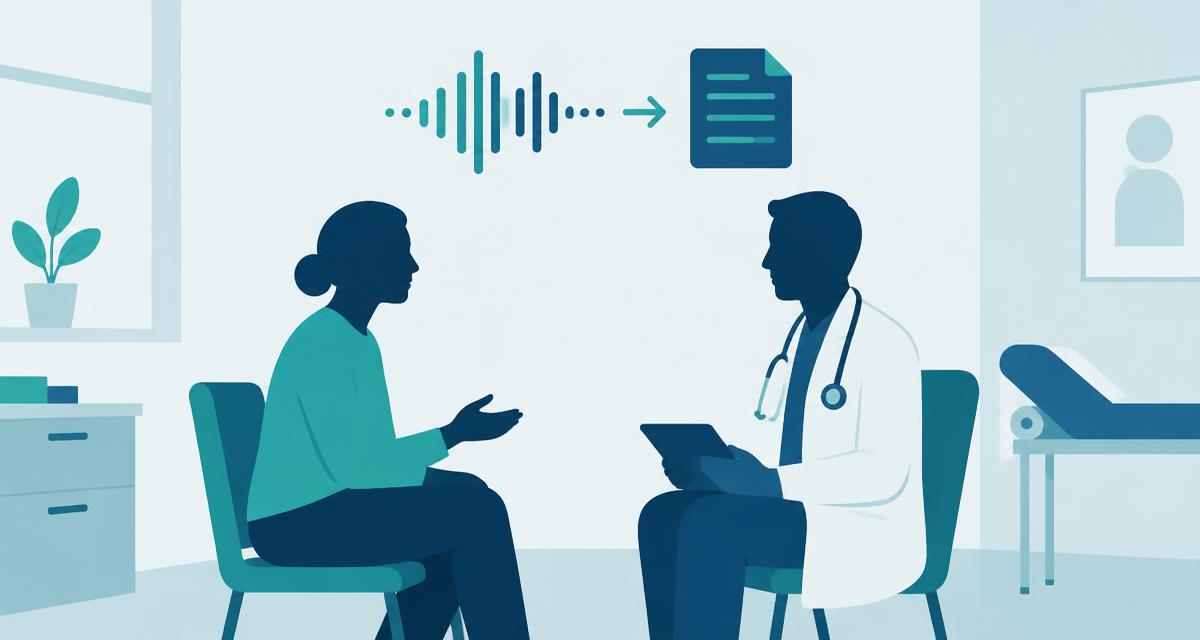
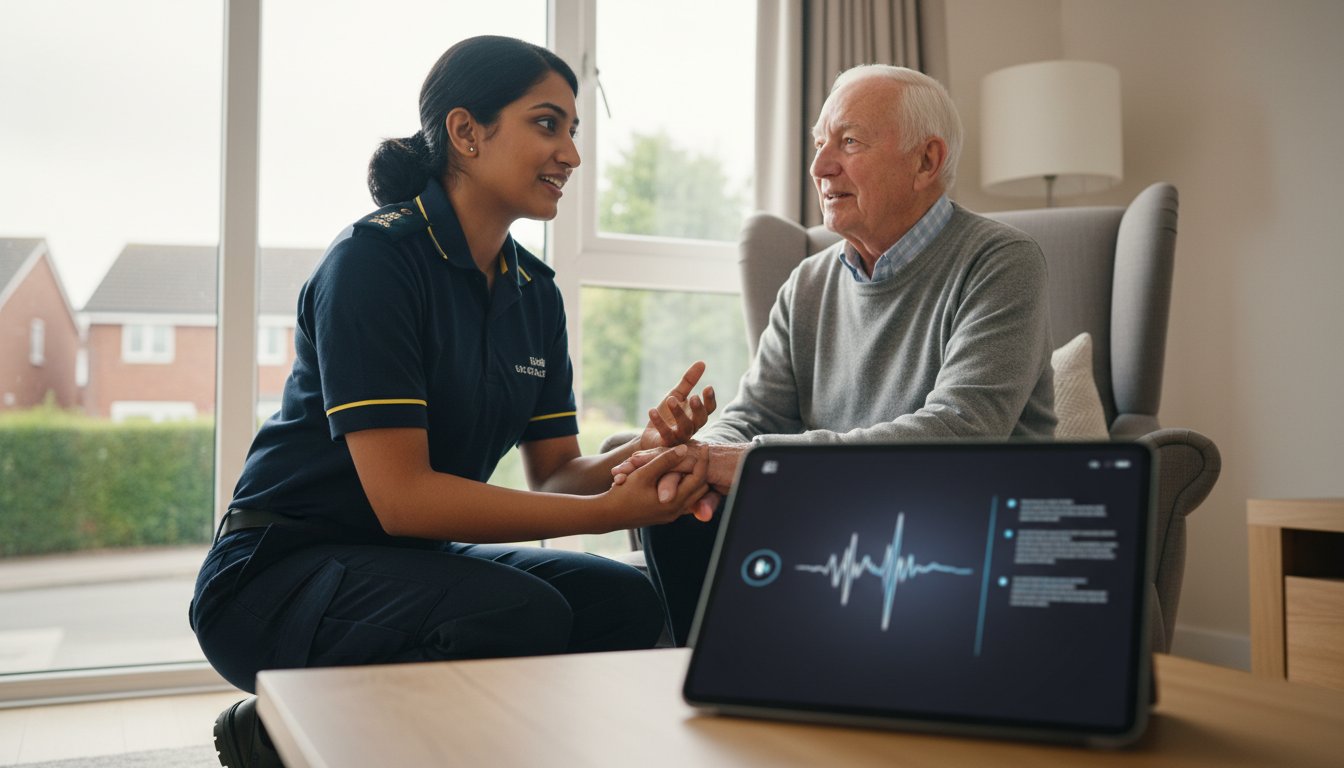
Ambient voice technology (AVT) represents a systemic shift from manual data entry to passive clinical capture. In the high-velocity environment of emergency care, an ai scribe for paramedics uk acts as an invisible administrative partner. It's designed to listen to the natural dialogue between a clinician and a patient, filtering out the auditory chaos of sirens, wind, or busy roadsides. Unlike traditional dictation, this technology doesn't require you to pause care or look away from your patient. It functions whilst you work, capturing the granular details that are often lost during high-pressure handovers or complex non-conveyance decisions.
There's a fundamental difference between simple transcription and intelligent clinical scribing. Transcription is a literal, verbatim record of every word spoken, which often results in bloated, unhelpful documents. Intelligent scribing is a sophisticated form of Clinical Documentation Improvement that extracts relevant medical facts and discards conversational filler. It identifies symptoms, medications, and vital signs, then maps them into a structured format. May 2026 marks a turning point for the sector as the NHS England guidance now provides a clear roadmap for trusts to implement these tools safely and legally.
The Technology Behind the Scribe
Doctoria AI Scribe® utilises Natural Language Processing (NLP) specifically trained on UK regional accents and the specialised vocabulary found in JRCALC guidelines. The system employs advanced speaker diarisation to distinguish between the paramedic's assessment and the patient's subjective complaints. By using Large Language Models (LLMs), the software ensures that the final output follows a logical structure. This isn't just text; it's structured data that recognises the difference between a suspected MI and a history of indigestion, ensuring clinical accuracy from the very first draft.
From Roadside to Record: The Data Journey
The journey begins with high-fidelity audio capture, often through integrated Philips digital dictation hardware that excels in noisy environments. The AI processes this data via secure, encrypted protocols to generate a clinical draft. Paramedics can choose between real-time streaming or post-consultation summarisation. For emergency contexts, post-consultation summarisation is often the superior choice, as it allows the clinician to remain entirely present during critical interventions. Every record requires final verification by the clinician before it's finalised. This clinician-in-the-loop model ensures you remain the final authority on the patient's record, maintaining total professional accountability and safety.
The Clinical Case: Why Paramedics Need AI Scribing Now
The "admin crisis" isn't just a matter of convenience; it's a driver of systemic burnout. Paramedics often spend hours post-shift completing paperwork, a task that leads to information fatigue and reduced job satisfaction. An ai scribe for paramedics uk transforms this by automating the data flow during the encounter itself. This shift aligns with the NHS Long Term Plan's focus on digital transformation, ensuring urgent care remains responsive rather than reactive. By capturing information at the point of care, we eliminate the 2-3 hours of retrospective typing that typically ends a paramedic's day.
Non-conveyance decisions carry significant legal weight. If safety netting advice isn't meticulously recorded, the clinician faces substantial professional risk during any subsequent coronial or internal investigation. An AI scribe ensures that every instruction given to a patient or carer is captured with high fidelity. This level of detail is essential for meeting the HCPC Standards of Proficiency for Paramedics, which mandate accurate and timely record-keeping as a core professional requirement. It moves the record from a summary of what the clinician remembers to a factual account of what actually occurred.
Reducing Cognitive Load in High-Pressure Scenes
When you're managing a complex scene, your focus should be on the patient's physiology and environment, not a mobile data terminal. By delegating documentation to an AI, you reclaim the headspace needed for critical diagnostic reasoning. It's a psychological safety net. You don't have to worry about forgetting a subtle symptom or a specific medication mentioned by a relative amongst the noise of multiple call-outs. This reduction in cognitive load directly improves patient safety, as the clinician is free to observe non-verbal cues and environmental factors that might otherwise be missed whilst typing.
Standardising Documentation Quality
Note-taking quality varies significantly between crews and skill levels, creating potential gaps in the longitudinal patient record. AI-enabled tools ensure that every record reflects JRCALC guidelines and local clinical pathways with total consistency. During a complex frailty assessment, the AI automatically ensures that all red-flag symptoms and environmental risks are documented to support a safe non-conveyance decision. This creates a reliable audit trail for both the trust and the individual clinician, improving the continuity of care during handovers to GPs or Emergency Departments. If you're looking to enhance your clinical workflow, you can explore how Doctoria® automates these processes.

How to Integrate AI Scribing into Your Mobile Workflow
Integrating an ai scribe for paramedics uk into a fluid, pre-hospital environment requires a structured approach to ensure both technical performance and patient trust. The process isn't about adding another task; it's about shifting the documentation burden to a background process. Successful integration follows a logical five-step path that begins the moment you arrive on-scene and ends with a high-fidelity handover at the hospital or GP surgery.
- Step 1: Obtaining Consent. Per the April 2026 NHS England national guidance, you don't need explicit written consent for direct care, but you must inform the patient at the start of the interaction. A simple, reassuring statement that an AI assistant is being used to ensure an accurate record allows the patient to object if they wish.
- Step 2: Positioning. To capture clear audio amongst sirens or environmental noise, place your device within two metres of the consultation. Positioning the microphone towards the patient ensures the AI distinguishes between your clinical questions and their symptoms.
- Step 3: Consultation. Conduct the assessment naturally. The AI works in the background, identifying clinical markers whilst you perform physical examinations or interventions.
- Step 4: Review. Once the scene is stable, review the structured summary on your device. This is the "clinician-in-the-loop" phase where you verify the facts before syncing the data to the Electronic Patient Record (EPR).
- Step 5: Handover. Use the digital summary to provide a concise, evidence-based handover, ensuring no critical details are lost during the transition of care.
Hardware Considerations for the Field
Ruggedised tablets are currently the standard for most trusts due to their durability and screen real estate, though modern smartphones are increasingly capable of high-quality ambient capture. In extremely noisy environments, using external microphones or integrated Philips digital dictation hardware provides the necessary fidelity for the AI to structure notes accurately. Battery management is a critical operational factor; devices should be docked in the vehicle to ensure the scribe is available for every call. In areas with poor connectivity, the system should offer "store-and-forward" capabilities so that processing occurs as soon as a signal is restored.
Managing Consent and Ethics
Transparency is the foundation of the 2026 regulatory landscape. You should explain that the AI doesn't replace your judgment but acts as a safety layer to prevent information loss. If a patient or family member objects, the session must be stopped immediately. Documenting the use of AI within the patient’s clinical record is now a best-practice requirement for transparency and audit purposes. This disciplined approach to ethics ensures that the technology remains a trusted partner in the delivery of inclusive, high-quality care.
Ensuring Data Security and GDPR Compliance in the Field
Data security in pre-hospital care is a non-negotiable infrastructure requirement. Deploying an ai scribe for paramedics uk requires strict adherence to the NHS Data Security and Protection Toolkit (DSPT). This framework ensures that every patient interaction captured on the road is handled with the same level of security as a hospital-based EPR. Encryption in transit and at rest provides a digital vault for sensitive audio data. To eliminate long-term risk, "Zero-Retention" policies are implemented. This means the raw audio is purged immediately after the structured clinical note is generated and verified, leaving no permanent record of the patient's voice on the device or server.
Clinical safety is governed by the DCB0129 and DCB0160 standards. DCB0129 requires the technology vendor to identify and mitigate potential clinical risks, whilst DCB0160 mandates that the adopting Trust performs its own internal safety assessment. For the individual paramedic, these standards are the guarantee that the tool has been stress-tested for accuracy and reliability in emergency contexts. They ensure that the AI doesn't just work, but works safely under pressure, providing a validated layer of Clinical Documentation Improvement without introducing new hazards to the patient journey.
Is My Data Staying in the UK?
Sovereign healthcare information must remain within UK borders to comply with British legal standards and GDPR. Doctoria AI Scribe® uses UK-based data centres to process information, ensuring that patient data never leaves the jurisdiction. This is a critical distinction from "off-the-shelf" generative AI tools like ChatGPT, which lack the clinical safety guardrails and data residency guarantees required for NHS frontline use. Using non-compliant tools in the field creates an unacceptable breach of trust and regulatory risk. If your Trust is preparing for digital transformation, you can view the full security specifications for Doctoria® solutions.
The Clinical Safety Officer (CSO) Role
Implementation is overseen by a Clinical Safety Officer (CSO). This role is vital for maintaining the "hazard log," a living document that tracks and mitigates risks such as AI "hallucinations," where a system might incorrectly summarise a clinical fact. By combining automated monitoring with human oversight, Trusts ensure the system learns and improves without compromising patient safety. This structured approach to risk management allows clinicians to use the technology with quiet confidence, knowing that the system's performance is being continuously audited against high-fidelity clinical benchmarks.
Optimising Documentation with Doctoria AI Scribe®
Doctoria AI Scribe® is engineered to handle the specific linguistic challenges of the UK ambulance service. Standard generative models often struggle with the rapid, high-fidelity vocabulary used during emergency assessments, yet our platform recognises the nuanced difference between a paramedic's verbalised findings and a patient's description of symptoms. This precision ensures that every record remains clinically sound. By utilising Doctoria Summarisation, clinicians can transform a detailed 20-minute roadside dialogue into a concise 30-second handover briefing. This capability ensures that the most critical clinical facts are prioritised when transitioning care to hospital teams.
The system's ability to structure data according to local clinical pathways makes it an essential infrastructure partner for modern trusts. It doesn't just record; it organises. An ai scribe for paramedics uk must be as mobile and resilient as the professionals using it. Whether you're managing a complex frailty case or a high-acuity trauma scene, the technology remains a passive, reliable observer that reduces the need for retrospective data entry.
The Doctoria and Philips Partnership
Superior AI transcription requires high-fidelity audio capture, which is why our solutions integrate seamlessly with Philips digital dictation hardware. These specialised microphones are designed to isolate the human voice from the ambient noise of a moving ambulance or a busy public space. This partnership is particularly valuable for Extended Care Paramedics (ECPs) who often need to generate complex referral letters to GPs or community teams. By combining world-class hardware with Doctoria AI Scribe®, clinicians can produce high-quality documentation that meets the most stringent audit requirements without the traditional administrative delay.
Breaking Language Barriers in Emergency Care
Clinical safety is often compromised when a patient cannot communicate in their first language, especially in diverse urban centres like Leeds or London. Doctoria Real-time Interpretation for Healthcare allows paramedics to manage consultations across multiple languages whilst simultaneously generating a clinical record. The system documents both the original dialogue and the translated version to ensure total accuracy and transparency. This empathetic application of technology ensures that advice is understood and documented correctly, reducing the risk of misdiagnosis or poor patient compliance due to linguistic barriers.
Getting Started with Doctoria®
Implementing this technology starts with a structured trial within your specific paramedic team or Primary Care Network (PCN). This allows your trust to evaluate the system's performance against your unique operational pressures. Doctoria AI Scribe® saves up to 3 hours of admin daily for clinicians by automating the transition from spoken consultation to structured electronic record. Reclaiming this time allows for improved patient eye-contact and a significant reduction in post-shift fatigue. To see the technology in action, you can book a demo of Doctoria AI Scribe® for your Trust.
Advancing Pre-Hospital Care through Automated Documentation
The integration of an ai scribe for paramedics uk represents a significant advancement in clinical safety and operational efficiency. By automating the transition from patient dialogue to structured electronic records, clinicians can reclaim hours of time previously lost to retrospective typing. This shift ensures that high-stakes documentation, particularly for non-conveyance decisions, remains accurate and compliant with the latest NHS standards. You've seen how the regulatory landscape of 2026 provides a clear path for adopting these tools whilst maintaining total patient privacy.
Doctoria® provides the vital infrastructure needed for this digital transformation. As an Innovate UK funded technology provider, we maintain an official partnership with Philips for high-fidelity digital dictation, ensuring superior audio capture in the most challenging environments. Our solutions are fully GDPR and NHS Data Security compliant, utilising UK-based data centres to protect sensitive healthcare information. You can discover how Doctoria® is transforming paramedic documentation to improve both your daily workflow and the quality of patient handovers. Embracing these tools allows you to focus on what matters most: delivering high-quality, empathetic care at the point of need.
Frequently Asked Questions
Does an AI scribe for paramedics require a constant internet connection?
No, a constant internet connection isn't required for the initial audio capture. The system utilised by an ai scribe for paramedics uk often includes a "store-and-forward" capability. This allows the device to record the consultation locally in areas with poor connectivity and process the clinical summary as soon as a 4G, 5G, or Wi-Fi signal is restored. This ensures operational continuity in rural or "dead zone" environments.
Will the AI understand my accent or specific UK medical abbreviations?
The system's Natural Language Processing (NLP) is specifically calibrated for regional British accents and the specialised vocabulary of the NHS. It's trained on JRCALC guidelines and common pre-hospital abbreviations, such as "ROSC," "FAST," or "BM." This ensures that the structured notes accurately reflect the clinical reality of a UK-based ambulance shift without requiring the clinician to alter their natural speaking patterns.
How does the AI scribe handle background noise like sirens or traffic?
Ambient noise is managed through advanced spectral subtraction algorithms and high-fidelity hardware integration. When used with Philips digital dictation microphones, the software isolates the human voice from the auditory chaos of the roadside or the back of a moving vehicle. This multi-layered approach to audio processing ensures that the AI captures clear, actionable data even in high-decibel emergency environments.
Is the patient’s voice recording stored permanently by the software?
No, patient recordings are not stored permanently. Doctoria® employs a strict "Zero-Retention" policy where the raw audio data is purged immediately after the clinical summary is generated and verified by the paramedic. This protocol ensures total data privacy and aligns with the highest levels of NHS information governance, protecting both the patient's identity and the clinician's professional liability.
Can Doctoria AI Scribe® integrate with my Trust’s existing EPR system?
Yes, Doctoria AI Scribe® is designed to integrate with major Trust EPR systems using standard healthcare protocols like HL7 and FHIR. This allows the structured clinical summary to sync directly into the patient's electronic record, eliminating the need for manual copy-pasting. Seamless data flow reduces the risk of transcription errors and ensures that the receiving hospital has immediate access to high-fidelity on-scene documentation.
Do I need to inform the patient that I am using an AI scribe?
Yes, you must inform the patient at the start of the interaction that an AI assistant is being used to record the consultation for their medical record. Per the April 2026 NHS England guidance, explicit written consent isn't required for direct care, but transparency is mandatory. If a patient objects to the use of the technology, the recording must be stopped immediately to respect their autonomy.
What happens if the AI makes a mistake in the clinical summary?
The clinician remains the final authority and must verify every summary before it's finalised in the EPR. This "clinician-in-the-loop" model ensures that any inaccuracies or omissions are corrected during the review phase. The AI provides a high-quality draft, but the professional responsibility for the accuracy and completeness of the clinical record always rests with the registered paramedic, as mandated by HCPC standards.
Is Doctoria® compliant with NHS DCB0160 standards?
Yes, Doctoria® provides the necessary clinical safety documentation and risk logs to support Trust compliance with DCB0160 standards. We work closely with your Trust's Clinical Safety Officer (CSO) to ensure that the deployment of an ai scribe for paramedics uk meets all national safety requirements. This structured approach to risk management ensures that the technology acts as a safety layer rather than an operational hazard.