AI for Clinical Documentation: A Professional Guide for UK Healthcare (2026)
Recent data indicates that 81% of NHS staff now support the integration of artificial intelligence to alleviate the mounting administrative burden within the health service. For many UK clinicians, the reality of modern practice involves spending nearly as much time on data entry as on direct patient care. This systemic pressure often leads to burnout and compromises the quality of patient records. Implementing ai for clinical documentation offers a direct solution to these operational risks. Doctoria AI Scribe® provides the necessary infrastructure to automate the capture of consultation data, ensuring that accuracy remains a priority whilst clinicians regain their focus on the patient.
You likely recognise that the current reliance on delayed dictation and manual note-taking is unsustainable in a high-stakes clinical environment. This guide demonstrates how advanced transcription technology facilitates precise record-keeping and significantly reduces the time spent on post-consultation paperwork. We will examine the transition toward structured SOAP notes, the implications of the 2026 MHRA regulatory updates, and the practical steps for integrating these tools into your existing workflow. By the end of this professional guide, you'll understand how to leverage these systems to enhance clinical safety and operational efficiency across both NHS and private sectors.
Key Takeaways
- Understand how ambient voice technology transitions traditional dictation into structured, real-time medical summaries.
- Learn to integrate ai for clinical documentation into your daily workflow whilst maintaining strict adherence to patient consent and data safety protocols.
- Master the "clinician-in-the-loop" model, which ensures that the healthcare professional retains final authority over every record generated.
- Discover how Doctoria AI Scribe® provides a secure infrastructure to reduce administrative overhead and mitigate the risk of clinician burnout.
- Explore the transition to automated SOAP notes to improve the consistency and quality of patient records across both NHS and private sectors.
The Evolution of AI for Clinical Documentation
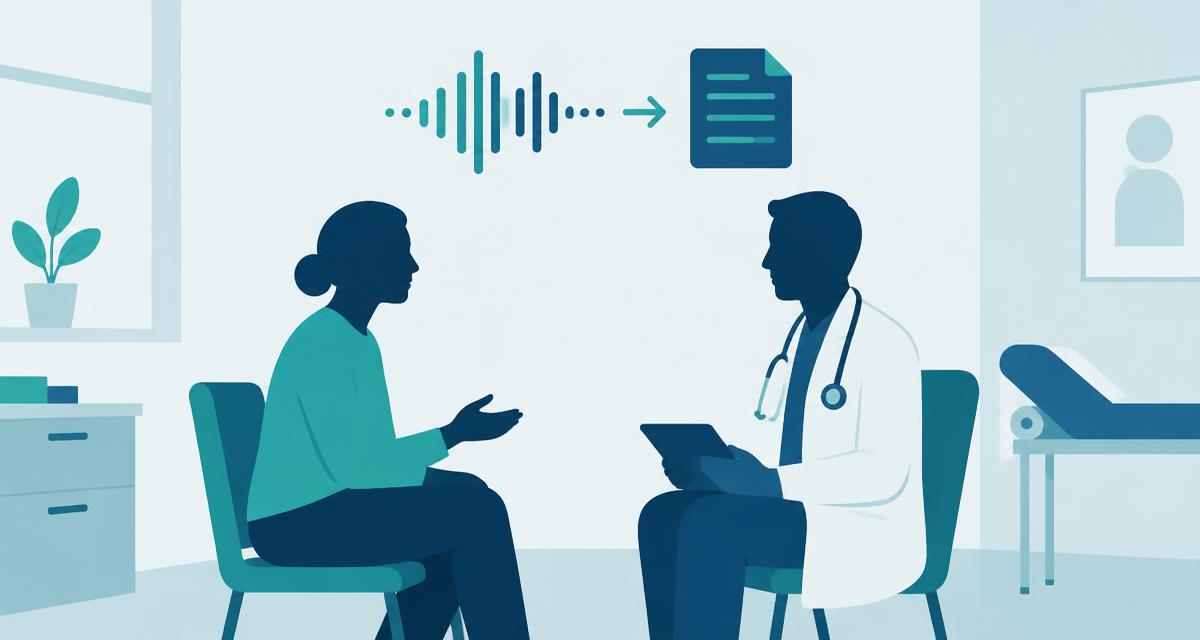
Clinical practice in the United Kingdom is transitioning from retrospective data entry to real-time, ambient capture. Systems designed for ai for clinical documentation utilise ambient voice technology to listen to the natural dialogue between a clinician and a patient. Unlike traditional methods, these systems process the conversation to generate structured medical summaries immediately. This shift moves away from manual note-taking and traditional digital dictation, which often result in delayed records and fragmented patient histories.
Structured data ensures that patient records are detailed, legible, and available across different care settings. When documentation is structured into formats like SOAP notes automatically, it improves the continuity of care. Clinicians don't need to rely on memory hours after a consultation has ended. Instead, the focus returns to the patient, whilst the technology handles the administrative overhead.
Moving Beyond Legacy Dictation Systems
Traditional digital dictation often creates a significant cognitive load. It requires a "stop-start" workflow where the professional must consciously recount clinical details after the patient has left. This legacy approach is prone to context loss and often involves lengthy turnaround times if manual transcription is required. In contrast, an Automated Medical Scribe operates in the background. It captures the nuances of the interaction without requiring the clinician to interrupt their natural diagnostic process. This reduction in cognitive switching allows for more meaningful direct patient interaction.
The Impact on Clinical Burnout and Operational Risk
Administrative overhead is a primary driver of clinician burnout amongst NHS staff. The phenomenon of "pajama time," where professionals complete documentation late into the evening, contributes to high turnover rates and reduced well-being. By automating these tasks, healthcare organisations can improve staff retention. Timely, comprehensive documentation also serves as a critical safeguard against operational risk. Accurate records reduce the likelihood of clinical errors and provide a robust audit trail, which is essential for compliance within both public and private healthcare frameworks.

Implementing AI Documentation in a Clinical Setting
Adopting ai for clinical documentation involves a structured workflow designed to enhance, rather than disrupt, the patient encounter. The process begins with securing patient consent, followed by the activation of ambient capture during the consultation. As the dialogue unfolds, the system identifies clinical markers and organises them into specialised formats, most notably SOAP notes. This ensures that the Subjective, Objective, Assessment, and Plan components are clearly delineated, providing a consistent structure across different medical specialities.
Central to this implementation is the "clinician-in-the-loop" model. The technology functions as a highly efficient assistant, but the healthcare professional retains final authority and clinical responsibility for every record. This approach aligns with a broader UK government initiative on AI aimed at reducing administrative friction to prioritise direct patient interaction. Most systems are designed to integrate into existing environments without requiring extensive hardware upgrades or complex software overhauls.
Ensuring Clinical Accuracy and Governance
Maintaining clinical safety requires a rigorous verification process. Clinicians should follow a three-step protocol: first, a rapid review of the generated summary for factual integrity; second, making any necessary refinements to specific clinical nuances; and third, final approval within the patient record. To ensure precision, it's vital to use models trained on specialised medical vocabulary and diverse regional British accents. For those seeking to enhance their current workflow, exploring Doctoria AI Scribe® offers a reliable pathway to high-fidelity documentation.
Practical Integration with EPR Systems
The transition of data from the AI interface to Electronic Patient Record (EPR) systems must be seamless to be effective. Technical integration focuses on ensuring a secure data flow that respects NHS DTAC and GDPR standards. By automating the transfer of structured notes, organisations eliminate the risk of manual transcription errors and ensure that the most current clinical data is immediately accessible to the wider care team. This creates a robust infrastructure for long-term record-keeping and auditability.
Doctoria AI Scribe: A Safety-First Approach
Doctoria AI Scribe® provides a specialised framework for ai for clinical documentation that addresses the unique pressures of the UK healthcare sector. The platform is designed as an infrastructure partner rather than a simple software utility, focusing on the systemic reduction of operational overhead. By automating the capture of clinical dialogue, it enables a significant reduction in the administrative burden that often leads to clinician fatigue.
Privacy and safety are integrated into the core of the system. The platform maintains total data privacy through rigorous adherence to GDPR and alignment with the NHS Digital Technology Assessment Criteria (DTAC). This ensures that all patient data is managed within a secure, validated framework that administrators and policy-makers can trust. This grounded approach prioritises the reduction of operational risk whilst maintaining high performance standards.
Data Sovereignty and Security in the UK
As a Leeds-based organisation supported by Innovate UK, Doctoria understands the specific regulatory and demographic complexities of the British market. This background reinforces its role as a stable infrastructure partner for NHS trusts and private clinics alike. Robust security protocols ensure that data sovereignty is maintained, protecting sensitive information in accordance with UK law whilst facilitating efficient data flow across clinical teams.
Restoring the Clinician-Patient Connection
Transitioning to ambient documentation allows for the return of "eye-contact medicine," where the professional is fully present for the patient. Removing the computer screen as a physical barrier fosters a more empathetic and inclusive consultation. Implementing automated medical documentation for doctors allows clinicians to prioritise complex diagnostic reasoning over the clerical task of note-taking. This shift ensures that ai for clinical documentation supports the humanistic core of healthcare whilst delivering the structured data necessary for modern clinical excellence.
Strengthening Clinical Infrastructure through Automated Documentation
The transition toward automated documentation represents a necessary evolution in UK healthcare. By moving away from legacy dictation systems and embracing ambient capture, clinicians can reclaim significant time previously lost to administrative overhead. This shift ensures that patient records remain structured and accurate whilst allowing practitioners to focus on complex decision-making and empathetic care.
Adopting ai for clinical documentation is about more than efficiency; it's about building a safer, more resilient clinical environment. Doctoria AI Scribe® is designed for high-stakes clinical and emergency settings, ensuring compliance with both GDPR and NHS DTAC standards. Supported by Innovate UK funding, our platform provides the secure infrastructure needed to modernise your workflow without compromising data privacy or clinical integrity.
Ready to reduce your administrative burden? Request a professional consultation on Doctoria AI Scribe® to see how we can support your practice. We look forward to helping you restore the focus to your patients.
Frequently Asked Questions
Is AI clinical documentation safe for use in the NHS?
AI documentation is safe when platforms adhere to the NHS Digital Technology Assessment Criteria (DTAC) and GDPR standards. As of January 2026, NHS England has approved 19 AI notetaking tools for use. These systems undergo annual self-assessments reviewed by NHS IT leads to ensure ongoing reliability. Using ai for clinical documentation within this framework ensures that patient data is handled with the highest level of security and clinical governance.
How does an AI scribe handle complex medical terminology and British accents?
Advanced scribing systems utilise specialised medical language models trained on vast clinical datasets to accurately recognise complex terminology and pharmacological names. These models are specifically optimised to interpret diverse regional British accents, ensuring reliability across the United Kingdom. By processing natural dialogue in real-time, the technology distinguishes between relevant clinical findings and casual conversation to produce structured medical summaries that reflect the true context of the encounter.
Does using an AI scribe require patient consent?
Obtaining explicit patient consent is a mandatory requirement before using ai for clinical documentation in any consultation. Clinicians must inform the patient that an ambient capture tool is being used to assist with record-keeping and explain how their data is managed. This practice is fundamental to maintaining professional ethics and ensures compliance with the General Data Protection Regulation (GDPR) and NHS clinical safety standards.
Will AI for clinical documentation replace the need for human review?
AI documentation does not replace the need for human review; it serves as a sophisticated assistant. The "clinician-in-the-loop" model is a core principle where the healthcare professional retains final authority over the medical record. Every generated summary must be reviewed and approved by the clinician to verify factual integrity and clinical safety before it is saved into the Electronic Patient Record system.