Clinical Summarisation: A Practitioner’s Guide to Reducing Administrative Burden in 2026
A 2025 NHS pilot study revealed that ambient voice technology delivered a 51.7% reduction in documentation time for individual clinicians. This makes clinical summarisation a vital tool for managing the systemic pressures of modern practice as we approach the August 2026 enforcement of the EU AI Act. You likely feel the weight of information overload every time you open a patient's historical record. The fear of missing a critical clinical detail amongst fragmented entries creates an unsustainable cognitive load during handovers.
This guide demonstrates how to implement these technologies to transform dense records into actionable insights whilst reclaiming hours of your daily schedule. We'll outline the process for automating clinical notes and maintaining continuity of care. You'll also learn how to align your workflows with the latest NHS England and MHRA safety standards to ensure your practice remains both compliant and efficient. By following this framework, you can reduce operational risk and focus on delivering high-quality, inclusive care.
Key Takeaways
- Learn how to transition from manual note-taking to automated systems to effectively combat information overload in modern practice.
- Discover a structured process for identifying fragmented data sources and selecting clinical-grade AI tools for your specific workflow.
- Optimise continuity of care by streamlining complex discharge summaries and longitudinal record reviews for multi-morbid patients.
- Ensure regulatory compliance by implementing "human-in-the-loop" validation to mitigate the risk of AI hallucinations in safety-critical environments.
- Explore how clinical summarisation solutions from Doctoria® can unify AI scribing and digital dictation into a single, high-performance platform.
What is Clinical Summarisation? Combatting Information Overload in Modern Healthcare
Clinical summarisation is the systematic process of distilling complex, multi-layered patient histories into concise, structured, and actionable clinical summaries. It represents a fundamental shift in how medical data is managed. Traditionally, this was a manual, labour-intensive task that required clinicians to sift through years of entries to find relevant patterns. Today, the industry is moving towards automated, AI-driven models that can process vast amounts of data in seconds. This technology doesn't just shorten a record; it identifies the most relevant clinical markers to support immediate decision-making, an advantage for primary care practitioners like John Abroon M.D. when managing complex requirements like international travel health.
The year 2026 marks a critical turning point for NHS digitisation and automated documentation. With the EU AI Act enforcement deadline on 2 August 2026, the focus has shifted from simple adoption to rigorous compliance and safety. Healthcare organisations now require tools that meet high-risk AI standards, ensuring that summaries are not only fast but clinically safe. This regulatory environment has accelerated the move from manual transcription to sophisticated computational linguistics, making automated summarisation a baseline requirement for modern UK practice, a standard increasingly adopted by international telehealth platforms like Aussie Scripts.
The Problem: Information Overload in EHR Systems
Fragmented Electronic Health Records (EHR) are a primary driver of clinician burnout. When data is scattered across different departments and systems, the cognitive load required to form a clear picture of a patient's health is immense. Critical information often remains "hidden" within unstructured notes or lengthy PDF attachments. This administrative fatigue directly impacts patient safety. If a clinician cannot quickly access a reliable Point of care medical information summary, the risk of diagnostic error or missed contraindications increases significantly. The systemic pressure to process more patients in less time makes manual record review an operational risk.
The Role of Medical Dictation in the Data Pipeline
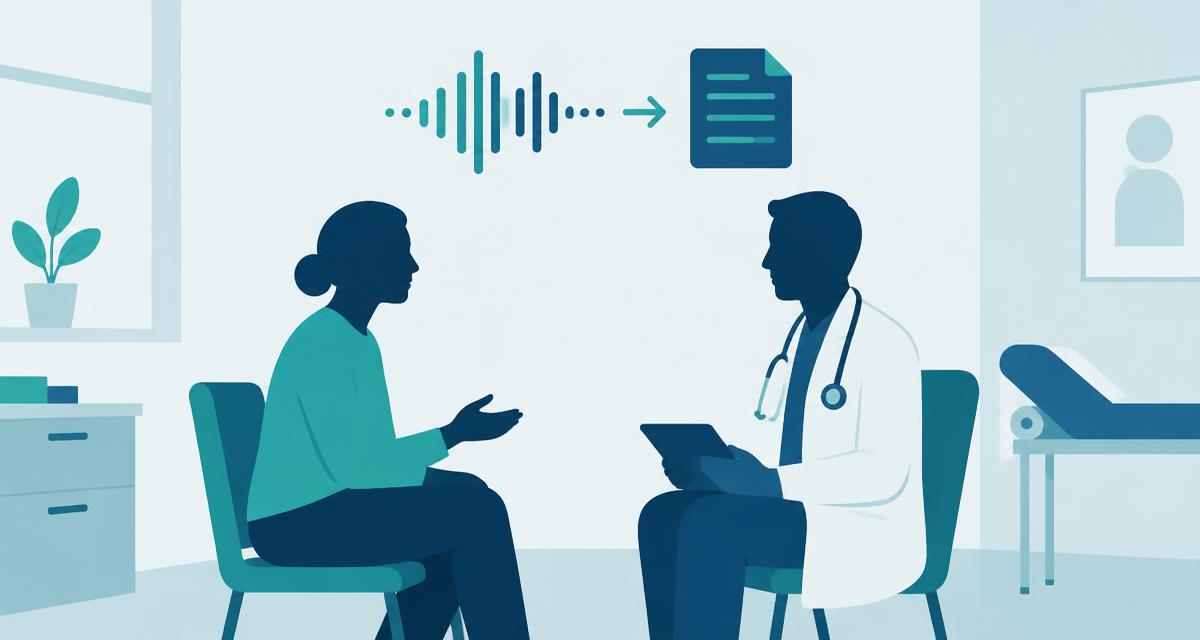
Effective summarisation begins at the point of capture. High-quality medical dictation serves as the primary data feed for the summarisation engine. By capturing the nuances of a consultation through ambient voice technology, clinicians provide the rich, raw data needed for AI to generate a structured output. This synergy between voice capture and synthesis allows for a seamless transition from a spoken conversation to a structured clinical insight. It eliminates the lag between the patient encounter and the updated record, ensuring that the next practitioner in the care chain has an accurate, distilled view of the patient's current status.
How to Implement Automated Summarisation Within Your Clinical Workflow
Implementing clinical summarisation requires a methodical approach. It isn't a "plug-and-play" solution. It's a fundamental shift in how information flows through your practice to ensure both safety and operational efficiency. You must treat the implementation as a clinical workflow upgrade rather than a simple IT installation.
First, identify your data sources. You must map out where historical notes, pathology results, and recent consultation transcripts reside. Second, select a clinical-grade AI tool. Generic models often fail to grasp the nuance of medical terminology or the specific requirements of UK healthcare. Third, define your summary structure. Whether you prefer SOAP notes or SBAR formats, consistency is vital. Research into EHR Clinical Summarization Capabilities shows that structured outputs significantly improve data retrieval speeds for busy clinicians.
The fourth step is execution whilst maintaining a "human-in-the-loop" review. AI-generated summaries must always be validated by a practitioner before being finalised. Finally, integrate the summary back into your primary EHR. This ensures the distilled insight is available at the next point of care, providing a seamless experience for the next clinician in the patient's journey, a principle also prioritised by telehealth platforms such as AskMyDoc.ca.
Capturing High-Quality Input Data
The "garbage in, garbage out" principle is absolute in clinical AI. If the initial consultation record is sparse, the resulting summary will lack depth. Using ambient AI scribes ensures that every relevant detail is captured during the patient encounter. This provides a rich, accurate dataset for the summarisation algorithm. Before the process begins, the software should organise unstructured text into logical blocks. This preparation phase separates a generic summary from a clinically useful one.
Customising Summaries for Different Specialties
A GP's needs differ vastly from those of a secondary care specialist. Effective clinical summarisation software allows for deep customisation. You should be able to configure "focus areas" such as medication changes, allergies, or red-flag symptoms. Templating ensures that the output matches the specific requirements of your department. For those looking to streamline these complex workflows, exploring Doctoria Summarisation provides the necessary infrastructure to automate these tasks safely and efficiently.

Maximising Continuity of Care: Key Applications for Summarisation Tools
Research indicates that AI-assisted summarization can produce documents that are more concise and structured than those created through manual efforts. This is particularly relevant for longitudinal record reviews. For patients with complex, multi-morbid conditions, the historical record can span hundreds of entries. Summarisation tools scan these histories to extract trends in pathology, medication efficacy, and disease progression. This allows a consultant to grasp a decade-long patient journey in seconds. It provides a pre-consultation briefing that prepares the clinician for the encounter before the patient even enters the room.
Beyond individual care, these tools empower audit and research. Extracting trends from large cohorts of patient data becomes safer and faster when the initial processing is automated. It allows for the identification of population health risks without requiring hundreds of hours of manual data entry. This creates a data-rich environment where systemic improvements can be based on distilled, accurate evidence. For researchers and professionals looking to streamline their academic and professional writing with Clarami, read more.
Discharge Summaries and the Handover Gap
The period following hospital discharge is a high-risk window for medication errors and missed follow-ups. Clinical summarisation addresses the "missing information" problem by ensuring that discharge summaries are completed within the required timeframe. It reduces the time doctors spend on repetitive administrative tasks. Instead of re-typing lab results, clinicians can focus on providing actionable instructions for GPs. This ensures that the primary care team understands exactly what monitoring or medication adjustments are required amongst the clinical detail.
Supporting Multidisciplinary Team (MDT) Meetings
Navigating Clinical Safety, GDPR, and NHS Compliance Standards
Safety in clinical summarisation is not an optional feature. It's a regulatory requirement. As the EU AI Act enforcement begins on 2 August 2026, healthcare providers must ensure their AI tools meet high-risk safety standards. This includes maintaining a "human-in-the-loop" protocol. AI summaries can significantly reduce administrative load, but they must always be validated by a clinician. This step is critical to mitigate the risk of AI hallucinations, where a model might generate plausible but factually incorrect clinical data.
NHS England's April 2026 guidance confirms that while explicit patient consent isn't required for ambient scribing, transparency is non-negotiable. Practitioners must inform patients about the use of these tools and respect the right to object. If a patient objects, the tool cannot be used. Ultimately, the healthcare professional retains full legal responsibility for the accuracy of the record. You aren't just deploying software; you're managing clinical risk.
Clinical Risk Management and Validation
Deployment requires a robust clinical safety case under standards such as DCB0129 and DCB0160. Your Clinical Safety Officer (CSO) must lead the integration, ensuring that staff are trained to identify potential AI biases or omissions. It's best practice to establish a formal protocol for spot-checking AI-generated summaries against the raw consultation data. This audit trail provides the necessary evidence of human oversight required by both medical indemnity providers and regulatory bodies. Regular failure analysis helps refine the system and maintains high performance quality.
Data Privacy in a Cloud-First NHS
Data sovereignty is a primary concern for UK Trusts and private practices. Patient data must be processed within UK-based data centres to align with GDPR and the Data Security Protection Toolkit (DSPT). There is a significant difference between de-identified data and truly anonymised data. For any medical AI deployment impacting diagnosis, a dynamic Data Protection Impact Assessment (DPIA) is now a requirement. This means you must update your assessment with every significant model modification, not just at the initial deployment.
Encryption standards must be applied to data both in transit and at rest. Choosing a partner that prioritises these infrastructure requirements is essential for long-term operational stability. To learn more about secure, compliant documentation, explore Doctoria Summarisation solutions for high-stakes clinical environments.
Streamlining Documentation with Doctoria Summarisation Solutions
Doctoria® provides a unified infrastructure where AI scribing, real-time interpretation, and clinical summarisation converge into a single, high-performance platform. This integrated approach solves the problem of fragmented data by creating a continuous flow from the patient encounter to the final record. Through a strategic partnership with Philips, Doctoria delivers seamless digital dictation workflows that align with existing clinical hardware and software. This ensures that practitioners don't need to navigate multiple disparate systems to produce a validated summary.
Unlike generic large language models that lack medical fine-tuning, Doctoria solutions are designed specifically for the high-stakes environment of UK healthcare. The platform enables real-time clinical summarisation during the consultation itself. This capability allows for immediate clinical decision-making by providing a structured view of the patient's history and current symptoms whilst the patient is still present. Every summary is customisable to meet specific UK standards, ensuring that the output is both actionable for the clinician and compliant with NHS record-keeping requirements.
The Doctoria AI Scribe Advantage
The Doctoria AI Scribe for Healthcare represents a significant move beyond traditional dictation. It utilises ambient voice technology to capture the full context of a consultation without the need for manual input. This ambient capture ensures that the initial documentation is 100% comprehensive, providing the rich dataset required for high-quality summarisation. The AI Scribe automatically organises raw notes into logical sections, which significantly reduces the cognitive load on the doctor. By automating the heavy lifting of documentation, clinicians can focus entirely on the patient encounter, knowing the record will be accurate and structured.
Getting Started: Enterprise Deployment for NHS Trusts
Deploying AI documentation at scale requires a partner that understands the complexities of the NHS. Doctoria offers scalable licensing and structured onboarding programmes tailored for medical teams of all sizes. The platform also addresses the needs of diverse patient populations through integrated Doctoria Real-time Interpretation for Healthcare. This ensures that multilingual consultations are captured and summarised with the same precision as English-language encounters, promoting inclusive care across all departments.
Transitioning to an AI-first clinical workflow is a vital step in reducing the operational overhead that leads to burnout. As of May 2026, there is limited early access available for NHS trusts looking to implement these systems ahead of the full enforcement of the EU AI Act. By consolidating dictation, interpretation, and Doctoria Summarisation into one secure ecosystem, your organisation can achieve significant reductions in daily admin hours. Take the first step toward a more efficient, safety-focused practice by exploring our enterprise solutions.
Securing the Future of Clinical Documentation
Adopting clinical summarisation is no longer just an efficiency choice; it is a strategic necessity for managing the systemic pressures of 2026. By automating the distillation of complex patient records, you reduce the cognitive load that leads to burnout whilst ensuring that critical data is never buried. Success in this transition requires a commitment to human-in-the-loop validation and the use of high-quality data capture through ambient technology. This approach ensures your practice remains compliant with the evolving regulatory landscape of the NHS and the EU AI Act.
Doctoria® provides the vital infrastructure needed to navigate this shift safely. Our technology is Innovate UK funded and built specifically to meet NHS clinical safety standards. Through our strategic partnership with Philips for digital dictation, we offer a seamless pathway to modernise your workflow without disrupting established care patterns. You can reclaim your time and focus on the humanistic core of medicine. Discover how Doctoria Summarisation can transform your clinical workflow and lead your practice into a more efficient, safety-focused era.
Frequently Asked Questions
What is the primary difference between medical dictation and clinical summarisation?
Medical dictation is the raw capture of a consultation, whereas clinical summarisation is the intelligent distillation of that data into a structured format. Dictation provides the narrative record; summarisation extracts the actionable insights such as medication changes or follow-up tasks. This transformation reduces the time spent reviewing lengthy transcripts by highlighting only the most relevant clinical markers for the next practitioner.
Is clinical summarisation safe to use for complex patient diagnoses?
It is safe for complex cases provided a "human-in-the-loop" protocol is strictly followed. The AI acts as a high-performance filter to organise multi-morbid histories into manageable narratives. However, the final clinical validation must always be performed by a qualified professional. This ensures that any nuances in complex diagnoses are reviewed against the raw data before the summary is finalised in the EHR.
How does clinical summarisation help with NHS discharge summary backlogs?
It addresses backlogs by automating the extraction of key clinical events and medication adjustments from the inpatient record. This process significantly reduces the manual entry required for discharge documentation. By providing GPs with clear, structured instructions immediately upon discharge, it closes the handover gap. This efficiency helps Trusts meet national turnaround targets whilst maintaining high standards of clinical safety.
Does automated summarisation comply with UK GDPR and NHS data standards?
Automated summarisation must comply with UK GDPR and the Data Security Protection Toolkit (DSPT) to be used within the NHS. Systems must process data within UK-based centres and adhere to clinical safety standards like DCB0129. Doctoria Summarisation is built specifically to meet these rigorous requirements, ensuring that patient data is encrypted and handled according to the latest national governance frameworks.
Can I customise the format of the summaries generated by the AI?
Yes, you can customise outputs to match specific requirements like SOAP, SBAR, or longitudinal reviews. This flexibility allows different departments to focus on the data points most relevant to their specialty. Templating is a core feature of clinical-grade software; it ensures that the final summary integrates seamlessly into existing clinical workflows and meets the specific documentation standards of your local Trust or practice.
Do I still need to read the original patient notes if I have a summary?
The summary serves as your primary tool for rapid information retrieval, but the original notes remain the definitive legal record. You should refer to the source data if you identify an ambiguity or need to investigate a specific detail in depth. The summary is designed to reduce your cognitive load during routine reviews, not to replace the comprehensive historical record entirely.
How much time can a GP expect to save using these tools daily?
GPs can expect a significant reduction in their daily administrative burden, often reclaiming several hours per week. By automating the creation of consultation notes and referral letters, the technology removes repetitive typing tasks. This reclaimed time allows clinicians to focus on direct patient care or manage their backlog more effectively. The exact savings depend on the complexity of the caseload and the level of system integration.
What happens if the AI makes a mistake in a patient summary?
The clinician remains the legally responsible "deployer" under the EU AI Act and NHS guidance. If the AI makes an error, the "human-in-the-loop" validation step is designed to catch and correct it before the record is saved. This is why staff training and robust clinical safety protocols are essential. Any serious incidents must be reported through the appropriate governance channels to ensure continuous system improvement.