English to Farsi Language: A Clinical Guide to Interpretation in UK Healthcare
NHS spending on translation and interpretation services reached £64 million in 2024-25, more than doubling in just four years. This sharp increase reflects the growing complexity of providing equitable care in a multilingual society, yet clinical risk remains a persistent concern when communication falters. You're likely managing the high costs of traditional telephone interpreting whilst navigating the nuanced linguistic differences between Farsi and Dari dialects. These barriers don't just drain budgets; they impact patient safety and clinical workflow efficiency.
Discover how to streamline your English to Farsi communication by utilising medical interpretation services for NHS settings that prioritise accuracy and data sovereignty. Doctoria® provides a sophisticated framework for real-time interpretation that integrates into clinical environments to support mission-critical interactions. This article outlines how to navigate Farsi communication whilst ensuring total compliance with NHS DTAC and GDPR standards. We'll examine the transition from fragmented legacy systems to ambient, tech-forward solutions that reduce administrative overhead and improve patient outcomes across the United Kingdom.
Key Takeaways
- Understand the legal mandates under the Equality Act 2010 and how to address the high demand for Farsi interpretation in metropolitan hubs like London, Manchester, and Leeds.
- Learn to navigate the structural complexities of the Farsi language and cultural etiquette, such as "Taarof," to maintain clinical accuracy and patient rapport.
- Evaluate the operational value of implementing medical interpretation services for NHS trusts to reduce administrative overhead and reliance on high-cost agency locums.
- Identify best practices for organising clinical environments to facilitate seamless, AI-assisted consultations that improve speech-to-text accuracy in Farsi-English dialogues.
- Discover how Doctoria Real-time Interpretation® integrates with Philips digital dictation to provide a unified, mission-critical communication suite for Farsi and Dari speakers.
The Landscape of Farsi Interpretation within the NHS
Farsi, often referred to as Persian, has emerged as a high-priority language for NHS Trusts operating within major urban centres like London, Manchester, and Leeds. In these regions, the demand for English to Farsi communication is a constant factor in both primary and secondary care. Meeting this demand isn't optional. Under the Equality Act 2010 and the Accessible Information Standard, providers of healthcare in the United Kingdom must ensure that patients with language barriers receive information in a format they can understand. Traditionally, this meant relying on locum interpreters, but the high costs and logistical delays of agency staffing have led many Trusts to seek more efficient medical interpretation services for NHS workflows.
The transition toward real-time digital solutions like Doctoria® is driven by the need for immediate access at the point of care. Waiting for a telephone interpreter to become available during an emergency or a routine GP consultation creates bottlenecks that the modern health service can no longer afford. By integrating medical interpretation services for NHS trusts directly into the clinical environment, providers can bypass the friction of third-party booking systems and focus on patient safety.
Distinguishing Farsi from Dari and Tajik
Whilst Farsi (spoken predominantly in Iran) and Dari (spoken in Afghanistan) are mutually intelligible, they contain distinct clinical terminologies. Using a generic translation tool often fails to capture these nuances, which is critical when securing valid informed consent. Clinicians must identify the specific dialect accurately to ensure the patient's understanding of a procedure or medication is precise. Doctoria® models trained on medical datasets distinguish between these variants more reliably than standard software, providing a safe framework for complex dialogues.
The Socio-Economic Impact of Language Barriers
Poor English proficiency is closely linked to increased hospital readmission rates amongst Farsi-speaking populations. When patients don't fully grasp their discharge instructions, the risk of medication errors rises significantly. Relying on family members as ad-hoc interpreters is a common but risky practice, especially in sensitive consultations involving mental health or oncology. This creates a hidden cost within the healthcare system. It also contributes to the clinical admin backlog, as misunderstood appointments lead to missed follow-ups and inefficient use of surgery time.
Linguistic Nuances in English to Farsi Medical Translation
Farsi's Subject-Object-Verb (SOV) structure presents a primary hurdle for real-time processing. Unlike English, the core verb appears at the end of the sentence. This requires medical interpretation services for nhs providers to maintain a high semantic buffer to ensure context is preserved before rendering a translation. Literal approaches often lead to significant confusion; they ignore the grammatical inversion necessary for clear patient understanding during a fast-paced consultation.
Cultural etiquette, particularly the practice of "Taarof," further complicates clinical assessments. This ritualised politeness might cause a patient to downplay pain or agree with a clinician merely to be respectful, rather than out of true comprehension. Clinicians must also watch for "false friends." These are words that sound similar in both languages but have different meanings; a mistake here could lead to significant clinical errors. Following NHS England guidance helps, but utilising medical interpretation services for nhs that are culturally aware is a safer strategy for high-stakes environments.
Technical Clinical Terminology
Complex concepts like "palliative care" or "myocardial infarction" don't have direct one-word equivalents in Farsi. Generic tools often provide vague descriptions that fail in urgent care settings. Doctoria Real-time Interpretation® uses medically-trained models to ensure these terms are handled with precision. This is particularly important in mental health assessments where metaphors are common. You can learn how Doctoria® manages complex clinical dialogues to improve patient outcomes and safety.
Written vs. Spoken Farsi in Patient Documentation
There is a sharp distinction between formal written Persian and colloquial spoken Farsi. Whilst a patient might describe symptoms informally, their records require formal accuracy for legal and clinical reasons. Doctoria’s AI bridges the gap between spoken Farsi and formal English documentation by synthesising colloquial input into structured clinical summaries. This ensures that the patient's narrative is captured accurately whilst maintaining the professional standard required for the clinical record.

Comparing Clinical AI Interpretation vs. Traditional Human Locums
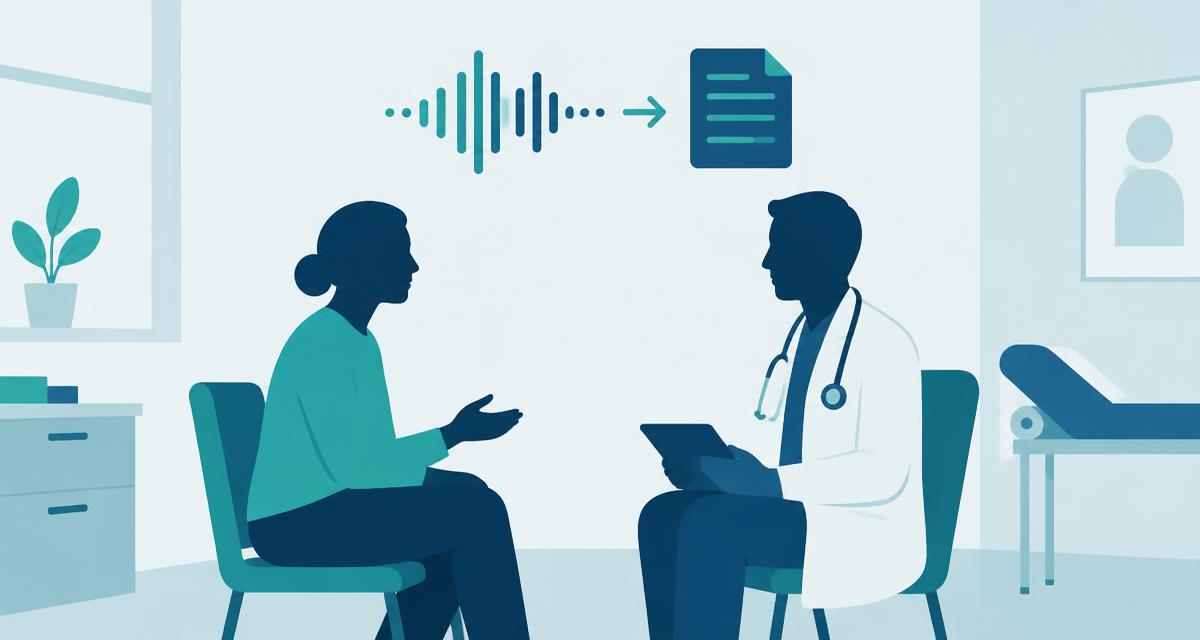
Doctoria Real-time Interpretation® facilitates immediate access to Farsi-English translation at the point of care. This on-demand availability is a core requirement for unscheduled presentations where communication delays can equate to delays in treatment. By implementing medical interpretation services for nhs environments, clinicians can maintain a consistent standard of care without the logistical wait times often associated with traditional staffing models. Ambient voice technology supports this by capturing dialogue in the background; this preserves the natural rapport between the clinician and the patient whilst ensuring every detail is recorded.
Data Security and NHS GDPR Compliance
Protecting patient confidentiality is a non-negotiable standard for any digital intervention. Doctoria® ensures that all data processing occurs within secure, clinical environments that adhere to GDPR and NHS DTAC requirements. This approach mitigates the risks associated with tools that store information on non-UK servers. Adopting real-time language interpretation for patient safety is a critical step for Trusts in Leeds and across the UK. It provides a secure framework for managing sensitive Farsi consultations whilst maintaining institutional data sovereignty.
Reliability in High-Stakes Environments
Safety remains the primary focus in every clinical interaction. Doctoria® uses specialised medical LLMs to ensure the accuracy of drug dosages and surgical instructions. This is essential for preventing errors that can occur when a model lacks specific clinical training. Our "Tech-Forward Guardian" approach prioritises safety and precision during consultations in A&E and urgent care settings. By providing medical interpretation services for nhs trusts that are built for high-stakes environments, we help clinicians deliver reliable care to Farsi-speaking patients under pressure.
Best Practices for Multilingual Consultations with Farsi Speakers
Clinicians can improve the quality of medical interpretation services for nhs patients by optimising the physical environment. Positioning the microphone to reduce background noise and ensure clear audio capture is a fundamental first step. Clinicians should speak in distinct segments; this allows the AI to render Farsi translations with greater contextual precision. Utilising the "teach-back" method is another vital practice. By asking the patient to repeat instructions back through the interface, the clinician can immediately verify that the medical advice has been understood correctly.
Bridging the Cultural Communication Gap
Managing family involvement is a common factor in Farsi-speaking consultations. Whilst families offer support, the AI interface ensures the patient remains the primary focus of the dialogue. This digital bridge is particularly effective for sensitive topics like reproductive health or oncology. It provides a neutral platform that can reduce the social friction sometimes present when a human third party is involved. This ensures the patient feels comfortable sharing sensitive symptoms whilst maintaining the privacy required for high-quality care.
Integrating Interpretation into Clinical Workflows
Seamless integration reduces the cognitive load on GPs during complex interactions. Doctoria Real-time Interpretation® allows the clinician to focus on the patient's clinical needs rather than managing a translation device. Every interpreted session is logged within the patient's record; this provides a robust audit trail for legal and safety compliance. This systematic approach ensures that medical interpretation services for nhs trusts are both efficient and fully documented. You can learn more about optimising your clinical workflows with our specialised suite.
Optimising Outcomes with Doctoria’s Farsi Interpretation Suite
Doctoria Real-time Interpretation® provides a robust infrastructure for managing the linguistic needs of Farsi and Dari speakers within the modern health service. Through a strategic partnership with Philips, we integrate digital dictation with real-time translation to create a unified clinical workflow. This allows clinicians to maintain their standard documentation patterns whilst the system provides immediate, high-fidelity Farsi output for the patient. By utilising Doctoria Summarisation tools, complex verbal consultations are converted into clear, translated instructions. This ensures patients leave the surgery with a precise understanding of their care plan, which significantly improves medication adherence.
The operational value of implementing medical interpretation services for NHS trusts is reflected in measurable ROI. We see a direct correlation between improved linguistic accessibility and a reduction in "Did Not Attend" (DNA) rates. When Farsi-speaking patients fully comprehend their follow-up requirements, attendance improves and resources are utilised more effectively. Administrative overhead is also reduced. The friction of booking human locums and the burden of manual transcription are replaced by an automated, secure system that prioritises clinician time and patient safety.
Enterprise Deployment for NHS Trusts
The platform is designed to scale across entire hospital departments or Integrated Care Boards (ICBs). Deploying medical interpretation services for NHS trusts at scale supports the NHS Long Term Plan for digital transformation and health equity. Trials in live clinical environments demonstrate how the English to Farsi feature maintains accuracy under high operational pressure. This enables Trusts to provide consistent, high-quality care regardless of the patient's primary language or dialect.
Getting Started: Onboarding Your Clinical Team
Integration with existing Electronic Patient Record (EPR) systems like EMIS or SystmOne is direct and functional. Our Leeds-based support team provides bespoke implementation guidance for NHS stakeholders, ensuring that the technology aligns with specific departmental needs. Clinicians and procurement officers can request a clinical demonstration to observe the Farsi interpretation suite in action and evaluate its impact on workflow efficiency.
Advancing Clinical Communication for Farsi Speakers
Effective English to Farsi communication in clinical settings requires a transition from fragmented legacy models to integrated, real-time systems. Specialised medical LLMs now navigate the structural complexities of Farsi whilst maintaining the cultural nuance required for patient safety. By adopting ambient voice technology, Trusts can significantly reduce the administrative burden associated with traditional locum booking. This shift doesn't just improve operational efficiency; it directly enhances the patient experience by ensuring every instruction is understood and every symptom is accurately captured.
Doctoria® provides the vital infrastructure needed to modernise medical interpretation services for nhs environments. As an Innovate UK funded technology provider and a Philips Digital Dictation Partner, we prioritise clinical accuracy and total data sovereignty. Our platform ensures that clinicians can focus on care delivery rather than navigating communication breakdowns. You can now request a clinical demonstration of Doctoria’s Farsi interpretation to see how these advancements integrate into your specific clinical workflow. We look forward to supporting your team in delivering inclusive, high-quality care for every patient.
Frequently Asked Questions
Is AI interpretation accurate enough for English to Farsi medical consultations?
Yes, provided the system is trained on specialised medical datasets rather than generic vocabulary. Doctoria Real-time Interpretation® utilises clinical-grade models that understand the specific syntax and medical terminology required for Farsi consultations. This ensures that complex diagnoses and instructions are conveyed with the precision necessary for patient safety. It's a significant advancement over standard translation tools that often miss the clinical context of a healthcare environment.
How does Doctoria ensure patient data privacy when translating Farsi?
Doctoria prioritises total data sovereignty by processing all information within secure, clinical environments. We adhere strictly to GDPR and NHS DTAC frameworks to protect sensitive patient interactions at every stage. Unlike consumer-grade applications, we don't store or transmit data on non-UK servers. This commitment to security ensures that medical interpretation services for nhs trusts remain fully compliant whilst providing essential linguistic support to their patients.
Can the software distinguish between Farsi and Dari dialects during a consultation?
Yes, the system is designed to identify and process the specific linguistic nuances between Farsi and Dari. Whilst these dialects share similarities, their clinical terminologies can differ significantly. Identifying the correct variant is essential for securing valid informed consent and ensuring the patient fully understands their treatment plan. Our models distinguish between these variants more reliably than generic software, providing a safe framework for diverse patient populations.
Is Doctoria’s interpretation software compliant with NHS clinical safety standards?
Doctoria is built to align with rigorous clinical safety standards, including the requirements set out in the Digital Technology Assessment Criteria (DTAC). We focus on reducing operational risk through high-fidelity translation and structured workflows. This ensures that medical interpretation services for nhs providers meet their legal obligations under the Equality Act 2010. Our "Tech-Forward Guardian" approach prioritises accuracy and safety in every high-stakes clinical interaction.
Does the software integrate with existing EPR systems like EMIS or SystmOne?
Yes, the platform is designed for functional integration with major primary and secondary care EPR systems, including EMIS and SystmOne. This allows clinicians to transfer translated summaries and structured notes directly into the patient's record. It eliminates the need for manual data entry and reduces the administrative overhead associated with multilingual consultations. The result is a more efficient workflow that ensures a complete and accurate audit trail.
Can I use Doctoria for English to Farsi translation on a mobile device during home visits?
Yes, the software is accessible via portable devices to support clinicians during home visits, community care, or emergency response situations. This flexibility ensures that professional interpretation is available at the point of care, regardless of the physical location. It maintains the same high standards of security and accuracy as a hospital-based deployment. This supports the NHS Long Term Plan for mobile and digital-first clinical services.
How does real-time AI interpretation compare to using a human telephone translator?
AI interpretation provides instant, 24/7 access without the logistical delays or high costs associated with human telephone locums. Whilst human interpreters remain valuable for exceptionally complex cases, AI offers a scalable solution for routine and urgent consultations. It also enables an ambient consultation flow. This allows the clinician to maintain direct eye contact and rapport with the patient rather than managing a third-party telephone connection.
What happens if the AI encounters a Farsi medical term it does not recognise?
The system utilises sophisticated contextual analysis to provide the most accurate interpretation possible based on the surrounding clinical dialogue. If a term remains ambiguous, the clinician is prompted to clarify the information to ensure absolute precision. Our specialised medical LLMs are continuously updated with the latest clinical terminology. This reduces the likelihood of unrecognised terms and ensures that the interpretation remains safe and reliable in every consultation.