Real-Time Language Interpretation for Patient Safety: Busting the Clinical AI Myths
Every minute a clinician spends waiting for a human interpreter represents a critical window where clinical risk escalates and patient outcomes can falter. You likely recognise the frustration of delayed diagnoses and the constant, underlying fear of medication errors caused by simple miscommunication. Traditional translation services often fail to meet the pace of acute care, creating bottlenecks that compromise health equity. Implementing real-time language interpretation for patient safety is no longer a futuristic ambition; it's a necessary infrastructure shift to close the communication gap.
This article examines how Doctoria Real-time Interpretation™ addresses these systemic challenges by providing zero-delay communication with non-English speaking patients. You'll discover why "deep medical" AI has become the gold standard for clinical reliability, moving beyond the limitations of generic translation tools. We'll explore the transition from high-cost manual services to seamless EPR-integrated workflows that prioritise both accuracy and data privacy. By the end, you'll understand how to eliminate the "danger window" whilst maintaining the highest standards of institutional trust and operational efficiency.
Key Takeaways
- Learn how real-time language interpretation for patient safety eliminates the critical "danger window" that exists when waiting for traditional human translation services.
- Discover the reality behind "deep medical" AI and how it uses specialised clinical datasets to ensure precision in complex medical environments.
- Analyse the "Time-to-Treatment" metric as the primary indicator for assessing clinical risk during patient communication.
- Identify practical steps for integrating AI interpretation into existing EPR workflows to reduce operational costs whilst improving health equity.
- Understand the importance of institutional trust markers, such as Innovate UK funding, when selecting a clinical infrastructure partner.
The Critical Link Between Real-Time Language Interpretation and Patient Safety
Real-time language interpretation for patient safety is a critical clinical intervention designed to ensure the immediate, high-fidelity exchange of information between a clinician and a patient. It functions as a vital infrastructure layer within acute and primary care settings. In these environments, the "Danger Window" represents the high-risk interval between a patient's admission and the arrival of a qualified human translator. During this period, triage decisions and initial treatments are often based on incomplete data or non-verbal cues. This latency is not merely an administrative delay; it's a period of heightened clinical risk where errors in assessment can lead to catastrophic outcomes.
The General Medical Council (GMC) is explicit in its guidance regarding patient communication. Doctors are required to take all reasonable steps to meet the communication needs of their patients to provide a safe standard of care. Failing to secure adequate interpretation is a breach of professional standards that can escalate to clinical negligence if a patient suffers harm due to miscommunication. Doctoria Real-time Interpretation™ addresses this risk by providing immediate linguistic access. By utilising "deep medical" AI, clinicians can maintain the flow of urgent assessments without compromising on the precision of the diagnostic data collected.
The High Cost of Miscommunication in the NHS
There's a significant correlation between language barriers and increased hospital readmission rates across the NHS. When patients don't fully understand their discharge instructions or follow-up requirements, the likelihood of a return to emergency care increases. Relying on family members for translation is a particularly dangerous practice. It often leads to incorrect prescriptions and the omission of sensitive symptoms that a patient might feel uncomfortable sharing with a relative. Accurate diagnostic data relies on "Deep Medical" precision to ensure that clinical nuances are captured without the distortion common in generic translation tools.
Beyond Basic Fluency: Why Clinical Context Matters
Conversational fluency doesn't equate to the ability to describe complex symptoms or understand medical procedures. A patient may manage daily interactions in English but lack the vocabulary to describe the specific quality of a pain or their detailed medical history. This gap is central to the standards of Medical Interpreting, where technical accuracy is paramount. Without this clarity, informed consent becomes legally and ethically fragile. Patients have a fundamental "Right to Refuse" treatment, yet this right is effectively nullified if they don't understand the risks involved. Doctoria Real-time Interpretation™ bridges the health literacy gap amongst migrant populations, ensuring that every patient receives equitable care through a secure and reliable communication framework.
Myth-Busting: Is "Deep Medical" AI Safe for Clinical Use?
Skepticism regarding the role of AI in high-stakes clinical environments is both natural and necessary. When patient lives are on the line, technology must be held to the highest possible standards of reliability. A common myth suggests that AI is incapable of grasping the subtle clinical nuances required for safe diagnosis. Whilst generic chatbots might struggle with the terminology used in a medical centre, "deep medical" AI is a different class of technology. Modern systems are built on vast, curated clinical datasets, ensuring that real-time language interpretation for patient safety is both accurate and resilient against the errors common in consumer tools.
The Evolution of Medical-Specific AI Models
Generic AI often fails because it's designed for broad, conversational tasks rather than specialised clinical assessments. In contrast, medical-specific models are trained through clinical-first protocols that prioritise technical precision. This focused training significantly reduces the risk of "hallucinations" where the AI might invent information. These systems don't just translate words; they understand the medical context. They're capable of recognising regional dialects and non-standard descriptions of symptoms that patients often use. Research into Patient Safety and Video Interpreting Systems highlights the necessity of technological reliability in bridging communication gaps. Deep medical AI provides this by focusing on the specific linguistic requirements of a healthcare setting.
Ensuring Data Privacy in Real-Time Consultations
Another prevalent myth is that using AI interpretation violates GDPR and patient confidentiality. This concern usually stems from experiences with consumer-grade apps that store data for model training. Enterprise-grade tools like Doctoria Real-time Interpretation™ operate under a completely different framework. They prioritise data sovereignty and strictly follow NHS-approved security protocols. A "Zero-Retention" policy ensures that patient voice data is never stored or used after the session ends. This creates a secure environment where clinicians can communicate freely without risking data breaches.
Security is a non-negotiable infrastructure requirement for any modern trust. Unlike traditional phone services that may have inconsistent security standards, specialised AI offers a transparent and auditable flow of information. You can review the Doctoria commitment to security to see how these protections are integrated into the software's core architecture. This level of rigorous data management is what makes real-time language interpretation for patient safety a viable, secure, and professional choice for contemporary healthcare providers.

Comparing Interpretation Methods: Speed vs. Accuracy vs. Safety
Clinical safety is a function of time. Traditional interpretation models often overlook the direct relationship between communication latency and clinical risk. In acute environments, the "Time-to-Treatment" metric serves as the primary safety indicator. Whilst human interpreters provide high accuracy, the logistical delay in their arrival creates a dangerous gap in care. Real-time language interpretation for patient safety is designed to close this gap by prioritising immediate linguistic access during the most critical stages of patient contact.
Clinicians managing non-English speaking patients face a significant cognitive load. Coordinating a three-way interaction with a human interpreter requires additional mental bandwidth, which can detract from the clinical assessment itself. The goal is to streamline the data flow. By reducing the operational friction of traditional translation, healthcare providers can ensure that communication remains a tool for safety rather than a source of stress.
Human Interpreters: The "Delay" Factor
On-site and on-call services face significant logistical hurdles. Even digital video links often involve a 5-15 minute wait before a translator is connected. This period is not just dead time. It is a source of escalating patient anxiety and unpredictable behaviour. When a patient cannot express their pain or fear, their clinical condition can become harder to manage. Furthermore, fatigue amongst human interpreters during long shifts can degrade accuracy. These subtle shifts in performance introduce risks that are often invisible to the presiding clinician until an error occurs.
Real-Time AI: The "Instant" Advantage
Doctoria Real-time Interpretation™ provides sub-second latency. In A&E settings, this speed saves lives. It ensures that the initial assessment happens immediately upon arrival, allowing for faster triage and intervention. Having this "Tech-Forward Guardian" present removes the operational overhead of traditional agency fees. The cost-per-minute of AI is significantly lower than manual services. This allows for broader implementation across the ward, ensuring that no patient is left in a communication vacuum.
A structured hybrid framework is the safest approach for modern trusts. Use real-time AI for rapid assessments, triage, and routine ward rounds where speed is the priority. Reserve human specialists for complex end-of-life discussions or sensitive psychiatric evaluations where emotional nuance is the primary requirement. This strategy ensures that real-time language interpretation for patient safety is utilised where it provides the most immediate clinical value, whilst human resources are targeted where they are most needed.
Practical Implementation: Integrating Interpretation into Clinical Workflows
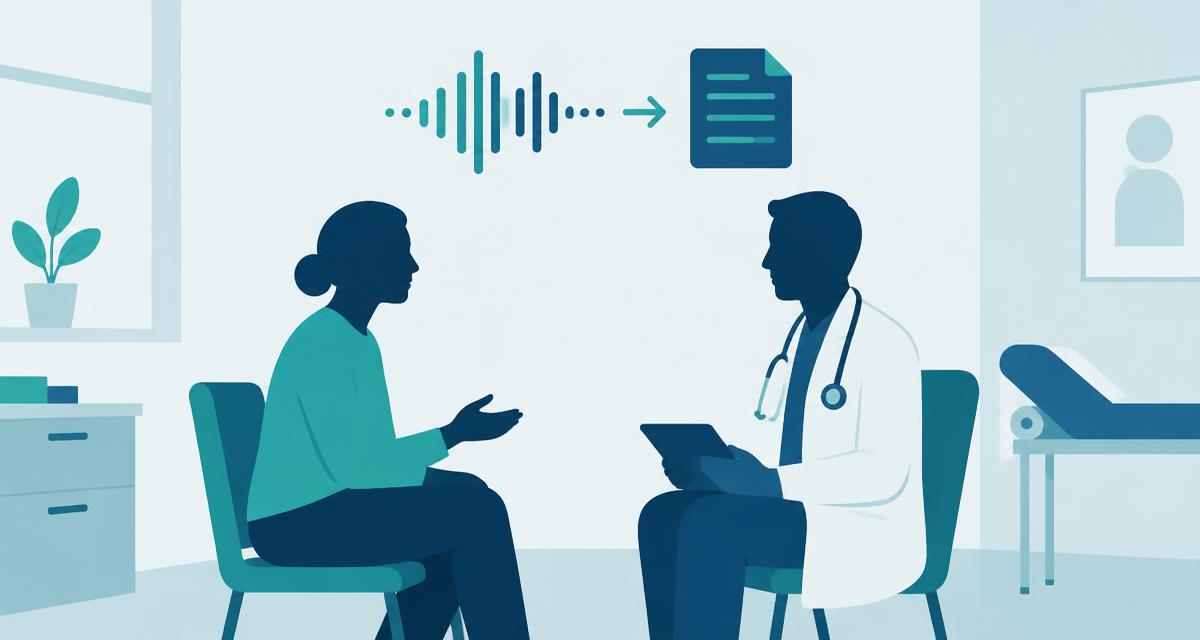
Deploying real-time language interpretation for patient safety requires a structured approach to ensure it becomes a seamless part of daily care. In a busy ward or GP surgery, the transition begins with equipping clinicians with the necessary hardware, typically tablets or mobile workstations. Staff should be trained to introduce the technology as a standard safety protocol. A simple explanation often suffices: "To ensure I understand every detail of your health, I am using a secure medical tool that translates our conversation in real-time." This transparency builds trust and reassures the patient that their voice is being accurately captured without the delays of traditional methods.
Integration with existing Electronic Patient Records (EPR) is the next critical step. For many trusts, the primary challenge is the administrative burden of multilingual consultations. By using automated medical documentation for doctors, the interpreted dialogue is converted into structured clinical notes instantly. This eliminates the risk of "translation lag" where vital details might be lost between the consultation and the final write-up. Clinicians must also be trained to recognise the boundaries of "deep medical" AI. Whilst the system is highly precise, certain scenarios, such as patients with severe cognitive impairments or rare, non-standard dialects, may still require a human specialist to step in.
The Workflow Synergy: Interpretation + Scribing
Doctoria Real-time Interpretation™ works in tandem with the Doctoria AI Scribe™ to create a unified data flow. The system captures the interpreted exchange and organises it into a coherent clinical summary. This synergy significantly reduces post-consultation admin time, allowing doctors to focus on the patient rather than the keyboard. Doctoria Summarisation™ tools further ensure that the most relevant diagnostic points are highlighted, maintaining continuity of care across different shifts and departments. This integrated approach transforms interpretation from a logistical hurdle into a data-driven clinical asset.
Patient-Centred Communication Strategies
Effective use of digital interpretation shouldn't compromise the human connection. Clinicians should maintain eye contact with the patient, using the device as a secondary tool rather than a focal point. Modern AI models excel at dialect recognition, which is essential for making patients from diverse UK communities feel truly heard. This level of linguistic precision is a cornerstone of health equity. It ensures that every patient, regardless of their primary language, receives the same high standard of clinical attention. To see how these tools can be deployed in your trust, you can explore Doctoria Real-time Interpretation™ solutions and start reducing your operational risk today.
Doctoria: The Infrastructure Partner for Safety-Critical AI
Doctoria operates as a vital infrastructure partner rather than a traditional software vendor. In high-stakes clinical environments, the distinction is fundamental. Whilst vendors focus on feature sets, partners focus on systemic outcomes and the reduction of operational risk. Our background as an Innovate UK-funded organisation serves as a critical marker of institutional trust, providing the regulatory alignment and technical validation required by NHS administrators. Implementing real-time language interpretation for patient safety is a mission-driven objective that requires a sophisticated expert approach to data flow and clinical reliability.
The Doctoria suite is designed to function as a tech-forward guardian within the ward. We don't just provide tools; we provide a framework for inclusive care that meets the rigorous demands of modern healthcare policy. By positioning our technology as a core component of clinical infrastructure, we help trusts move away from fragmented, high-cost translation services toward a unified, data-sovereign solution that prioritises both the clinician and the patient.
A Radical Commitment to Clinical Safety
Our commitment to safety is evidenced by sub-second latency and high-fidelity dialect recognition. Doctoria Real-time Interpretation™ eliminates the communication gaps that lead to diagnostic errors and medication mistakes. This performance is backed by a strategic partnership with Philips for Doctoria Solutions for Digital Dictation, ensuring that every interpreted interaction can be captured and reported with clinical precision. By integrating interpretation directly into the reporting workflow, we remove the friction that often compromises data integrity in multilingual consultations. Our goal is to provide a seamless, auditable path for patient information that eliminates the "danger window" entirely.
Next Steps for Healthcare Providers
Modernising your language access strategy is a direct investment in health equity and risk management. The long-term ROI of implementing real-time language interpretation for patient safety is found in the significant reduction of miscommunication-related safety incidents and the associated litigation costs. Trusts can transition from reactive, on-call models to a proactive, instant-access framework that supports clinicians at the point of care. We invite NHS Trusts and private healthcare providers to request a clinical trial of the Doctoria suite to evaluate these performance benchmarks within their own busy wards or surgeries. It's time to replace outdated translation bottlenecks with a secure, clinical-first infrastructure. Experience the future of clinical safety with Doctoria and ensure that every patient is heard, understood, and treated with the highest standard of care.
Modernising Clinical Communication for a Safer NHS
Transitioning to digital infrastructure isn't just about efficiency; it's about closing the communication gaps that threaten patient lives. You've seen how the "danger window" of traditional translation creates unnecessary clinical risk. By adopting real-time language interpretation for patient safety, trusts can ensure that every consultation begins with clarity and precision. This shift replaces logistical bottlenecks with a reliable, clinical-first framework that prioritises immediate assessment and intervention. It ensures that language is never a barrier to high-quality care.
Doctoria provides the necessary foundation for this transformation through a mission-driven approach to communication. Our Innovate UK-funded technology utilises specialised "Deep Medical" LLMs to maintain the highest standards of accuracy whilst ensuring NHS-standard GDPR compliance. This is not a generic software solution; it's a sophisticated guardian for high-stakes environments. Integrating these tools into your daily workflow reduces cognitive load on staff and ensures that no patient is left in a communication vacuum. Discover how Doctoria secures patient safety with real-time interpretation. We're here to help you build a more responsive, inclusive, and fundamentally safer healthcare environment for every member of your community.
Frequently Asked Questions
Is real-time AI interpretation as accurate as a human medical interpreter?
Real-time AI provides high-fidelity technical accuracy that matches or exceeds human performance in acute triage settings. Whilst human interpreters are valuable for emotional nuance, "deep medical" AI offers sub-second latency that is critical for real-time language interpretation for patient safety. This immediate access eliminates the dangerous waiting periods associated with on-call services, ensuring that clinicians can act on accurate data without delay.
How does "deep medical" AI handle complex clinical terminology and jargon?
Specialised "deep medical" models are trained on curated clinical datasets rather than generic conversational text. This allows the system to accurately identify complex terminology, pharmacology, and anatomical descriptions. It also recognises regional dialects and non-standard ways patients might describe their symptoms. This ensures that the diagnostic data remains precise even when the patient uses informal language to describe their condition.
Can Doctoria interpretation be used for sensitive or mental health consultations?
Doctoria Real-time Interpretation™ is designed for use across various clinical settings, including sensitive consultations. Its "Tech-Forward Guardian" approach ensures a respectful and empathetic interaction that supports the patient's dignity. For high-complexity mental health assessments where emotional subtlety is the primary requirement, clinicians may still choose to augment the AI with a human specialist to ensure the most comprehensive evaluation possible.
Is the use of AI interpretation compliant with NHS GDPR and data security standards?
The platform is built to exceed NHS-standard GDPR and data security requirements. Doctoria prioritises data sovereignty through a "Zero-Retention" policy, meaning voice data is never stored or used for model training. This radical commitment to security ensures that patient confidentiality is maintained at every stage of the consultation. It provides a secure infrastructure that administrators and policy-makers can trust for high-stakes environments.
What happens if the AI interpretation misinterprets a critical clinical fact?
Clinicians remain the primary decision-makers and use the AI as a supportive infrastructure tool. The real-time nature of the system allows for instant clarification if a point seems unclear, which is far safer than proceeding without any interpretation. It provides a transparent, auditable flow of information that reduces the likelihood of systemic miscommunication compared to relying on untrained family members for translation.
Does real-time interpretation work for less common languages like Farsi or Welsh?
The system supports a vast range of languages, including Farsi, Welsh, and other less common dialects found across the UK. This capability is essential for supporting health equity and ensuring that every patient receives immediate care regardless of their background. It removes the logistical hurdle of finding a niche human translator in an emergency, ensuring that communication remains a constant clinical standard.
How does real-time interpretation integrate with existing NHS EPR systems?
Doctoria integrates with existing EPR workflows by capturing interpreted dialogue and converting it into structured clinical data. When used alongside Doctoria AI Scribe™, it organises the conversation into coherent notes that can be uploaded directly to the patient record. This synergy reduces post-consultation admin time and ensures that no critical details are lost between the initial assessment and the final clinical write-up.
Can AI interpretation reduce the cost of language services for an NHS Trust?
Implementing real-time language interpretation for patient safety significantly reduces the operational overhead of traditional translation agencies. By lowering the cost-per-minute and eliminating minimum call-out fees, NHS Trusts can achieve a superior ROI. It allows for broader linguistic coverage across the entire ward without the financial strain of manual services, making it a sustainable choice for long-term operational efficiency.