How to Use Scribe AI for Clinical Documentation: A 2026 Guide for UK Clinicians
28% of UK GPs are already leveraging artificial intelligence, with 57% of those clinicians using it specifically to manage clinical documentation and notetaking. You likely find that your most demanding hours occur long after the final patient has left the surgery. This "pajama time" spent on administrative tasks doesn't just contribute to burnout; it erodes the quality of the patient-clinician relationship by forcing you to prioritise a screen over a person. Adopting a clinical-grade ai scribes solution is no longer a futuristic concept but a necessary shift toward operational safety and professional well-being.
We understand the pressure to maintain precise records whilst facing increasing patient volumes. This guide demonstrates how to implement technology like the Doctoria AI Scribe for Healthcare to halve your documentation time and return your focus to the patient. You'll learn the essential steps for integrating these tools into your workflow, ensuring MHRA compliance for Software as a Medical Device, and achieving a documented 30% reduction in after-hours work. We will also examine how Doctoria Summarisation and real-time tools standardise record quality to protect both your patients and your practice.
Key Takeaways
- Automate clinical documentation with ai scribes to eliminate administrative 'pajama time' and return your focus to direct patient interaction.
- Understand the four-stage ambient voice process to ensure medical records are structured, accurate, and professionally reviewed.
- Identify the safety risks associated with non-medical AI tools to ensure your practice remains MHRA compliant and avoids diagnostic errors.
- Prepare your practice for transition by conducting a workflow audit and assessing hardware requirements for ambient technology integration.
- Leverage the Doctoria suite to integrate real-time interpretation and legacy digital dictation into a modern, efficient clinical environment.
What is Scribe AI in a Healthcare Context?
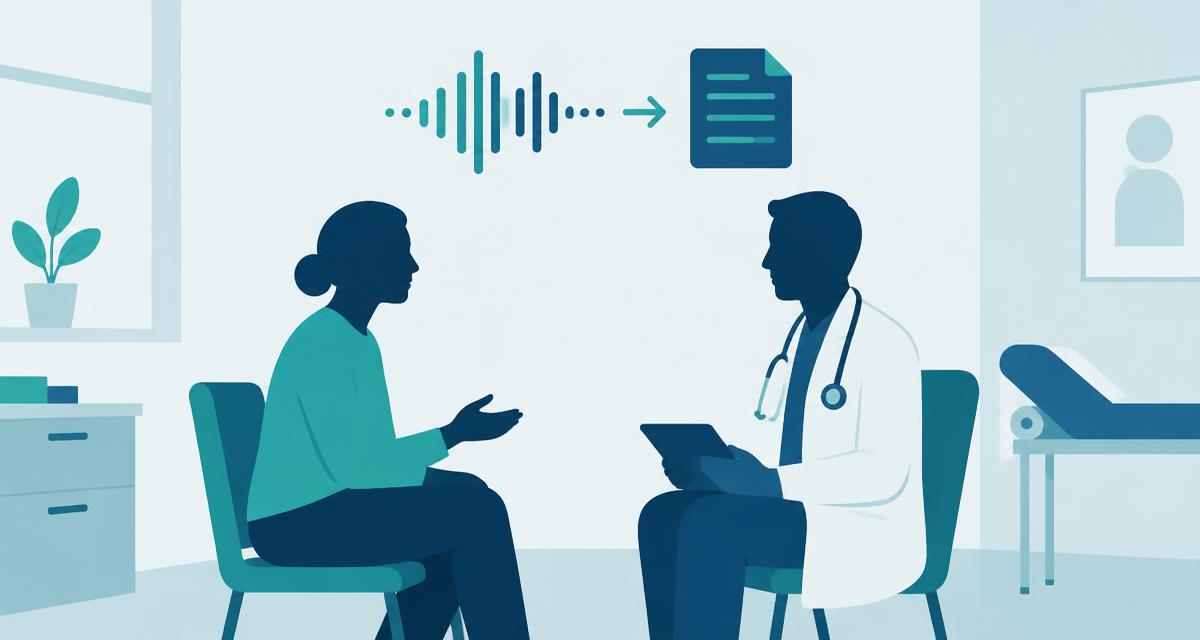
In a clinical setting, ai scribes refers to the use of ambient voice technology to capture the dialogue of a medical consultation and convert it into structured, high-quality clinical records. Unlike general documentation tools that record screen-based processes or browser workflows, a clinical AI scribe operates in the background of a physical or virtual examination room. It's an invisible participant that understands medical terminology, patient nuances, and the specific requirements of healthcare governance. This technology ensures that the record is a precise reflection of the care provided, rather than a hurried summary typed after the patient has left.
The value proposition centres on eliminating the cognitive load of simultaneous documentation. By 2026, the technology has transitioned from a luxury to a vital infrastructure component. It addresses the systemic challenge of administrative burnout by ensuring that notes are finalised during the consultation itself. Most importantly, it returns your gaze to the patient. You no longer need to look at a screen to ensure accuracy; the technology handles the data flow whilst you handle the care. This shift from manual dictation to real-time, autonomous capture represents a fundamental change in clinical behaviour.
General tools often hallucinate or miss critical medical nuances because they lack sector-specific training. Clinical-grade solutions, such as the Doctoria AI Scribe for Healthcare, are built on models that understand the difference between a patient's social history and their presenting symptoms. This ensures the final record is both safe and actionable, meeting the high-stakes demands of modern medicine.
The Evolution of Clinical Scribing
The journey toward autonomous documentation began with human medical scribes, which were often cost-prohibitive and intrusive in private consultations. This evolved into digital dictation, where clinicians still had to spend hours recording and reviewing notes after the fact. Today, automated medical scribes represent the third generation of this lineage. Innovate UK-funded research has been instrumental in this progress, particularly in refining Natural Language Processing (NLP) to handle the complexity of the British healthcare landscape. These models are now sophisticated enough to interpret diverse British accents and regional dialects with high precision. Whether you are a GP in Glasgow or a consultant in London, the system maintains a consistent level of accuracy and reliability.
Key Components of a Clinical AI Scribe
A robust clinical system relies on three technical pillars to maintain safety and efficiency:
- Ambient Listening: High-fidelity capture that identifies multiple speakers without requiring the clinician to hold a microphone or repeat patient symptoms for the benefit of the software.
- Medical Summarisation: Advanced algorithms, including Doctoria Summarisation, that filter conversational noise to produce structured SOAP notes or clinical letters tailored to your specific workflow.
- EPR Integration: The seamless transfer of these notes into Electronic Patient Records, which reduces manual data entry and the risk of transcription errors.
By integrating these components, a professional ai scribes solution provides a secure, end-to-end documentation workflow that meets current regulatory standards and operational needs.
How Ambient AI Scribing Works During a Consultation
The operational efficiency of a clinical ai scribes depends on a rigorous four-stage lifecycle: Capture, Interpret, Summarise, and Review. This cycle ensures that the transition from spoken word to medical record is both seamless and accurate. In the high-pressure environment of a UK surgery, the technology must differentiate between a clinician’s specific instructions, such as a request for a blood test, and a patient’s description of symptoms. This distinction is vital for maintaining the integrity of the Subjective and Objective sections of a medical note.
Noise cancellation plays a critical role here. Busy GP surgeries and hospital wards are rarely silent. Advanced systems use directional audio and digital filtering to isolate the consultation dialogue from background environmental noise. Whilst post-consultation processing was common in earlier iterations, the 2026 standard favours real-time processing. This allows clinicians to review and sign off notes immediately, preventing the accumulation of administrative debt at the end of the day.
Phase 1: Ambient Capture and Voice Recognition
Ambient technology uses encrypted, medical-grade devices to listen to the natural flow of conversation. These systems are designed to handle complex acoustic environments where multiple speakers are present, such as a consultation involving a clinician, a patient, and a carer. The software identifies distinct voices and assigns contributions correctly within the transcript. Implementation of voice-activated software in health and social care ensures no detail is missed whilst allowing the practitioner to remain fully engaged with the patient. This foundational stage prioritises total data privacy through end-to-end encryption, ensuring that sensitive information remains secure from the moment of capture.
Phase 2: Clinical Interpretation and Structuring
During the interpretation phase, the ai scribes must distinguish between clinical evidence and social pleasantries. The system filters conversational 'small talk' from relevant clinical data points. This process requires deep medical knowledge to ensure that a casual mention of the weather is discarded whilst a subtle mention of a medication side effect is retained. The technology then maps this information to standard medical formats like SOAP (Subjective, Objective, Assessment, Plan).
Precision is paramount when documenting drug dosages and specialist terminology. The Doctoria AI Scribe for Healthcare employs specialised models that cross-reference terminology against established clinical databases. This reduces the risk of transcription errors that could lead to prescribing mistakes. By structuring the conversation into a clinical framework, the system provides a clear, logical record that supports long-term patient safety and audit requirements. This structured approach ensures that the final output is not just a transcript, but a professional medical document ready for immediate integration into the patient's record.

Clinical AI vs. General Scribe Tools: Why Specialisation Matters
Selecting the correct technology is a decision that carries significant clinical and legal weight. Whilst generic ai scribes tools have gained popularity for documenting business meetings or software processes, they are fundamentally unsuitable for the medical environment. These general-purpose models lack the specific training required to distinguish between a patient's self-reported symptoms and a clinician's definitive assessment. This often leads to "hallucinations," where the AI generates plausible but entirely fabricated clinical details. In a healthcare context, such errors aren't merely inconvenient; they represent a direct threat to patient safety.
Specialised tools are designed to handle the high-stakes nature of medical consultations. They understand that a 10-minute conversation about chronic pain requires a different structural approach than a standard corporate briefing. Beyond mere transcription, a clinical tool must integrate seamlessly with existing infrastructure. For UK clinicians, this means the software must "speak" the language of EMIS, SystmOne, or Epic. Without this interoperability, the efficiency gains of AI are lost to manual data entry and "copy-paste" workflows that introduce further risk of transcription error.
Medical Terminology and Accuracy
There is a stark difference between a generic "Scribe" and a Clinical Scribe. Generic AI often fails to grasp the complexity of multiple comorbidities or the specific nuances of British pharmaceutical names. It might confuse "paracetamol" with its American counterpart or misinterpret complex dosing instructions. The Doctoria AI Scribe for Healthcare is built on models refined for these specific medical contexts. Even with high-precision technology, human-in-the-loop verification remains a cornerstone of professional practice. Clinicians must always review and sign off the AI-generated note, ensuring that the final record reflects their professional judgement. This collaborative approach maintains the highest standards of accuracy whilst significantly reducing the time spent on manual drafting.
Regulatory Compliance and GDPR
Data privacy is perhaps the most critical differentiator. Many general ai scribes tools store data on servers outside the UK, which often violates strict NHS data residency requirements. Clinical-grade solutions prioritise total data privacy and are built to comply with the Data Protection Act 2018 and GDPR. For a deeper dive into the regulatory landscape, you can consult our Automated Medical Documentation for Doctors: The Definitive 2026 Guide.
Safe implementation in the UK also requires adherence to clinical safety standards DCB0129 and DCB0160. These frameworks require a designated Clinical Safety Officer (CSO) to oversee the deployment and ensure the technology doesn't introduce new hazards into the clinical workflow. By choosing a partner that speaks the language of administrators and policy-makers, you ensure that your documentation strategy is as legally robust as it is efficient.
How to Implement Scribe AI in Your Practice: A Step-by-Step Guide
Successful integration of a clinical ai scribes requires a structured transition from manual documentation to autonomous capture. This is not merely a technical installation; it's a systemic shift in how your surgery operates. To ensure safety and efficiency, your practice should follow a rigorous implementation framework that prioritises data integrity and clinician sign-off.
The following five steps provide a roadmap for deploying this technology within a UK clinical environment:
- Step 1: Conduct a Workflow Audit. Identify specific documentation bottlenecks, such as the time spent on referrals or the volume of "pyjama time" admin. Understanding where the burden is heaviest allows you to tailor the AI's summarisation style to your specific needs.
- Step 2: Ensure Hardware Readiness. Assess your current infrastructure. Reliable capture requires high-quality microphones and tablets or desktop integration that can handle encrypted data flow without latency.
- Step 3: Establish Patient Consent Protocols. Transparency is vital for maintaining trust. Develop a clear process for introducing the technology to patients, ensuring they understand that the AI is a tool to improve their care, not a replacement for your professional attention.
- Step 4: The 'Shadowing' Phase. Run the AI alongside your manual notes for a 48-hour period. This allows you to verify the accuracy of the Doctoria Summarisation against your established standards before fully transitioning.
- Step 5: Review and Approve. The clinician remains the final authority. Every AI-generated note must be reviewed and signed off to ensure it accurately reflects the clinical encounter and meets all regulatory requirements.
Preparing Your Team and Infrastructure
Staff training is a critical component of a successful rollout. It is essential that your team understands the distinction between traditional digital dictation and ambient scribing. Whilst dictation requires active input, ambient technology listens to the natural dialogue. Your technical team must also verify Wi-Fi stability and ensure that encryption protocols within the surgery centre meet the highest NHS standards. Setting up the Doctoria® interface correctly ensures that data flows seamlessly into your patient records without manual intervention. Request a demonstration of the Doctoria AI Scribe for Healthcare to see this integration in practice.
Gaining Patient Trust and Consent
Introducing AI into the consultation room requires clear communication. Patients generally respond positively when they understand that the technology allows for more direct eye contact and a more focused clinician. Use posters and leaflets in the waiting area to explain how the ai scribes works and the data security measures in place. Providing a simple opt-out mechanism ensures that patient autonomy is respected, which is a core requirement of inclusive care. By focusing on the humanistic benefits of the technology, you can improve patient satisfaction scores whilst maintaining rigorous clinical standards.
Maximising Efficiency with Doctoria’s AI Documentation Suite
The Doctoria® suite represents a shift from isolated tools to a comprehensive documentation ecosystem. Whilst the primary function of a ai scribes is to capture consultations, this infrastructure extends into specialised applications. Multilingual clinics benefit from Doctoria Real-time Interpretation for Healthcare, ensuring that language barriers don't compromise clinical safety or the quality of the record. This integration allows for a seamless flow of data where the spoken word is accurately captured and processed into the patient's record.
Operational continuity is a priority for many NHS Trusts. Through our strategic partnership, we provide Doctoria Solutions for Digital Dictation together with Philips. This allows clinicians to maintain familiar dictation workflows whilst leveraging modern AI to automate the transcription and summarisation process. It bridges the gap between traditional methods and the future of autonomous documentation, reducing the risk of data silos and transcription errors.
Doctoria Summarisation automates the creation of discharge letters and referral notes. This ensures that complex clinical encounters are distilled into concise, actionable documents. The Return on Investment (ROI) for these technologies is measurable. By automating these workflows, UK GPs have reported reclaiming up to 3 hours of their day. This significantly reduces the operational overhead that leads to professional burnout and administrative fatigue.
A Unified Communication Platform
We act as a Tech-Forward Guardian for your practice's data. By combining scribing, interpretation, and summarisation within a single secure portal, we ensure that information flows safely and efficiently. This unified approach eliminates the need for multiple disparate systems, reducing technical risk and simplifying compliance. Our platform is designed to meet the analytical mindset of professionals who prioritise evidence-based performance and total data privacy. Case studies across the UK demonstrate that this streamlined workflow allows practitioners to manage higher patient volumes without sacrificing the quality of inclusive care.
Getting Started with Doctoria
Transitioning to an AI-driven workflow requires a partner that understands the nuances of your speciality. We provide comprehensive onboarding and enterprise licensing tailored for NHS Trusts and private healthcare groups. A clinical demonstration allows your team to see how the ai scribes handles your specific documentation requirements. Book a consultation to see the Doctoria AI Scribe in action and discover how our specialised tools can standardise your clinical records whilst returning your focus to patient care.
Advancing Clinical Efficiency with Autonomous Documentation
The transition to ambient technology represents a critical infrastructure upgrade for the modern surgery. By implementing a clinical-grade ai scribes, you eliminate the operational risk of administrative burnout whilst ensuring that every consultation is documented with medical precision. We've explored how specialised tools must integrate with your existing EPR systems and respect the high stakes of patient privacy. It's no longer a choice between documentation and care; it's about using technology to facilitate both.
Doctoria® provides a secure foundation for this transition. Our technology is backed by Innovate UK funding and supported by a strategic partnership with Philips for digital dictation. Every solution is fully GDPR and NHS clinical safety compliant, meeting the rigorous DCB0129 and DCB0160 standards required for professional practice. This ensures your practice remains at the forefront of clinical safety and operational efficiency. You can now reclaim your focus and return your full attention to the patient encounter.
Discover how Doctoria's AI Scribe is revolutionising UK clinical documentation and begin your journey toward a more efficient, patient-centred future.
Frequently Asked Questions
Is Scribe AI safe for use in the NHS?
Scribe AI is safe for NHS use when the supplier complies with the Digital Technology Assessment Criteria (DTAC) and the Data Security and Protection Toolkit (DSPT). These frameworks ensure the technology meets rigorous standards for clinical safety and data residency. Professional solutions also adhere to DCB0129 and DCB0160 standards. This oversight minimises operational risk and ensures patient data remains within secure, encrypted environments that speak the same language as policy-makers.
How does an AI scribe handle complex medical terminology and different British accents?
Modern systems use advanced Natural Language Processing (NLP) models specifically calibrated for the linguistic diversity of the UK. These models are trained on vast datasets of clinical terminology and regional British accents. This ensures high accuracy during ambient capture. The technology distinguishes between complex pharmaceutical names and patient descriptions, maintaining a precise record regardless of the speaker's dialect or the complexity of the medical condition.
Do I still need to check the notes created by the AI?
Clinicians must review and approve every note generated by the ai scribes. Whilst the technology automates the drafting process, the practitioner remains the final authority and holds legal responsibility for the medical record. This "human-in-the-loop" verification ensures that the final summary accurately reflects your professional judgement. It acts as a safety barrier against potential hallucinations or subtle misinterpretations of the dialogue during the consultation.
What happens to the audio recording once the note is generated?
Audio recordings are typically deleted immediately after the clinical note has been successfully generated and processed. This protocol is a core component of total data privacy and NHS compliance. The temporary audio data is encrypted during transmission and is not stored permanently. This approach prevents the accumulation of sensitive voice data and ensures that only the structured medical note remains as part of the patient's permanent record.
Can Scribe AI integrate with my existing EPR like EMIS or SystmOne?
Seamless integration with Electronic Patient Record (EPR) systems like EMIS, SystmOne, and Epic is a standard feature of clinical-grade software. This allows the structured output to flow directly into the patient's file without manual data entry. By synchronising with your existing infrastructure, the system reduces the risk of transcription errors. It ensures that your workflow remains streamlined and that the administrative burden is significantly reduced across the practice.
How do patients typically react to having an AI scribe in the consultation room?
Patients generally react positively to the use of ambient technology when the benefits are explained clearly. Most appreciate the increased eye contact and the fact that their clinician is not distracted by a computer screen. Transparency is essential; patients should be informed about the technology through waiting room posters or verbal introductions. Providing a clear opt-out mechanism ensures that patient trust is maintained whilst improving the overall quality of the consultation.
Is there a difference between an AI scribe and standard medical dictation software?
The primary difference lies in the level of clinician involvement during the documentation process. Standard medical dictation software requires you to actively speak your notes after the consultation. In contrast, a ai scribes operates ambiently, capturing the natural dialogue between you and the patient in real-time. This eliminates the need for manual summaries and allows the documentation to be generated automatically whilst you focus on the physical examination.
How much time can a GP realistically save by using an AI scribe?
Practitioners can achieve significant efficiency gains, with some clinical environments reporting that they have halved the time spent on manual drafting. A study published in the BMJ indicated an 8.2% reduction in overall appointment length alongside a 23.5% increase in direct patient interaction time. These metrics demonstrate that the technology doesn't just save time at the end of the day; it streamlines the entire consultation process and reduces the cognitive load on the clinician.