Human Medical Scribe vs AI Scribe: A Strategic Comparison for UK Healthcare
A recent study documented a 21.2% reduction in clinician burnout after 84 days of implementing ambient AI technology. This figure highlights a critical shift in how UK healthcare providers manage the administrative burden that currently consumes hours of a clinician's day. Many practitioners feel that the choice between a human medical scribe vs ai scribe is a trade-off between human intuition and digital efficiency. Whilst human scribes have traditionally filled this gap, their presence in the consultation room often introduces significant costs, with average NHS salaries for these roles reaching £44,861 per year, alongside complex privacy considerations for the patient.
You likely recognise that the current volume of post-consultation admin is unsustainable and directly impacts the quality of care. This comparison provides a strategic framework to help you choose the most effective solution for your practice or trust. We will evaluate the operational differences between traditional scribing and modern ambient AI, specifically focusing on how Doctoria AI Scribe integrates into existing EPR systems. By examining clinical safety standards and the latest NHS England guidance from April 2026, this article demonstrates how automated documentation can save an average of 13.4 minutes of total EHR time per clinician every day.
Key Takeaways
- Analyse the evolution of clinical documentation from human-led manual entry to ambient AI partners that structure notes in real time.
- Evaluate the strategic differences between a human medical scribe vs ai scribe concerning operational overhead and clinical nuance.
- Review the critical governance requirements for UK healthcare, focusing on NHS DTAC standards and data protection protocols.
- Understand how Doctoria’s "Zero data storage" model prioritises patient privacy whilst delivering high-accuracy medical documentation.
- Gain a clear framework for integrating automated documentation into existing EPR systems to reduce clinician burnout and administrative load.
The Evolution of Clinical Documentation: From Human Scribes to AI Partners
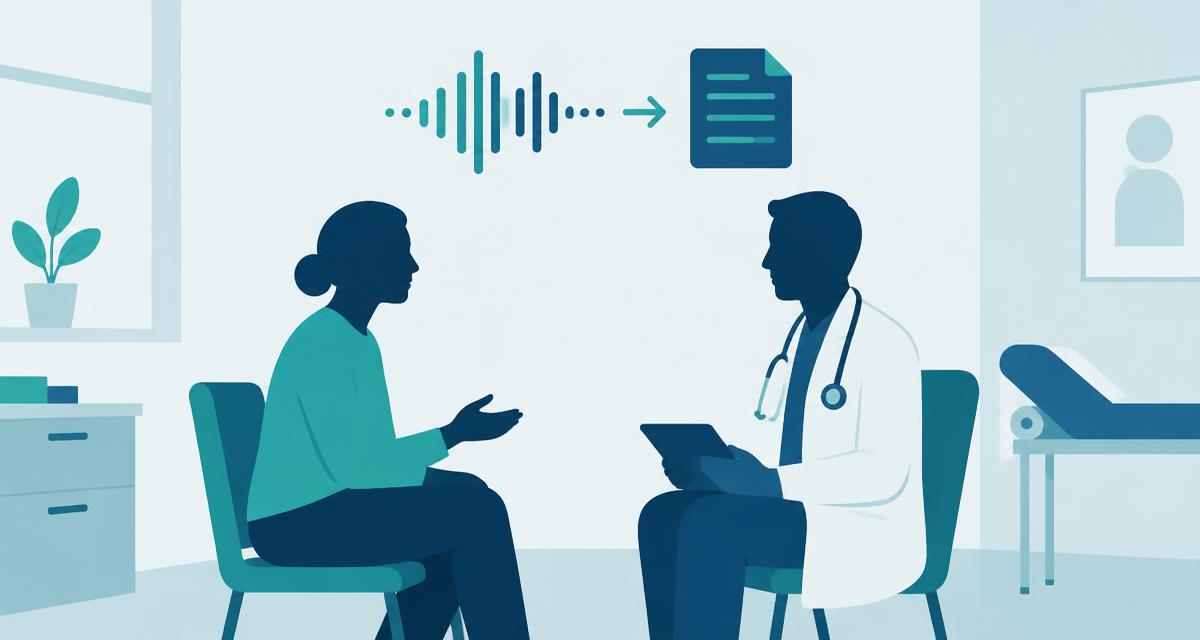
Clinical documentation is undergoing a systemic transition. Traditionally, a medical scribe was a human assistant tasked with real-time documentation, physically present or connected remotely to record patient interactions. However, the UK healthcare system now faces an unsustainable administrative crisis, with clinicians spending an average of three hours daily on paperwork. Automated medical scribes are increasingly replacing manual methods to mitigate this burden. In the strategic evaluation of a human medical scribe vs ai scribe, the shift towards automation is driven by the necessity for immediate record availability and organisational scalability. The AI Clinical Scribe serves as a non-intrusive software partner that captures the clinical essence of a consultation.
This transition reflects a broader move towards efficiency in the NHS and private sectors. Practitioners require tools that integrate seamlessly into their existing workflows without adding complexity. The primary benefits of this evolution include:
- A significant reduction in cognitive load during the patient encounter.
- Immediate availability of structured notes within the EPR.
- The elimination of logistical costs and management overhead associated with human personnel.
The Operational Limitations of Traditional Scribing
Placing a third person amongst the patient and clinician creates logistical friction. It often triggers the 'observer effect', where patient behaviour changes due to the presence of a witness, particularly in sensitive mental health or sexual health contexts. Beyond clinical impact, the financial overhead remains substantial. Recruitment, training, and retention for human scribes in the UK are resource-intensive, with average NHS salaries for these roles estimated at £44,861 per year.
Defining the AI Clinical Scribe in a Modern Healthcare Setting
Ambient voice technology represents a fundamental departure from traditional automated medical documentation for doctors. These systems use clinical-grade algorithms to filter non-clinical 'small talk' from essential medical facts. Doctoria AI Scribe™ is a Leeds-based solution designed specifically for safety-critical environments. It prioritises data flow and operational safety, allowing clinicians to focus entirely on the patient whilst the software structures the consultation into a compliant medical note.

Human Medical Scribe vs AI Scribe: A Comparative Framework for UK Clinicians
Selecting between a human medical scribe vs ai scribe requires an objective evaluation of accuracy, financial sustainability, and clinical integration. Performance data indicates that ambient AI achieves 99.2% accuracy in capturing medical intent, providing a level of consistency that human variability often struggles to match. Whilst human scribes require extensive training and individual management, enterprise AI licensing offers a predictable cost structure that eliminates the overheads associated with recruitment and National Insurance contributions. This scalability is particularly vital in diverse UK boroughs where clinicians must manage multilingual consultations and high patient volumes with limited resources.
The speed of documentation is another critical differentiator. Modern ambient systems deliver EPR-ready notes to platforms like EMIS or SystmOne within seconds of a consultation ending. This rapid data flow ensures that records are updated in real time, facilitating immediate referrals and prescriptions. According to the NHS England guidance on AI scribes, these technologies are essential infrastructure for modernising the workforce and enhancing patient safety through better record-keeping practices.
Ambient Voice Technology and Clinical Accuracy
Ambient voice technology processes dialogue with sub-second latency, allowing for immediate clinician review. These systems are specifically engineered to handle complex medical terminology, varied British accents, and pharmaceutical nomenclature without the fatigue that affects human performance. Doctoria ensures high-fidelity documentation through sophisticated summarisation tools that distinguish between clinical facts and social interactions. To see how these tools perform in practice, you can explore the Doctoria AI Scribe interface.
Addressing the Administrative Burden and Clinician Burnout
The adoption of AI significantly reduces 'pyjama time', the hours clinicians spend on documentation after their shift ends. By removing the laptop barrier, practitioners can restore eye contact and focus on the patient, which directly improves the therapeutic relationship. Doctoria summarisation ensures continuity of care by providing structured SOAP notes. This intelligent structuring reduces the cognitive load on GPs and Consultants, allowing them to remain present during the encounter whilst the software manages the administrative output.
Implementing AI Scribing within the NHS: Security, Governance, and Doctoria
Deploying high-stakes technology within the NHS requires a rigorous approach to security and governance. When evaluating a human medical scribe vs ai scribe, procurement officers must look beyond operational speed to ensure full alignment with NHS DTAC and GDPR standards. Doctoria’s Leeds-based team, supported by Innovate UK, developed the AI Scribe with a foundational commitment to patient confidentiality. This is achieved through a 'Zero data storage' model, where audio data is processed in real time and immediately purged once the structured note is generated. It's a design choice that ensures patient privacy is never compromised for the sake of efficiency.
Clinical safety remains the priority in every deployment. Whilst the AI handles the complex task of documentation, the 'human-in-the-loop' principle ensures that the clinician retains final authority. Every note must be reviewed and verified by the practitioner before it's committed to the EPR. This approach adheres to the latest NHS England guidance for implementing AI scribing products, ensuring that professional accountability is maintained throughout the digital workflow.
Clinical Safety Standards and GDPR Compliance
The data flow within Doctoria AI Scribe™ is designed for maximum security. Ambient capture is transmitted via encrypted channels to secure processing centres where it is transformed into structured medical data. Cloud-based clinical AI has become the secure standard for NHS Trusts in 2026, replacing fragmented local storage with centralised, audited environments. These systems provide the institutional trust markers necessary for large-scale clinical deployment, ensuring that data flow remains compliant with the most stringent regulatory frameworks whilst reducing operational risk.
Integrating Doctoria AI Scribe™ into Existing Workflows
Transitioning to ambient technology doesn't require a total overhaul of existing infrastructure. Many organisations move from manual methods or legacy digital dictation systems to ambient scribing through a phased approach. This ensures that clinical teams are onboarded effectively, maintaining operational stability whilst scaling the technology across departments. It allows for the gradual replacement of legacy systems with more efficient, AI-enhanced workflows. If you are ready to modernise your documentation process, you can request a professional consultation on Doctoria AI Scribe™ for your clinic.
Modernising Patient Care through Ambient Intelligence
The decision between a human medical scribe vs ai scribe rests on the need for scalable, secure, and accurate clinical documentation. By adopting ambient technology, UK healthcare providers can address the root causes of clinician burnout whilst enhancing the patient experience. Doctoria AI Scribe™ provides a robust framework for this transition, delivering 99.2% accuracy in clinical-grade documentation. This Leeds-based innovation is supported by Innovate UK funding and maintains a strictly GDPR-compliant infrastructure through its unique zero data storage signature.
Integrating this technology into your daily workflow ensures that admin tasks don't interfere with patient-facing time. It's a strategic investment in the long-term health of your staff and your practice. You can Discover the Doctoria AI Scribe™ for Healthcare Professionals to see how we support clinical excellence.
Embracing these advancements allows you to focus on what matters most: delivering exceptional care in a modern, efficient environment.
Frequently Asked Questions
What is the primary difference between a medical scribe and a transcriptionist?
Medical scribes focus on real-time clinical documentation and structuring notes into formats like SOAP, whereas transcriptionists provide a verbatim record of recorded audio. In the context of a human medical scribe vs ai scribe, both aim to capture the clinical encounter, but the AI version automates the structuring of notes immediately. This eliminates the delay associated with traditional transcription services and ensures records are updated instantly.
Is an AI clinical scribe legal and safe to use within the NHS?
Ambient AI scribing is legal and safe for NHS use provided the supplier meets specific regulatory standards. NHS England issued national guidance in April 2026 regarding the safe application of these tools in health and care settings. Solutions must comply with GDPR and the NHS Digital Technology Assessment Criteria (DTAC) to ensure data protection and clinical safety are maintained across all UK care environments.
How does an AI scribe handle complex medical terminology and different British accents?
Ambient AI systems are engineered with clinical-grade datasets to recognise complex medical terminology and diverse British accents. These systems process phonetics and context in real time to ensure high-fidelity documentation. Doctoria AI Scribe™ specifically handles pharmaceutical nomenclature and regional dialects, ensuring that the structured output remains accurate regardless of the clinician’s or patient’s vocal characteristics or the complexity of the medical case.
Do I need to obtain patient consent before using an AI scribe during a consultation?
According to NHS England guidance from April 2026, explicit written consent is not mandatory for using AI scribes in direct care, but patients must be informed. You should provide clear information about the technology and offer patients the opportunity to object. This transparency ensures compliance with the National Data Guardian’s standards whilst maintaining the trust and privacy of the individuals under your care.
Does the AI scribe record and store the audio of my patient consultations?
Doctoria AI Scribe™ operates on a "Zero data storage" signature, meaning it doesn't store audio recordings after processing. The system captures the consultation, converts it into structured clinical text, and then purges the original audio immediately. This radical commitment to security distinguishes the platform from tools that retain sensitive data, ensuring total alignment with UK data privacy laws and NHS safety protocols.
How much time can a GP realistically save by switching to an AI scribe?
When comparing the efficiency of a human medical scribe vs ai scribe, the automated solution offers superior speed in note generation. A study published in JAMA in April 2026 found that clinicians saved an average of 13.4 minutes of total EHR time every day. Real-world applications in the UK show that GPs can save between two and three minutes per consultation, significantly reducing the daily administrative burden.
What happens if the AI scribe makes a mistake in the structured clinical notes?
The healthcare professional retains ultimate responsibility for the accuracy and completeness of the patient record. If the AI makes an error, the clinician must correct it during the final review phase before the note is saved to the EPR. This human-in-the-loop requirement is a central pillar of clinical safety, ensuring that technology assists rather than replaces professional judgement in high-stakes medical environments.
Can Doctoria AI Scribe™ integrate with my existing EPR system like EMIS or SystmOne?
Doctoria AI Scribe™ is designed to integrate seamlessly with major UK EPR systems, including EMIS and SystmOne. The software facilitates a smooth data flow, allowing structured notes to be transferred into the patient record without manual re-entry. This integration is essential for maintaining workflow efficiency and ensuring that clinical documentation is available to the wider care team without delay or technical friction.