Medical Speech Recognition: A Comprehensive Reference for UK Clinicians (2026)
A major NHS study published in January 2026 confirmed that clinicians using AI documentation tools saw a 23.5% increase in direct patient interaction time. You likely recognise the alternative: hours spent tethered to a keyboard long after the final consultation has ended. The burden of administrative overhead remains the primary driver of professional burnout across the UK healthcare system. Whilst traditional tools often required tedious manual correction, modern medical speech recognition has transitioned into a sophisticated infrastructure for automated, real-time clinical documentation.
This reference provides a definitive framework for evaluating and implementing these technologies within your practice or trust. We'll examine how to ensure 100% GDPR and NHS clinical safety compliance, including the latest DCB 0129 standards and the 2026 MHRA regulatory framework. You'll gain a clear understanding of the transition from digital dictation to ambient AI scribing. This guide details the operational benchmarks and procurement pathways, such as the SBS10505 framework, required to restore focus to patient care. By the end, you'll understand why Doctoria™ prioritises radical data security as the foundation for systemic efficiency.
Key Takeaways
- Understand the technical shift from legacy dictation to modern medical speech recognition and ambient AI scribing to reduce administrative overhead.
- Identify the critical clinical governance standards, including UK GDPR and DSPT frameworks, required to ensure total patient data privacy in cloud environments.
- Evaluate the operational differences between front-end and back-end recognition to select the most efficient documentation workflow for your practice.
- Learn how to synchronise Philips digital dictation hardware with Doctoria™ AI Scribe to automate clinical notes and mitigate clinician burnout.
- Explore the strategic value of real-time interpretation and summarisation in enhancing communication within diverse, multilingual clinical settings.
The Evolution of Medical Speech Recognition in UK Healthcare
Medical speech recognition has transitioned from a niche administrative aid into a critical piece of clinical infrastructure. While early iterations focused on simple speech-to-text conversion, the technology now encompasses a complex ecosystem of artificial intelligence designed to interpret medical intent. This evolution is driven by the urgent need to modernise legacy workflows that rely on manual typing and retrospective transcription. Speech recognition technology has historically served as a bridge between the clinician's voice and the electronic health record (EHR), but the scope of its application has widened significantly.
The year 2026 marks a decisive turning point for NHS Trusts and private providers alike. With the UK medical speech recognition market projected to reach USD 0.21 billion this year, the focus has shifted from basic dictation to ambient AI. This transition addresses the systemic failures of traditional documentation methods that often lead to inaccurate records and delayed patient care. By automating the capture of clinical data, healthcare organisations can prioritise safety and operational reliability over administrative volume.
Addressing the Clinical Admin Crisis
The administrative burden in UK primary care has reached a critical threshold. Clinicians frequently report that documentation tasks consume more time than direct patient interaction. A 2026 trial with the Modality Partnership demonstrated that implementing an AI scribe led to a 51% drop in documentation time during appointments and a 61% decrease in after-hours admin. These metrics represent more than just efficiency; they signal a shift toward a voice-first clinical environment. Automated recognition allows for painless record-keeping, ensuring that the clinician's primary focus remains on the patient rather than the keyboard. This reduction in operational overhead is essential for mitigating the burnout currently affecting the medical workforce.
Terminology: Recognition vs. Transcription vs. Scribing
Understanding the distinction between these terms is vital for informed procurement. Simple transcription is the literal conversion of audio to text, often lacking the nuance of medical terminology. In contrast, medical speech recognition utilises specialised medical dictionaries to ensure clinical accuracy. The integration of Natural Language Processing (NLP) allows the system to understand medical intent rather than just transcribing individual words.
- Digital Dictation: Best for structured reports and formal letters where the clinician directs the narrative.
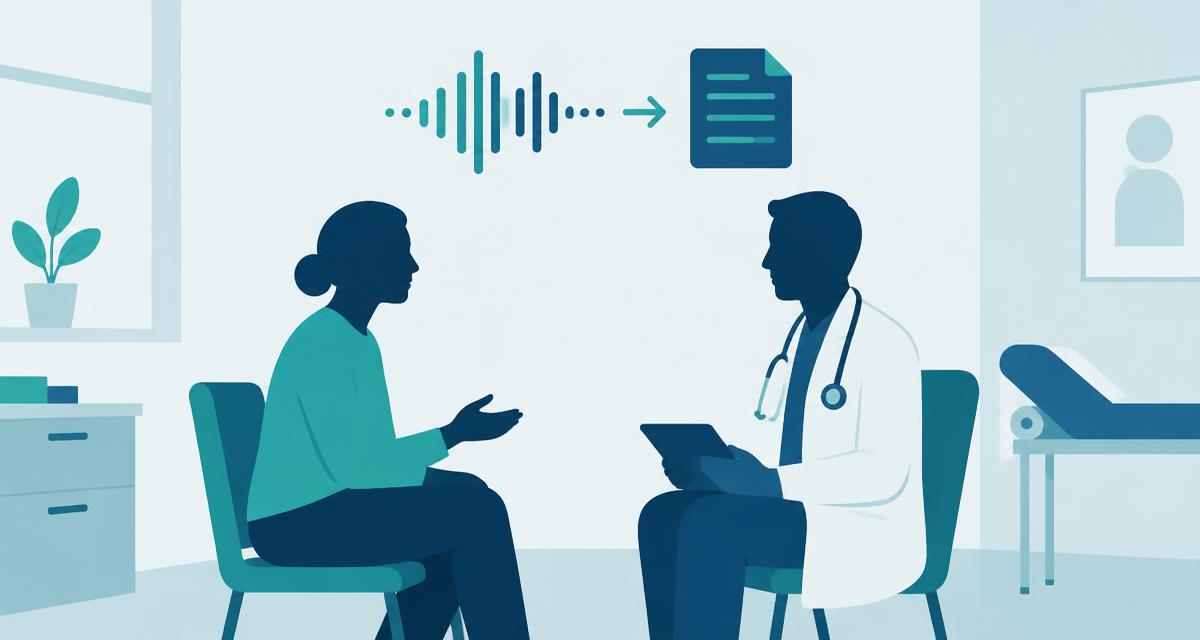
- AI Scribing: An ambient solution, such as Doctoria AI Scribe, that listens to the consultation and generates structured notes automatically.
- Summarisation: Tools like Doctoria Summarisation that condense complex patient histories into actionable clinical insights.
Context-aware AI represents the current gold standard. It distinguishes between patient symptoms, clinician observations, and diagnostic plans. This level of sophistication ensures that the generated documentation meets the rigorous standards of UK clinical governance whilst improving the overall flow of data within the practice.
Core Technologies: Front-End, Back-End, and Ambient AI
Modern medical speech recognition is categorised by how and when the data is processed. Front-end recognition, often called "real-time" dictation, allows the clinician to speak directly into the Electronic Health Record (EHR). The text follows the cursor, providing immediate visual feedback and allowing for instant corrections. Whilst this model requires active clinician engagement, it eliminates the delay associated with traditional transcription services. Back-end recognition, by contrast, processes recorded audio files after the consultation is complete. This is typically used in high-volume reporting environments where immediate turnaround isn't the primary requirement.
The industry is now moving rapidly toward Ambient Clinical Intelligence (ACI). This technology acts as an "invisible" scribe that listens to the natural conversation between the doctor and patient. Strategic investments in the sector, such as Microsoft's Nuance Acquisition, underscore the shift toward smarter, voice-enabled clinical environments that don't require the clinician to dictate specific commands. These systems distinguish between clinical observations and casual conversation, filtering out the "noise" to capture only relevant medical data.
Accuracy remains the primary differentiator between consumer-grade tools and specialised clinical systems. Generic AI models often struggle with complex anatomical terms or drug names. Medically-trained AI is built on vast datasets of clinical terminology, ensuring it can accurately distinguish between "aphasia" and "effusion" in a high-stakes environment. Clinicians seeking to implement these hybrid models often find that Doctoria Solutions for Digital Dictation together with Philips provide the necessary hardware-software synergy to maintain this high level of precision.
Front-End Dictation vs. Ambient Scribing
Front-end dictation is the preferred choice for rapid reporting, referrals, and structured letters. It gives the clinician total control over the narrative flow. Ambient scribing, however, is transformative for the patient-doctor relationship. By removing the computer screen as a barrier, clinicians can maintain eye contact and focus on physical cues. Many UK practices are now adopting hybrid workflows, using ambient tools for consultations and front-end dictation for specific, complex administrative tasks.
The Role of LLMs in Clinical Summarisation
Large Language Models (LLMs) have revolutionised how raw transcripts are handled. Rather than providing a wall of text, tools like Doctoria Summarisation use LLMs to extract key information and structure it into clinical templates. These systems can automatically organise data into standard formats such as SOAP (Subjective, Objective, Assessment, Plan) or SBAR (Situation, Background, Assessment, Recommendation). This ensures consistency across a Trust's records. Despite this automation, the "human-in-the-loop" principle remains essential. Clinicians must always perform a final review and verification of the generated notes to ensure clinical safety and accountability.

Evaluating Solutions: Digital Dictation vs. AI Clinical Scribes
Selecting the optimal implementation of medical speech recognition requires a nuanced understanding of specific clinical objectives. Digital dictation and AI clinical scribing serve distinct operational roles within the UK healthcare landscape. Whilst both technologies aim to reduce administrative overhead, they differ significantly in their engagement models and output structures. Decision-makers must weigh factors such as immediate turnaround requirements, the complexity of patient interactions, and the desired level of clinician involvement in the documentation process.
Traditional digital dictation remains the gold standard for structured reporting and formal correspondence. It is a deliberate, clinician-led process where the user directs the narrative, making it ideal for discharge summaries or complex referrals. Solutions like Doctoria Solutions for Digital Dictation together with Philips provide a robust framework for this workflow, ensuring high-fidelity audio capture and seamless routing to administrative teams. In contrast, AI clinical scribes, such as Doctoria AI Scribe, are designed for the high-intensity environment of the consultation room. These systems handle multi-party conversations and convert natural dialogue into structured clinical notes without requiring the clinician to break eye contact with the patient or pause to type.
A rigorous cost-benefit analysis often reveals that a hybrid approach yields the highest return on investment for UK clinics. The primary value lies in the reduction of cognitive load; AI scribing eliminates the need for simultaneous note-taking, which allows for improved diagnostic focus. However, for short, highly structured tasks, the speed of front-end dictation often proves more efficient. Assessing these tools based on their ability to integrate with existing infrastructure is essential for long-term operational success.
Workflow Integration: EMIS, SystmOne, and Epic
Effective medical speech recognition is only as valuable as its integration with existing Electronic Patient Records (EPR). Systems must communicate via secure APIs to ensure that data flows directly into EMIS, SystmOne, or Epic without the need for manual copy-pasting. This connectivity reduces the "click burden" that frequently contributes to digital fatigue amongst staff. Voice-activated navigation further enhances this by allowing clinicians to open folders or switch between patient records using simple verbal commands, streamlining the entire clinical session.
Hardware Requirements: Microphones and Dictation Devices
Technical reliability depends heavily on the quality of the input hardware. Professional-grade microphones, such as the Philips SpeechMike, are engineered with noise-cancelling technology specifically tuned for clinical frequencies. This ensures high accuracy even in busy ward environments or noisy GP surgeries. As ambient AI adoption increases, "ambient-ready" hardware is becoming standard in modern consultation rooms. For clinicians on the move, secure mobile applications allow smartphones to function as encrypted dictation inputs, maintaining data integrity whilst providing flexibility during ward rounds or home visits.
Clinical Governance: Security and Compliance in the UK
Data security represents the primary threshold for the adoption of medical speech recognition within the NHS and private sectors. As clinical workflows migrate to cloud-based environments, the protection of Patient Identifiable Information (PII) must be absolute. Governance is not merely a regulatory hurdle; it is the framework that ensures technological reliability and institutional trust. Every deployment must align with the Data Protection Act 2018 and the UK GDPR to mitigate operational risk and ensure patient safety.
Procurement within the NHS is governed by the Digital Technology Assessment Criteria (DTAC). This framework evaluates tools based on clinical safety, data protection, technical security, and interoperability. Solutions must also comply with mandatory clinical safety standards, specifically DCB 0129 for manufacturers and DCB 0160 for healthcare organisations. These standards require a designated Clinical Safety Officer (CSO) to conduct rigorous risk assessments, ensuring that the AI does not introduce clinical errors during the documentation process. Organisations prioritising these standards should learn more about Doctoria™ compliance frameworks to ensure their documentation strategy meets current 2026 requirements.
Data Sovereignty and NHS Standards
UK-based data residency is a non-negotiable requirement for many Integrated Care Boards (ICBs) and Trusts. Storing audio data and clinical transcripts within UK borders ensures that data remains under domestic legal jurisdiction. Security protocols must include AES-256 encryption for data at rest and TLS 1.2 or higher for data in transit. Furthermore, the 2025-26 Data Security and Protection Toolkit (DSPT) cycle requires submission by 30 June 2026. Attaining certifications such as Cyber Essentials Plus and ISO 27001 provides the necessary evidence of a robust security posture, signalling that the provider speaks the same language as NHS digital leads and policy-makers.
The Ethics of AI in Clinical Documentation
Managing patient consent is a critical component of ethical AI deployment. Recent NHS trials published in February 2026 indicate a high level of public trust, with 92% of patients consenting to the use of AI scribes during consultations. Transparency is vital; patients must be informed how their data is recorded and processed. Additionally, developers must actively address algorithmic bias to ensure that medical speech recognition models perform accurately across diverse accents and dialects. Despite the high accuracy of modern AI, the clinician remains the ultimate authority. The "Review and Sign" process ensures that every automated note is verified by a human professional, maintaining clinical accountability and safety in every interaction.
Optimising Clinical Workflows with Doctoria and Philips
The integration of Doctoria AI Scribe with world-class Philips dictation hardware creates a unified documentation ecosystem designed for the rigours of the UK healthcare environment. This partnership addresses both the physical and digital requirements of the modern clinician. Whilst software provides the intelligence, the hardware ensures the high-fidelity audio capture necessary for maximum accuracy in high-pressure clinical settings. This synergy allows for a seamless transition to automated medical documentation for doctors, moving away from the systemic inefficiencies of manual note-taking and keyboard-heavy workflows.
Operational reliability is enhanced when medical speech recognition is treated as infrastructure rather than just a software add-on. By combining Philips’ established dictation hardware with Doctoria’s AI-native platform, Trusts can reduce operational risk and administrative overhead simultaneously. This approach ensures that the data flow from the consultation room to the patient record is secure, structured, and immediately actionable.
Beyond Scribing: Interpretation and Summarisation
Getting Started: A Roadmap for UK Healthcare Providers
Implementing a new medical speech recognition framework requires a logical, phased approach to ensure staff adoption and clinical safety. Most successful deployments begin with a pilot programme in a single department, such as Cardiology or a specific GP surgery. This allows for the calibration of the AI to local clinical dialects and specific administrative preferences.
- Phase 1: Departmental pilot to establish performance benchmarks and workflow compatibility.
- Phase 2: Evaluation of data flow efficiency and clinician feedback on cognitive load reduction.
- Phase 3: Scaling to Enterprise level across the entire Trust with dedicated onboarding support.
Continuous improvement is a core feature of the Doctoria™ platform. The AI learns from your specific clinical dialect and documentation patterns, which leads to incremental gains in accuracy and speed. This ensures that the system remains a vital partner in delivering efficient, patient-centric care whilst maintaining the highest levels of data privacy and security.
Securing the Future of Clinical Documentation
The transition to advanced medical speech recognition is no longer a luxury for UK healthcare providers. It is a systemic necessity. By automating the capture of clinical notes and integrating real-time interpretation, practices can finally address the administrative overhead that drives clinician burnout. We've explored the critical importance of selecting tools that meet the highest standards of data sovereignty and clinical safety. Doctoria™ provides this assurance through Innovate UK funded development and a radical commitment to UK GDPR and NHS clinical safety standards.
Our partnership with Philips ensures industry-leading dictation quality that integrates seamlessly with your existing EPR. Book a Clinical Workflow Consultation with Doctoria to evaluate how these technologies can modernise your practice infrastructure. Reclaiming time for direct patient care is achievable with the right technological partner.
Frequently Asked Questions
Is medical speech recognition accurate enough for complex clinical terminology?
Specialised medical speech recognition models are highly accurate because they are trained on vast datasets of clinical terminology and anatomical terms. Unlike generic models, these systems recognise complex drug names and surgical procedures with high precision. This specificity reduces the need for manual corrections and ensures the clinical record remains reliable for secondary care or referral purposes.
How does medical speech recognition differ from the dictation built into Microsoft Word?
Clinical systems differ from consumer tools by incorporating specialised medical dictionaries and context-aware processing. While generic dictation converts sounds to words, medical-grade AI understands clinical intent and distinguishes between patient symptoms and diagnostic plans. This enables the automated structuring of notes into formats like SOAP or SBAR, which is not possible with standard office software.
Can I use an AI scribe for consultations involving multiple family members?
Ambient AI scribes are designed to handle multi-party conversations by distinguishing between different speakers in a consultation room. This allows the system to capture the dialogue between a clinician, a patient, and their family members simultaneously. The AI then filters these interactions to generate a structured summary that focuses on the relevant clinical information and patient outcomes.
Does the software integrate with NHS systems like EMIS or SystmOne?
Seamless integration with EMIS, SystmOne, and Epic is a standard feature of professional medical speech recognition platforms. These systems use secure APIs to ensure that captured notes flow directly into the patient's Electronic Health Record (EHR). This eliminates the need for manual copy-pasting, which reduces administrative friction and maintains the integrity of the clinical data across the Trust's infrastructure.
How do I handle patient consent when using an ambient AI scribe?
Clinicians should obtain verbal consent at the start of the consultation and can supplement this with transparent signage in the clinical area. A 2026 NHS trial published in February showed that 92% of patients consent to the use of AI scribes when informed of the benefits. It's essential to explain that the recording is used solely for documentation accuracy and is handled according to strict data privacy protocols.
What happens if the AI makes a mistake in the clinical notes?
The clinician remains the ultimate authority and must review every automated note before it's finalised in the patient record. This "human-in-the-loop" process ensures that any inaccuracies are corrected before the document is signed. While AI accuracy is high, professional accountability requires that the medical professional verifies the output to ensure clinical safety and compliance with DCB 0160 standards.
Is my data stored in the UK, and is it GDPR compliant?
Professional clinical AI solutions prioritise UK-based data residency to ensure compliance with UK GDPR and the Data Protection Act 2018. Data is encrypted both at rest and in transit using high-level AES-256 and TLS 1.2 standards. Providers must also meet the requirements of the Data Security and Protection Toolkit (DSPT), which has a submission deadline of 30 June 2026 for the current cycle.
Do I need a special microphone to use medical speech recognition?
Using specialised medical microphones, such as those from Philips, is recommended to ensure the highest levels of audio fidelity and noise cancellation. These devices are specifically tuned for clinical frequencies, which improves recognition accuracy in busy environments. However, many systems also support secure mobile applications that allow smartphones to function as encrypted dictation inputs during ward rounds or home visits.