Medical Speech to Text Software: A Comprehensive Guide for UK Clinicians
The most significant threat to the UK healthcare system isn't a lack of clinical expertise, but the 'pyjama time' spent on administrative overhead whilst using legacy medical speech to text software. For many clinicians, the working day doesn't end when the clinic closes; it continues into the late hours as you struggle with inaccurate voice recognition or tedious manual typing. You likely feel that documentation shouldn't dictate your lifestyle or compromise the eye contact you owe your patients. We agree that clinical professionals deserve a workflow that prioritises patient outcomes over data entry.
This comprehensive guide demonstrates how to select and implement high-performance tools to reclaim up to three hours of your day. We'll explore how to navigate the new MHRA 2026 cybersecurity requirements and ensure total GDPR compliance whilst maintaining 99% accuracy in your clinical notes. From Doctoria® AI Scribe technology and summarisation to digital dictation with Philips SpeechLive, you'll learn how to transform documentation into a strategic asset that supports both safety and efficiency.
Key Takeaways
- Reclaim approximately three hours of daily clinical time by evolving from command-based dictation to advanced ambient AI documentation.
- Navigate the selection of medical speech to text software by evaluating critical UK-specific markers like BNF dictionary integration and MHRA 2026 compliance.
- Maintain institutional trust by ensuring your chosen platform adheres to strict GDPR standards and provides secure, UK-based data residency.
- Execute a seamless digital transition by auditing existing documentation bottlenecks and establishing a pilot programme with clinical digital champions.
- Leverage the strategic partnership between Doctoria® and Philips to integrate the Doctoria AI Scribe for Healthcare with world-class digital dictation hardware.
What is Medical Speech to Text Software in 2026?
Modern clinical documentation has outgrown simple transcription. In 2026, medical speech to text software represents a sophisticated implementation of speech recognition technology designed specifically for high-stakes healthcare environments. Unlike generic tools, these systems are engineered with deep neural networks trained on millions of clinical dialogue hours. They recognise the phonetic nuances of complex pharmaceutical names and anatomical terminology with a precision that generic alternatives cannot match. This technology is now a foundational component of UK healthcare infrastructure. It addresses the demographic complexities of a growing patient population by ensuring that clinicians spend their time on care rather than clerical tasks.
The Evolution from Dictation to AI Scribing
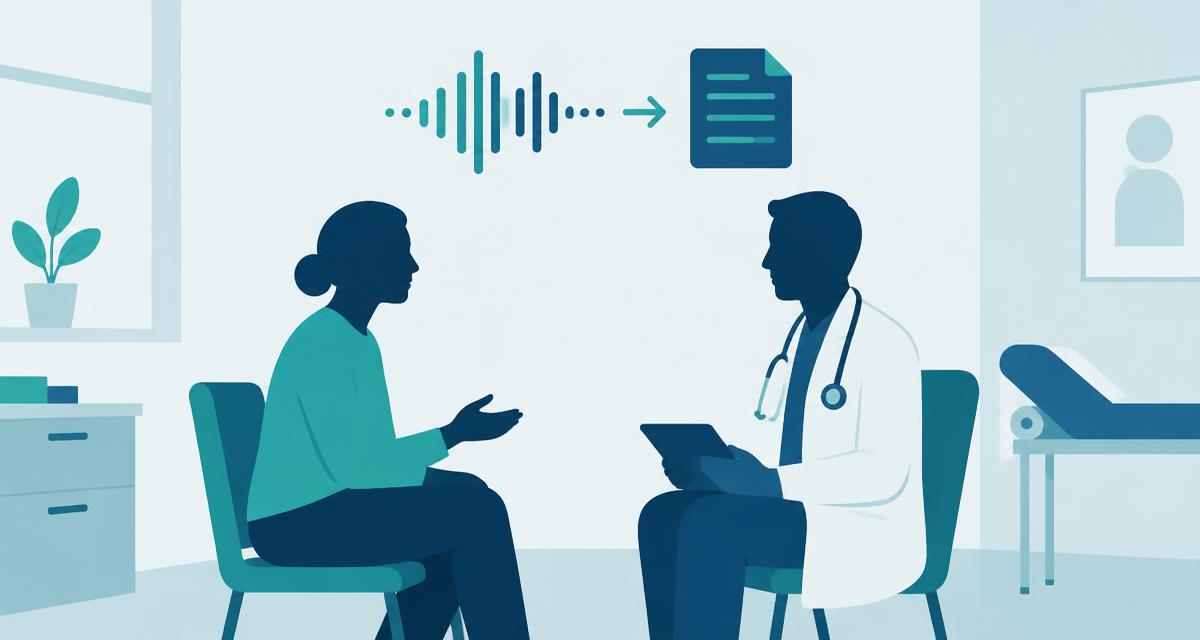
Traditional digital dictation, such as the Doctoria® solutions for digital dictation together with Philips, remains a cornerstone for structured reporting and formal correspondence. However, the industry has seen a rapid shift towards ambient AI. Modern systems like the Doctoria® AI Scribe for Healthcare remove the need for verbal formatting commands. They use Large Language Models (LLMs) to understand the context of a patient-doctor interaction. It doesn't just transcribe; it interprets. This shift from command-based input to ambient documentation allows for a natural consultation flow. The result is a significant reduction in error rates. While generic tools often struggle with medical jargon, specialised clinical solutions now achieve accuracy rates exceeding 99%.
Key Components of a Clinical Voice Solution
A robust clinical voice solution relies on three primary pillars. First is the medical-grade ASR engine. This engine must handle various British accents and dialects whilst filtering out background clinical noise. Second is the integration layer. For a tool to be effective in a GP surgery or hospital trust, it must communicate directly with Electronic Patient Record (EPR) systems like EMIS or SystmOne. Without this, the data flow remains fragmented. Finally, Doctoria® Summarisation tools represent the final step in the workflow. These tools take raw transcripts and automatically structure them into clinical notes, such as SOAP or SBAR formats. This ensures that the detail of the consultation is preserved without the clinician needing to spend hours manually organising the data.
How AI-Powered Recognition Improves Clinical Workflows
The administrative burden in UK healthcare has reached a critical threshold. It's now cited as a primary driver of clinician burnout. Documentation isn't merely a task; it's a systemic bottleneck that consumes hours of potential patient-facing time. Implementing medical speech to text software directly addresses this pressure by decoupling clinical record-keeping from manual data entry. According to NHS England guidance on AI scribing, these technologies are essential for modernising health settings and reducing the operational risk associated with transcription lag.
The efficiency gains are measurable and significant. Research indicates that speech recognition is up to four times faster than manual typing. In one recorded instance, an NHS Trust with only eight users of a clinical speech solution saved 2,042 hours over a 12-month period. These aren't just abstract metrics. They represent reclaimed time that allows GPs and consultants to focus on complex diagnostic work rather than the mechanics of a keyboard. By capturing more detail than manual typing allows, the quality of patient records improves, which directly enhances clinical safety and reduces the likelihood of manual errors during the transcription process.
Reducing Cognitive Load for GPs and Consultants
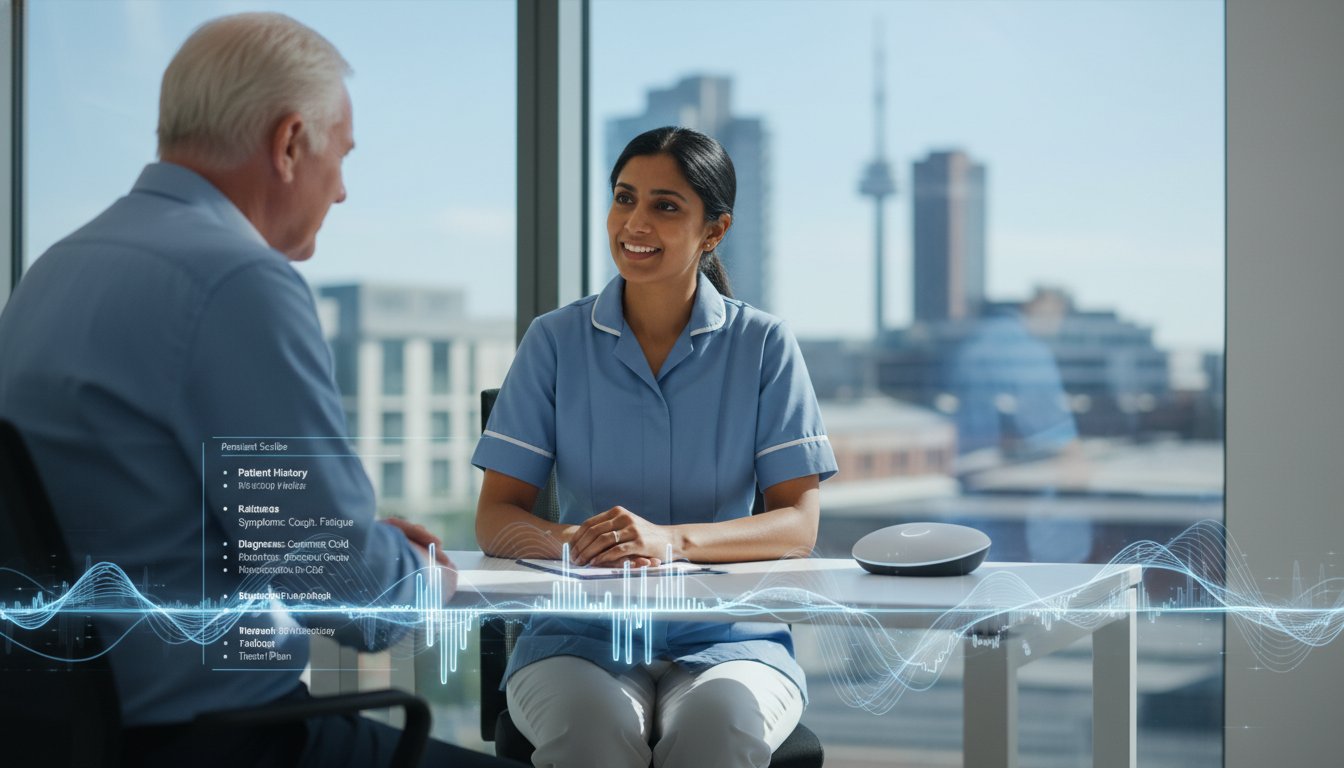
Ambient capture technology fundamentally changes the consultation dynamic. It allows for sustained eye contact and improved patient rapport because the clinician is no longer tethered to a screen. This reduction in cognitive load is vital for maintaining professional standards during long shifts. Finishing the day with "inbox zero" for clinical notes provides a psychological benefit that cannot be overstated. For a deeper look at these systemic changes, see our Automated Medical Documentation for Doctors: The Definitive 2026 Guide. Adopting the Doctoria AI Scribe for Healthcare ensures that the nuance of every conversation is captured without the doctor needing to act as a data clerk.
Streamlining Multi-Disciplinary Team (MDT) Communication
Effective communication amongst different providers is the backbone of continuity of care. Instant summarisation facilitates faster referrals and discharge summaries, ensuring that the next clinician in the care pathway has immediate access to structured data. Doctoria Summarisation tools turn raw consultation transcripts into concise, actionable reports. This structured data output simplifies audit trails and ensures that all documentation meets the high-stakes requirements of clinical governance. By automating the summary process, MDTs can make decisions based on accurate, real-time information rather than waiting for transcribed letters to be processed and filed.

Selecting the Right Solution for UK Healthcare Environments
Choosing a medical speech to text software platform requires a rigorous evaluation that extends beyond simple accuracy metrics. In the UK, the baseline for any clinical tool is absolute compliance with GDPR and a guarantee of UK-based data residency. Systems that process sensitive patient data on international servers introduce unnecessary legal and operational risks. Clinicians must ensure that their chosen solution recognises the specific nuances of the British National Formulary (BNF). A tool that fails to identify the latest UK drug names or anatomical references used in British medical schools will ultimately increase the correction workload, defeating the purpose of automation.
Seamless data flow is the next critical pillar. High-performance software must offer deep integration with the primary Electronic Patient Record (EPR) systems used across the NHS, including EMIS Web, SystmOne, and TPP. The ability to move between devices is equally vital. Surgeons and consultants often require the flexibility of mobile applications for ward rounds, whilst needing a robust desktop interface for surgery-based consultations. The Doctoria® Solutions for Digital Dictation together with Philips provide this versatility, ensuring that the documentation process remains uninterrupted regardless of the clinical setting.
Essential Security and Compliance Standards
Security isn't an optional feature; it's a core infrastructure requirement. When evaluating medical speech to text software, look for providers that hold Cyber Essentials Plus certification and demonstrate a high score on the NHS Data Security and Protection Toolkit (DSPT). These markers indicate that the vendor speaks the same language as NHS Trust procurement officers. Zero-retention policies are particularly critical for ambient AI tools. This ensures that whilst the AI processes the audio to generate a note, the raw recording is never stored permanently, maintaining total patient confidentiality. This approach mitigates the risks associated with cloud-based processing and provides a safer alternative to local data storage, which is often vulnerable to hardware failure or theft.
Usability and Integration Criteria
The practical utility of a voice solution depends on its 'Cursor Anywhere' functionality. This allows you to dictate directly into any clinical field within your EPR without needing to copy and paste from a separate window. For ambient solutions like the Doctoria® AI Scribe for Healthcare, multi-speaker identification is a non-negotiable requirement. The system must distinguish between the clinician's instructions and the patient's symptoms during a recording to create a structured, coherent note. Finally, don't overlook the value of UK-based implementation teams. Having access to local support and training ensures that your practice or Trust can resolve technical challenges quickly, maintaining the continuity of care that your patients expect.
Step-by-Step: Implementing Speech to Text in Your Practice
Successful integration of medical speech to text software into a clinical environment isn't an automated event. It requires a methodical approach to ensure that the technology enhances rather than disrupts the patient journey. Start by auditing your current documentation workflows. Identify the specific areas where clinicians lose the most time, such as post-clinic letter writing or referral generation. This data allows you to target the implementation where it will provide the most immediate relief. We recommend a structured transition to avoid the operational friction often associated with new software adoption.
Once you've identified the bottlenecks, organise a pilot phase. Select a small group of "digital champion" clinicians who are comfortable with tech-forward solutions. This group provides the necessary feedback to refine your protocols before a full-scale practice rollout. During this phase, establish clear patient consent protocols for ambient voice technology. Transparency is vital for maintaining institutional trust. You should also configure standardised templates and macros within your EPR to ensure that the software's output aligns with your existing clinical standards. This consistency is essential for accurate audit trails and continuity of care.
After 30 days of active use, review your metrics. Compare the time spent on documentation against your pre-implementation audit to quantify the efficiency gains. This iterative process allows you to address any accuracy issues or workflow friction before expanding the programme across the entire practice. Monitoring these performance benchmarks ensures that the medical speech to text software remains a vital infrastructure asset rather than just an additional tool.
Managing the Patient Interaction
The transition to ambient capture changes the consultation dynamic. Introduce the technology to patients by explaining that it allows you to focus on them rather than a screen. This reassures the patient that they're being heard. Maintain professional "voice etiquette" by verbalising physical examination findings clearly. For example, stating "the abdomen is soft and non-tender" ensures the AI captures the clinical negative accurately. This practice keeps the patient informed whilst providing the structured data the system needs to generate a high-quality note.
Technical Set-up and Hardware Optimisation
Hardware choice is a critical performance factor. Whilst smartphone integration is convenient for ward rounds, stationary consultation rooms benefit from high-quality directional microphones. These devices reduce background noise and improve the ASR engine's performance. Ensure the room's acoustic environment is optimised by minimising external noise. Finally, verify that your surgery has stable network connectivity. High-performance AI processing requires a consistent data flow to maintain the real-time speeds necessary for a busy clinical schedule.
Ready to modernise your clinical workflow? Discover how the Doctoria AI Scribe for Healthcare can reclaim your clinical hours.
Future-Proofing Documentation with Doctoria® and Philips
The transition toward high-performance medical speech to text software is a fundamental shift in clinical infrastructure. As the premier UK-developed AI Scribe solution, the Doctoria® platform is engineered to meet the specific demands of the NHS and private healthcare sectors. It functions as a Tech-Forward Guardian, prioritising safety and reliability in environments where documentation accuracy is non-negotiable. By moving beyond generic transcription, Doctoria® provides a mission-driven approach to reducing operational risk whilst ensuring that clinicians remain focused on their primary goal: inclusive and effective patient care.
One of the platform's most significant capabilities is the integration of Doctoria Real-time Interpretation for Healthcare. In the UK's increasingly diverse clinical landscape, language barriers can introduce systemic challenges to patient safety. This feature allows for seamless communication with multilingual populations, ensuring that every consultation is documented with the same level of precision regardless of the patient's primary language. This commitment to inclusive care distinguishes the platform as a vital partner for modern healthcare providers.
The Doctoria® and Philips Synergy
The strategic partnership between Doctoria® and Philips represents a fusion of world-class hardware and advanced AI intelligence. Philips hardware provides the physical reliability required for intensive clinical use, whilst the Doctoria® engine delivers the sophisticated context needed for accurate records. This synergy allows for a unified workflow that supports both traditional digital dictation and modern ambient AI scribing. The safety-critical design of the Doctoria® suite ensures that data flow remains secure and efficient, providing a reassuring emotional style that procurement officers and clinical leads can trust.
Scaling AI Across Primary and Secondary Care
Scaling these technologies across large organisations requires more than just functional software; it requires a robust enterprise framework. Doctoria® offers flexible licensing options tailored for NHS Trusts and large private healthcare groups, allowing for a structured rollout across multiple departments. The roadmap for the platform includes advanced longitudinal patient data analysis and enhanced Doctoria Summarisation tools. These developments aim to turn decades of fragmented clinical notes into structured, actionable insights that improve long-term patient outcomes. This forward-thinking approach ensures that your documentation strategy remains resilient in the face of future regulatory and demographic shifts.
The future of clinical documentation is structured, secure, and ambient. To see how these technologies integrate into your specific workflow, book a clinical demonstration with the Doctoria team and take the first step toward reclaiming your clinical hours.
Transitioning to a Data-Driven Clinical Future
The evolution of clinical documentation is no longer a future prospect; it's a present necessity for the modern practitioner. By integrating high-performance medical speech to text software, you eliminate the administrative friction that contributes to professional burnout and systemic inefficiency. This guide has detailed the shift from legacy dictation to ambient capture, the critical importance of UK-specific regulatory compliance, and the strategic value of a unified documentation workflow. These advancements ensure that your practice maintains the highest standards of patient safety whilst protecting the wellbeing of your clinical team.
Doctoria® provides Innovate UK funded technology that bridges the gap between clinical dialogue and structured medical records. Through our strategic partnership with Philips and a radical commitment to GDPR and NHS Data Security standards, we offer the robust infrastructure required for high-stakes healthcare environments. Our platform is designed to be a tech-forward guardian of your data flow and patient confidentiality.
Discover how Doctoria® automates clinical documentation to restore your focus to the patient. It's time to reclaim your clinical hours and lead the digital transformation of your practice with confidence.
Frequently Asked Questions
Is medical speech-to-text software GDPR compliant?
Clinical documentation software is GDPR compliant when it employs UK-based data residency and robust encryption. Doctoria® ensures that patient data never leaves the UK and adheres to the NHS Data Security and Protection Toolkit. Zero-retention policies mean that raw audio is processed and then immediately purged. This approach maintains total confidentiality and aligns with the highest standards of clinical governance.
How accurate is AI-powered medical transcription compared to a human scribe?
Modern AI-powered transcription often exceeds 99% accuracy in clinical settings. These systems use deep neural networks trained on vast medical datasets, allowing them to outperform generic tools. Whilst human scribes can experience fatigue during long shifts, AI provides a consistent level of performance. This reliability is essential for maintaining the safety and detail of patient records.
Does the software work with NHS systems like EMIS Web and SystmOne?
Seamless integration with EMIS Web and SystmOne is a core feature of high-grade medical speech to text software. This allows clinicians to dictate directly into the appropriate fields within the EPR. By removing the need for manual data entry or copy-pasting, the software streamlines the clinical workflow. It ensures that the patient record is updated accurately and instantaneously.
Can I use speech-to-text for complex specialities like Oncology or Radiology?
Specialised voice solutions are engineered to handle the complex vocabularies of Oncology, Radiology, and other niche specialities. These tools include comprehensive dictionaries that recognise specific pharmaceutical agents and anatomical nuances. Generic software often fails in these environments, but clinical-grade engines maintain high accuracy regardless of the complexity of the medical terminology involved.
What happens if the AI misinterprets a medical term?
Clinicians must review and sign off on all notes generated by AI to ensure absolute accuracy. The software acts as a supportive tool rather than a replacement for clinical judgement. If a term is misinterpreted, the clinician can quickly correct it before the note is finalised in the EPR. This human-in-the-loop approach is a fundamental safety requirement in healthcare documentation.
Do I need to ask for patient consent before using an AI scribe?
Obtaining verbal or written consent is a mandatory step when using ambient AI scribing technology in a consultation. Patients must be informed that the conversation is being processed to facilitate accurate note-taking. Most clinicians find that patients are receptive when they understand that the technology allows for better eye contact and a more focused interaction.
Can medical voice recognition software handle different accents?
Advanced acoustic models are specifically trained to interpret a diverse range of British regional accents and dialects. Modern medical speech to text software uses machine learning to adapt to your specific voice patterns over time. This continuous learning process ensures that accuracy improves with every use, regardless of the speaker's background or speech characteristics.
How much time can a GP realistically save using these tools?
GPs using these tools report reclaiming between one and three hours of clinical time every day. This significant reduction in administrative overhead allows for a better work-life balance and reduces the pressure of post-clinic documentation. By automating the transcription process, clinicians can focus on complex diagnostic work instead of spending their evenings typing up notes.