Secure Clinical Documentation Software in the UK: 2026 Myth-Busting Guide
If your AI documentation tool isn't built specifically for the NHS Data Security and Protection Toolkit Version 8, is it actually a clinical asset or a systemic liability? Finding legitimate secure clinical documentation software uk providers is becoming increasingly complex as generic AI tools flood the market. Many UK practitioners struggle with the exhausting reality of administrative overhead, yet the fear of a data breach under UK GDPR often stalls the transition to more efficient workflows. You shouldn't have to choose between patient safety and your own operational capacity.
This guide dismantles the common myths surrounding healthcare AI and provides a technical framework for identifying truly medical-grade security. You'll discover how to achieve total compliance whilst significantly reducing documentation time, even as we move into the era of the Data (Use and Access) Act 2025. We'll examine how Doctoria™ provides a reliable infrastructure for modern healthcare, moving beyond simple automation to focus on genuine clinical safety and the reduction of operational risk.
Key Takeaways
- Align your practice with the 2026 regulatory landscape by understanding the latest NHS Data Security and Protection Toolkit (DSPT) Version 8 requirements.
- Debunk five persistent myths about medical AI to distinguish between generic voice tools and professional-grade clinical guardians.
- Use a structured procurement checklist to identify truly secure clinical documentation software uk that guarantees local data residency and AES-256 encryption.
- Learn how to integrate automated dictation and summarisation into existing EPR systems whilst maintaining total compliance with UK GDPR and clinical safety standards.
- Explore how Doctoria™ serves as a mission-driven infrastructure partner to reduce administrative overhead and operational risk in high-stakes environments.
The State of Secure Clinical Documentation Software in the UK
The evolution of Electronic health records (EHRs) has made the generation of notes a critical point of vulnerability. Whilst traditional methods relied on the physical stamina of the clinician, modern systems like the Doctoria™ AI Scribe use "Security by Design" principles. This means security isn't a feature added later; it's the foundation of the architecture. Standard office software fails in these environments because it lacks the granular audit trails and clinical safety standards mandated by DCB0129 and DCB0160. Generic tools don't speak the language of "special category" data protection, leaving practices exposed to both regulatory and clinical risks.
Why Security is Non-Negotiable for UK Clinicians
The legal implications of UK GDPR for clinical notes are absolute. Healthcare data requires a higher level of protection than standard personal information, and any failure in this area directly impacts professional indemnity. For private practices, the rising cost of data breaches is a significant concern that goes beyond financial penalties. Documentation errors, often the result of administrative fatigue, threaten patient safety. Using unvalidated tools increases the risk of data leakage, which can lead to the loss of access to vital NHS systems and a total breakdown in patient trust.
From Dictation to Ambient Scribing: A Security Evolution
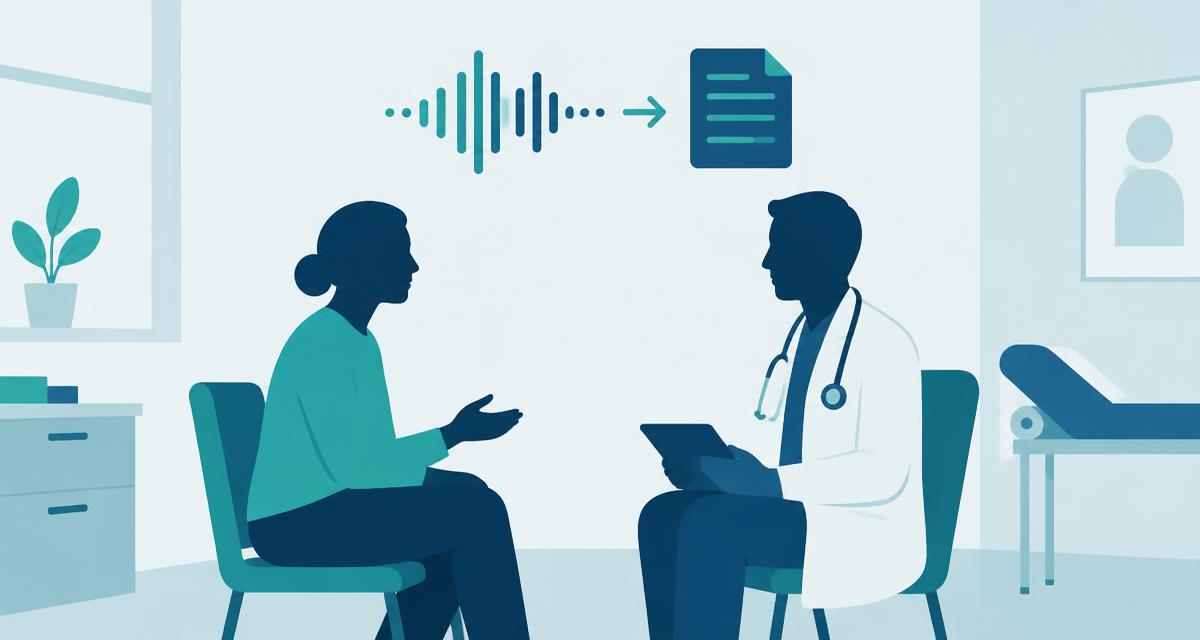
The transition from traditional digital dictation to ambient scribing marks a turning point in clinical efficiency. Older systems, including those used in Doctoria™ solutions for digital dictation together with Philips, established the baseline for record-keeping. However, modern medical voice recognition software takes this further. Ambient technology captures the nuances of a consultation in real-time without storing audio files indefinitely. This reduces the cognitive load on doctors by automating the heavy lifting of summarisation. It allows clinicians to focus entirely on the patient whilst the software handles the complex data flow required for accurate, compliant medical records. This systemic improvement reduces operational risk and ensures that the ultimate goal of inclusive, high-quality care is met without compromising data sovereignty.
Debunking 5 Common Myths About Medical Voice Recognition
Misconceptions regarding AI safety often prevent clinical teams from adopting secure clinical documentation software uk. These myths typically stem from experiences with generic, consumer-grade voice assistants that lack the robust safeguards required for healthcare. To ensure clinical safety and data sovereignty, it's essential to distinguish between these myths and the technical reality of medical-grade systems.
- Myth 1: 'AI scribes record and store every conversation indefinitely.' Modern medical AI uses ephemeral processing. It converts audio into text in real-time and discards the raw audio data immediately after the note is generated, ensuring no permanent voice record exists.
- Myth 3: 'Voice recognition is too inaccurate for complex medical terminology.' Whilst generic tools struggle with clinical dialects, specialised models are trained specifically on medical taxonomies. These systems accurately capture complex diagnoses and pharmaceutical names that standard software misses.
- Myth 4: 'Using AI software violates patient confidentiality agreements.' Compliance is built into the architecture. When a system meets UK GDPR and NHS DSPT standards, it operates under a clear legal basis for processing healthcare data, provided patient consent is managed correctly.
- Myth 5: 'UK data must stay on a physical server in the clinic to be secure.' Data residency is about the geographic location of the data centre, not a physical box in your office. Secure UK providers use domestic cloud regions to ensure data never leaves the country.
The Reality of Ephemeral Data Processing
Security in AI documentation is achieved through the distinction between data in transit and data at rest. When evaluating secure clinical documentation software uk, you must confirm that audio is encrypted whilst in transit to the processing engine. Once the clinical summary is produced, the temporary data is purged. This ensures that no identifiable voice recordings remain on the system or the clinician's device. Ephemeral processing is the key to AI privacy.
Accuracy and Clinical Governance
Medical-grade AI outperforms generic speech-to-text by understanding the context of clinical interactions. However, technology is never a replacement for professional judgement. Clinicians remain the ultimate gatekeepers, reviewing and validating every summary before it enters the patient record. This human-in-the-loop requirement is a core component of clinical governance. You can explore this further in our guide on automated medical documentation for doctors. Implementing Doctoria™ AI Scribe ensures these protocols are hard-coded into your workflow, reducing risk whilst reclaiming time.

Navigating GDPR and NHS Data Standards in 2026
Adherence to the UK regulatory framework is a mandatory prerequisite for any secure clinical documentation software uk deployment. In 2026, the landscape is defined by the Data (Use and Access) Act 2025, which has refined how special category healthcare data is managed under UK GDPR. Compliance is no longer a static checkbox; it is a continuous requirement for institutional trust. Procurement officers must verify that providers hold Cyber Essentials Plus and ISO 27001 certifications as a baseline. However, the true differentiator for clinical AI lies in the Data Protection Impact Assessment (DPIA). A robust DPIA for AI tools must specifically address automated decision-making and the legal basis for processing sensitive patient narratives.
The Digital Technology Assessment Criteria (DTAC) remains the central framework for NHS Digital when evaluating new technologies. It ensures that software meets clinical safety, data protection, and interoperability standards. For NHS Trusts and large private practices, the June 30, 2026, deadline for the Data Security and Protection Toolkit (DSPT) Version 8 assessment is a critical milestone. Systems that fail to demonstrate high-level compliance with these criteria risk immediate exclusion from the NHS ecosystem. This rigorous vetting process is designed to eliminate high-risk generic tools in favour of validated clinical infrastructure.
Clinical Safety Standards: DCB0129 and DCB0160
Clinical risk management is governed by two mandatory standards under the Health and Social Care Act 2012. DCB0129 places the responsibility on the manufacturer to identify and mitigate potential hazards within the software. Conversely, DCB0160 requires the healthcare organisation to manage the risks associated with implementing that software in a live environment. Every secure clinical documentation software uk provider must have a nominated Clinical Safety Officer (CSO) to oversee these assessments. Doctoria™ prioritises these standards by maintaining comprehensive clinical safety cases, ensuring that AI-driven summarisation doesn't just work efficiently, but operates within a strictly defined safety envelope.
The Importance of Data Sovereignty
Data sovereignty is a non-negotiable requirement for UK healthcare procurement in 2026. NHS cloud storage requirements now heavily favour 'UK-only' data residency to avoid the legal complexities of transatlantic data flows. Relying on non-UK based AI providers introduces significant risks regarding data access by foreign jurisdictions, which can lead to a breach of UK GDPR. By utilizing domestic data centres, Doctoria™ ensures that patient information remains under the protection of UK law at all times. This commitment to local residency aligns with the 2026 market shift where cloud-native solutions now generate nearly 87% of new revenue, provided they can guarantee total data sovereignty.
A Procurement Checklist: Evaluating Secure Software
Selecting secure clinical documentation software uk requires a transition from understanding regulatory theory to performing technical due diligence. With cloud-native solutions now representing nearly 87% of new market revenue, the burden of proof rests on the vendor to demonstrate systemic resilience. A rigorous procurement process ensures that any implemented technology acts as a safeguard rather than a vulnerability. Use the following five-step framework to evaluate potential partners before deployment.
- Step 1: Verify UK Data Residency and Encryption. Confirm that all patient data remains within UK-based data centres to satisfy the Data (Use and Access) Act 2025. Demand evidence of AES-256 encryption for both data at rest and data in transit.
- Step 2: Assess EPR Integration capabilities. Secure software must integrate directly with existing Electronic Patient Record (EPR) systems. This maintains a single source of truth and prevents the fragmentation of clinical data across disparate platforms.
- Step 3: Review Clinical Safety and DTAC Documentation. Request the manufacturer's DCB0129 Clinical Safety Case Report. Ensure the software has been assessed against the Digital Technology Assessment Criteria (DTAC) to meet NHS Digital standards.
- Step 4: Evaluate Data Portability and Erasure. Under UK GDPR, systems must support the 'Right to be Forgotten.' Verify that the software allows for secure data deletion and easy portability if you decide to migrate providers.
- Step 5: Validate Medical-Specific Accuracy. Test the software against complex clinical dialects. High accuracy is a safety requirement, as errors in automated summaries can lead to significant clinical documentation risks.
Interoperability and Secure Integration
True security is found in a closed-loop system where data flows seamlessly via secure APIs. When documentation software lacks deep integration, clinicians often resort to copy-pasting notes into unencrypted external documents or local files. This practice creates massive security gaps and bypasses institutional audit trails. By prioritising interoperability, you ensure that the Doctoria™ AI Scribe feeds directly into your primary record system. This eliminates the need for manual data handling and preserves the integrity of the clinical narrative whilst reducing administrative overhead.
User Access Control and Audit Trails
Identity management is your first line of defence against internal and external threats. Multi-Factor Authentication (MFA) is now a mandatory requirement for all clinical logins to prevent unauthorised access. Furthermore, detailed audit logs are essential for medico-legal protection. These logs must record who accessed what data and when, providing a transparent history for any clinical governance review. Organising team permissions according to the principle of 'least privilege' ensures that staff only access the specific information required for their role. You can begin securing your practice today by adopting secure clinical documentation software that prioritises these rigorous access protocols.
Why Doctoria™ is the Trusted Partner for UK Clinical Teams
Doctoria™ represents a radical commitment to data privacy within the UK healthcare sector. As a Leeds-based organisation funded by Innovate UK, we act as a specialised guardian for sensitive clinical data. Selecting secure clinical documentation software uk is about more than technical specifications; it's about institutional trust. We've established a robust infrastructure that prioritises systemic safety. This includes our strategic partnership with Philips for secure digital dictation workflows, ensuring that traditional dictation methods are enhanced by modern security protocols. Our quiet confidence in these systems allows clinicians to focus on patient outcomes rather than administrative risk.
The Doctoria™ AI Scribe is engineered for zero-retention audio processing. This architecture ensures that we never store raw audio files, adhering strictly to the ephemeral processing standards required for modern clinical safety. Our technology facilitates real-time medical interpretation and summarisation whilst ensuring that data sovereignty is maintained within domestic data centres. This grounded, mission-driven approach reduces operational risk and allows clinicians to reclaim vital time. We invite you to experience a live demonstration of our real-time medical interpretation and scribing tools to see this security in action.
Built for the NHS, Designed for Doctors
Our UK-centric model simplifies the Data Protection Impact Assessment (DPIA) process for NHS Trusts and private clinics. Because our clinical safety officers and technical support teams are based in Leeds, we provide a level of accountability and local knowledge that international vendors cannot match. We speak the same language as UK administrators and policy-makers, specifically regarding the NHS Data Security and Protection Toolkit Version 8. Our mission is to improve inclusive care through technology that is both innovative and deeply responsible. This focus on specialised, empathetic applications ensures that communication remains the priority in every sensitive clinical context.
Next Steps: Securing Your Practice
Transitioning to automated workflows shouldn't compromise patient data integrity. We offer a structured onboarding process that focuses on clinical governance and the legal requirements of the Data (Use and Access) Act 2025. Your team can begin a trial of the Doctoria™ AI Scribe whilst maintaining total data safety. We'll guide you through the setup of user access controls and audit trails to ensure your practice remains compliant. This evidence-based flow ensures a persuasive case for procurement officers and clinical leads alike. To begin your transition to a more efficient, compliant workflow, Book a consultation with our clinical security experts. We will help you evaluate your specific requirements and ensure your strategy meets the highest standards of secure clinical documentation software uk.
Future-Proofing Your Clinical Infrastructure
The transition to AI-driven documentation is a strategic necessity for practices aiming to mitigate administrative fatigue. By dismantling misconceptions regarding data retention and cloud vulnerability, it's clear that secure clinical documentation software uk must be founded on ephemeral processing and domestic data residency. Adhering to the NHS DSPT Version 8 and the Data (Use and Access) Act 2025 provides the essential framework for this operational evolution. These standards ensure that technological advancement doesn't compromise patient safety or data sovereignty.
Doctoria™ serves as a validated infrastructure partner within this high-stakes environment. Our Leeds-based clinical safety team ensures every deployment meets mandatory DCB standards, providing the reassurance required for institutional trust. As an Innovate UK Funded organisation and a Philips Digital Dictation Partner, we prioritise systemic reliability and the reduction of operational risk. You can reclaim your clinical focus whilst maintaining the highest standards of data protection. Secure your clinical documentation with Doctoria today.
Frequently Asked Questions
Is AI clinical documentation software GDPR-compliant in the UK?
Yes, provided it adheres to the UK GDPR framework for special category healthcare data. Secure systems must implement a specific legal basis for processing and conduct a comprehensive Data Protection Impact Assessment (DPIA). This ensures that patient narratives are handled with the highest level of technical and organisational safeguards. It's a mandatory requirement for any system operating within the UK healthcare ecosystem to protect patient privacy.
Does medical voice recognition software store my patient's voice recordings?
Medical-grade systems typically use ephemeral processing to convert audio to text in real-time. Once the clinical summary is generated, the raw audio data is purged from the system immediately. This zero-retention approach eliminates the risk of storing identifiable voice recordings on local devices or cloud servers. It ensures that only the final, validated clinical note remains as part of the permanent patient record.
What is the difference between generic AI and medical-grade AI scribes?
Medical-grade AI is trained on specialised clinical taxonomies and follows NHS safety standards like DCB0129. Generic tools lack the medical vocabulary and rigorous audit trails required for medico-legal protection. Choosing secure clinical documentation software uk ensures that the system understands complex diagnoses whilst maintaining strict clinical governance. This focus on specialised applications distinguishes professional infrastructure from consumer-grade voice assistants used in non-clinical environments.
How do I ensure my clinical documentation software is NHS-ready?
Verify that the provider has completed the Data Security and Protection Toolkit (DSPT) assessment and meets DTAC requirements. You should also check for Cyber Essentials Plus certification and evidence of UK-based data residency. These markers confirm the software speaks the same language as NHS administrators and procurement officers. A system is only NHS-ready if it meets these specific regulatory and clinical safety benchmarks.
Can I use secure clinical documentation software on my mobile phone?
Yes, many professional platforms offer mobile applications designed for secure ambient scribing during consultations. These apps must utilise encrypted data transmission and require Multi-Factor Authentication (MFA) for access. This allows clinicians to capture consultations safely during home visits or whilst moving between clinical environments. Mobile access provides the flexibility required for modern care models without compromising the integrity of sensitive patient data.
What happens to the data if I decide to cancel my software subscription?
Under UK GDPR, you retain the right to data portability and erasure at all times. Secure providers must allow you to export your clinical notes in a structured format before closing the account. Once exported, the provider is obligated to securely delete all hosted data to satisfy the 'Right to be Forgotten' requirement. This ensures you maintain control over your practice's data throughout the software lifecycle.
Does secure clinical documentation software work with EMIS or SystmOne?
Professional secure clinical documentation software uk is designed to integrate with major EPR systems like EMIS and SystmOne via secure APIs. This creates a closed-loop system where automated notes flow directly into the patient record. It eliminates the need for manual copy-pasting, which is a common source of security vulnerabilities. Seamless interoperability ensures that clinical data remains accurate, accessible, and protected within your primary record-keeping environment.
How does Doctoria ensure data sovereignty for UK healthcare providers?
Doctoria™ ensures data sovereignty by hosting all patient information exclusively in UK-based data centres. This prevents clinical data from being subject to foreign jurisdictions or transatlantic data flows. Our Leeds-based infrastructure aligns with the latest NHS cloud storage requirements to guarantee total data privacy for domestic providers. We maintain a radical commitment to security, ensuring your data never leaves the protection of UK legal frameworks.