Transcribing Medical Dictation: A Reference Guide for Modern Clinicians
Recent UK clinical trials have demonstrated that transitioning to AI-assisted documentation can increase direct patient interaction time by 23.5%. Most clinicians accept that transcribing medical dictation is a necessary burden, yet the reality of after-hours typing and delayed discharge summaries is increasingly unsustainable. You likely feel the weight of this administrative overhead every day, as manual processes struggle to keep pace with modern clinical demands. It's a systemic challenge that compromises both staff well-being and patient throughput.
This guide provides the strategic framework you need to master the transition from manual transcription to AI-powered clinical documentation whilst maintaining NHS-grade security. We'll examine the latest standards under the NHS SBS Framework SBS10505 and demonstrate how ambient technology reduces operational risk. You'll learn how to achieve faster document turnaround and seamless EPR integration, moving your practice from a reactive back-office task to a proactive clinical asset that prioritises safety and efficiency through advanced Doctoria® summarisation and dictation workflows.
Key Takeaways
- Understand the systemic shift from legacy analogue systems to cloud-based digital dictation to mitigate documentation delays and improve patient safety.
- Discover how transcribing medical dictation now utilises Medical Natural Language Processing (mNLP) to transform clinical speech into high-fidelity, structured data.
- Establish rigorous clinical validity by implementing Human-in-the-Loop (HITL) protocols that balance AI-driven speed with essential human oversight.
- Verify your compliance posture by ensuring all clinical documentation is processed within UK-sovereign data centres using end-to-end encryption.
- Optimise your workflow by integrating Doctoria® solutions for digital dictation together with Philips hardware for a unified and secure communication infrastructure.
The Evolution of Transcribing Medical Dictation in UK Healthcare
The Evolution of medical transcription has transitioned from handheld analogue recorders to sophisticated, cloud-integrated ecosystems. For decades, the clinical standard was a physical tape that required manual transport and dedicated secretarial time. This process was prone to human error and significant delays. In the modern NHS environment, where patient flow is a critical metric, the friction of legacy systems is no longer acceptable. Delays in transcribing medical dictation directly contribute to bed blocking and fragmented care transitions. We've moved past the era of simply digitising audio; we are now in the era of intelligent clinical data management.
Traditional Transcription vs. Digital Dictation
The Rise of Ambient Clinical Intelligence
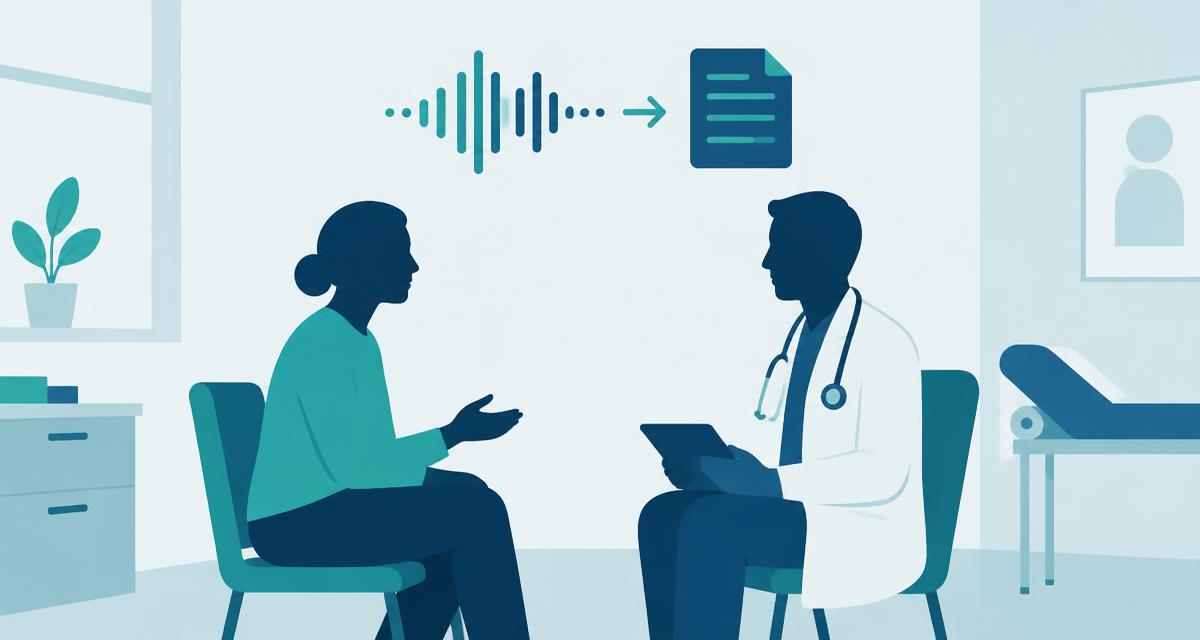
Ambient technology is the successor to traditional dictation. It functions as a "passive" observer during the consultation, capturing the conversation whilst the doctor remains fully engaged with the patient. This is a significant departure from "active" dictation, where the clinician must recount the encounter after the patient has left. The impact on the patient-clinician relationship is profound. By removing the need to type or dictate post-consultation, doctors can maintain eye contact and provide more empathetic care. UK-based trials have shown that AI scribe support can increase direct patient interaction time by 23.5%. It's not just a tool for efficiency; it's a tool for restoring the human element of medicine.
The shift towards intelligent summarisation marks the final stage of this evolution. Instead of a raw transcript, clinicians now receive structured summaries. Using Doctoria® summarisation, the system identifies key clinical markers and organises them into a format ready for the Electronic Patient Record (EPR). This reduces burnout by eliminating the need for after-hours typing, ensuring that documentation is completed as soon as the consultation ends. By adopting these tech-forward solutions, Trusts can mitigate operational risk and ensure that clinical information flows as fast as the patients it serves.
Understanding the Mechanics: Speech Recognition vs. AI Scribing
Transcribing medical dictation in a modern clinical setting represents the systematic conversion of clinical speech into high-fidelity, structured data. It's a process that moves beyond simple phonetic recognition. At its core, this technology relies on Medical Natural Language Processing (mNLP) to interpret the dense, specialised vocabulary used by clinicians. Unlike general-purpose voice assistants, medical-grade systems are trained to recognise complex pharmacological terms and anatomical references with precision. This ensures that the technical nuances of a diagnosis are captured without the need for constant manual correction.
This intelligence is particularly evident in how the software manages the natural noise of a consultation. Modern AI scribing identifies the difference between "social chatter" and "clinical findings." It filters out peripheral conversations about the weather or personal anecdotes, ensuring only relevant data enters the clinical record. This selective processing is supported by advanced acoustic modelling. These models are essential in the UK, where healthcare staff present a wide variety of regional and international accents. Reliable systems must maintain accuracy amongst this diversity to prevent documentation errors. Without this specific acoustic training, legacy systems often fail to capture the nuances of regional dialects, leading to increased administrative friction.
Front-End vs. Back-End Speech Recognition
Choosing the correct mechanical approach depends on the specific clinical environment. Front-end recognition provides real-time text on the screen as the clinician speaks. This is often preferred in high-pressure settings like Accident & Emergency, where immediate documentation is vital for patient safety. Conversely, back-end recognition processes the audio in the background, producing a draft for later review. This model suits scheduled GP appointments or complex specialist consultations where a clinician may prefer to review the full narrative at the end of a shift. Both methods aim to reduce the burden of transcribing medical dictation by automating the initial draft creation.
Context-Aware Transcription and Medical Logic
True clinical accuracy requires context-aware logic. A standard transcriber might struggle with homophones, but a medical-grade system knows that a patient has a "sore" throat rather than a "soar" in temperature based on the surrounding clinical narrative. This logic extends to automatic formatting. Advanced systems can take a non-linear conversation and reorganise it into a structured SOAP note (Subjective, Objective, Assessment, Plan). This transformation ensures that the data is not just recorded but is immediately actionable for the next clinician in the care pathway. It effectively bridges the gap between raw audio and the Electronic Patient Record (EPR).
Ensuring that your chosen tool meets these high standards is a matter of safety. It's also a matter of Regulatory compliance for AI scribes, which is increasingly scrutinised under UK and EU medical device regulations. These mechanics ensure that medical dictation becomes a functional, searchable part of the patient record rather than a static block of text. To see how these mechanics work in practice, you can explore the Doctoria AI Scribe for Healthcare, which integrates these mNLP capabilities into a seamless clinical workflow.

Overcoming the Accuracy Barrier: Safety and Clinical Validity
The primary objection to automated documentation is trust. Many clinicians believe that transcribing medical dictation requires a human touch to maintain accuracy, yet human fatigue and recall bias introduce their own systemic risks. A tired typist or a clinician dictating from memory eight hours after a shift can easily misinterpret technical jargon or omit subtle clinical cues. The modern solution is a hybrid "Human-in-the-Loop" (HITL) model. In this framework, AI handles the heavy lifting of data capture whilst the clinician provides the final clinical validation. This approach creates a robust Quality Assurance (QA) framework that exceeds the consistency of manual typing by ensuring every record is reviewed by the person who actually performed the consultation.
AI-driven systems also significantly reduce omission errors. Traditional dictation relies on a clinician's ability to remember every detail of an encounter after the patient has left the room. This often leads to "information decay," where secondary symptoms or lifestyle factors are forgotten. By capturing the entire consultation in real time, AI ensures that the full clinical narrative is preserved. This level of detail provides a more comprehensive record for future audits and multi-disciplinary team reviews, effectively turning the transcript into a high-fidelity clinical asset.
Minimising Cognitive Load and Information Recall
The psychological cost of clinicians dictating from memory at the end of a long shift is a major factor in workforce attrition. Cognitive burden is the primary driver for burnout in GPs, representing the excessive mental effort required to balance complex clinical decision-making with intensive administrative documentation. When you use the Doctoria AI Scribe for Healthcare, you eliminate the need for post-consultation recall. This reduces the "second shift" of paperwork that many clinicians face. By automating the capture process, you allow your brain to focus entirely on the patient, which naturally improves the quality of the clinical encounter.
Clinical Safety Standards: DCB0129 and DCB0160
In the UK healthcare environment, clinical safety is governed by strict regulatory frameworks. Any tool used for transcribing medical dictation must comply with DCB0129, which outlines the risk management requirements for manufacturers of health IT systems. NHS organisations must also follow DCB0160 to ensure the technology is implemented safely within their specific environment. A dedicated Clinical Safety Officer (CSO) must oversee this process, approving the software's impact on patient care pathways. These standards ensure that automated systems are programmed to recognise and highlight "critical findings" or urgent red flags. This ensures that life-critical information is never buried within a transcript, maintaining a high level of patient safety across the Trust.
Regulatory Compliance and Data Security for NHS Trusts
Data security is the non-negotiable foundation of modern clinical documentation. For NHS Trusts, transcribing medical dictation involves handling highly sensitive Person Identifiable Data (PID). This necessitates a radical commitment to privacy. All audio processing and data storage must occur within UK-sovereign data centres to ensure compliance with national security standards. This geographic restriction prevents data from being subject to foreign jurisdiction. It ensures absolute alignment with the Data Protection Act 2018. It's a high-stakes environment where safety is paramount.
Security is maintained through end-to-end encryption for both audio files and their resulting text outputs. Doctoria® distinguishes itself through a zero-retention policy. Once the transcription is finalised and integrated into the patient record, the source audio is purged. This approach eliminates the risk of a long-term data breach. Managing patient consent for ambient recording remains a clinical priority. Clinicians must ensure patients are informed about how their data is captured and processed. This maintains the trust that defines the therapeutic relationship.
UK GDPR and the Data Protection Act 2018
In the context of medical documentation, it's vital to distinguish between the "Data Controller" and the "Data Processor" roles. The NHS Trust remains the controller, whilst the technology provider acts as the processor. This distinction ensures that the Trust retains ultimate authority over the data. Patients also retain the "right to rectification." This allows them to request changes if they find inaccuracies in their transcribed notes. Before deploying any new tool for transcribing medical dictation, organisations must complete a Data Protection Impact Assessment (DPIA). This document identifies and mitigates risks to ensure that the deployment is both lawful and safe.
NHS Data Security Protection Toolkit (DSPT) Compliance
Clinicians and procurement officers should prioritise vendors with a "Standards Met" status on the NHS Data Security Protection Toolkit (DSPT). This assessment ensures that the provider meets the ten data security standards set by the National Data Guardian. Accreditation such as Cyber Essentials Plus and ISO 27001 adds another layer of validation. It proves that the vendor’s systems are resilient against common cyber threats. Every interaction with the data must leave an immutable audit trail. These trails track who accessed, edited, or approved the dictation. They provide a clear record of accountability that is essential for clinical governance.
To ensure your documentation meets these rigorous standards, you can review the Doctoria AI Scribe for Healthcare security specifications.
Optimising Clinical Workflows with Doctoria® and Philips
Doctoria® serves as the vital infrastructure partner for modern clinical communication. By combining Philips digital dictation hardware with Doctoria AI software, Trusts create a high-performance ecosystem that eliminates the friction common in legacy setups. This synergy streamlines the entire process of transcribing medical dictation, ensuring data moves securely from the clinician's voice to the patient record without delay. It's a grounded, mission-driven approach to reducing operational risk. By adopting this integrated model, departments can reduce discharge summary turnaround from several days to just a few minutes, significantly improving patient flow.
The transition to automated medical documentation for doctors is about more than just speed. It's about systemic clarity. Using specialised tools for transcribing medical dictation allows clinicians to reclaim their time. This time is better spent on patient-facing care rather than administrative typing. This shift is supported by high-fidelity data capture that ensures every clinical nuance is preserved with clinical authority.
Seamless EPR Integration and Interoperability
Avoiding "copy-paste" workflows is essential for maintaining data integrity. Direct API integration with EMIS and SystmOne allows structured data to flow directly into the patient record. This eliminates the need for manual entry. It also reduces the security risks associated with granting human secretaries external login access to sensitive systems. Interoperability across different NHS Trusts and primary care centres ensures that patient data remains consistent. This structured data can then feed into population health analytics, providing administrators with the insights needed for long-term service planning.
The Future: From Transcription to Intelligent Summarisation
The next phase of clinical documentation moves beyond verbatim records. Doctoria Summarisation helps clinicians quickly digest long and complex patient histories by highlighting critical clinical markers. This tool is particularly effective in acute settings where rapid decision-making is vital. For multilingual environments, Doctoria Real-time Interpretation ensures that consultations are accurately captured regardless of the language spoken. This inclusive approach prioritises safety and communication in sensitive clinical contexts. To see how these technologies can stabilise your department's documentation output, Explore Doctoria’s Digital Dictation Solutions.
Advancing Clinical Efficiency through Intelligent Documentation
The transition from legacy manual processes to ambient clinical intelligence represents a fundamental shift in how UK healthcare operates. By implementing a "Human-in-the-Loop" model, clinicians can ensure absolute accuracy whilst significantly reducing the cognitive burden of administrative tasks. We've established that modern security frameworks, such as the NHS DSPT and UK-sovereign data storage, provide the necessary infrastructure to protect patient privacy at every stage of the documentation lifecycle. This approach moves beyond simple recording, transforming speech into structured, actionable clinical data.
Doctoria® provides the technical foundation for this evolution. Our technology is Innovate UK funded and developed through a strategic partnership with Philips, ensuring it is specifically specialised for NHS and private UK healthcare standards. Mastering the process of transcribing medical dictation through AI-powered tools allows you to reclaim your time and focus on the humanistic core of medicine. It's an investment in both staff well-being and systemic safety. To see how these solutions integrate with your existing workflow, Request a demonstration of Doctoria’s AI Clinical Scribe. The future of clinical communication is structured, secure, and patient-centred.
Frequently Asked Questions
Is transcribing medical dictation with AI as accurate as a human secretary?
AI accuracy in clinical contexts is exceptionally high, often exceeding human performance by eliminating fatigue-related errors. Systems trained on Medical Natural Language Processing (mNLP) capture technical jargon with high precision. While human secretaries provide a secondary layer of review, the AI ensures a consistent baseline. The "Human-in-the-Loop" model remains the gold standard, where the clinician provides the final validation of the generated text.
How does Doctoria ensure UK GDPR compliance for clinical audio recordings?
Doctoria maintains a radical commitment to privacy by processing all data within UK-sovereign data centres. We employ end-to-end encryption and a strict zero-retention policy, which means audio files are purged once the transcription is finalised. This alignment with the Data Protection Act 2018 ensures that the NHS Trust remains the Data Controller at all times, maintaining full authority over patient information.
Can I integrate medical dictation software with EMIS or SystmOne?
Yes, seamless integration with EMIS and SystmOne is a core capability of the Doctoria platform. Direct API connections allow structured data to flow directly into the Electronic Patient Record (EPR), eliminating the risks associated with manual copy-paste workflows. This interoperability ensures that clinical documentation is immediately available across the care pathway, supporting better patient outcomes and systemic efficiency.
What is the difference between medical transcription and an AI clinical scribe?
Traditional transcription involves a verbatim conversion of audio to text, whereas an AI clinical scribe uses ambient technology to listen to a consultation and generate structured notes. While transcribing medical dictation focuses on the words spoken, an AI scribe like Doctoria identifies clinical intent. It filters out social chatter to produce formatted SOAP notes or discharge summaries automatically.
Do I need specific equipment to start transcribing medical dictation?
While basic recording can be done via mobile devices, we recommend professional-grade hardware for optimal results. Through our strategic partnership with Philips, we provide specialised digital dictation hardware that ensures high-fidelity audio capture. These devices are designed for clinical environments, offering superior noise cancellation and ergonomic controls that support a high-performance workflow for busy clinicians.
How does Doctoria handle patient consent for recording consultations?
Patient consent is managed through a transparent, clinician-led process supported by clear information governance protocols. Clinicians must verbally inform the patient that an ambient scribe is being used to assist with documentation before the consultation begins. This ensures that the therapeutic relationship is preserved whilst maintaining full compliance with NHS ethical standards and data protection requirements.
Can the software understand complex medical terminology and diverse British accents?
Yes, the system uses advanced acoustic modelling specifically trained on a wide range of regional and international accents found amongst UK healthcare staff. Combined with specialised mNLP, it accurately interprets complex pharmacological terms and anatomical references. This ensures that transcribing medical dictation remains reliable regardless of the clinician's dialect or the technical complexity of the case.
What are the cost savings of switching from manual transcription to an AI suite?
Switching to an AI-powered suite reduces operational overhead by eliminating the high cost-per-line associated with traditional typing services. By automating the documentation process, Trusts can reallocate secretarial time to higher-value patient coordination tasks. Recent UK data suggests that AI scribes can increase direct patient interaction time by 23.5%, delivering significant systemic value beyond direct financial savings.