AI Clinical Scribe NHS Implementation: A Case Study on Reducing Administrative Burden
NHS-sponsored research indicates that clinicians using ambient voice technology achieve a 23.5% increase in direct patient interaction time. For most practitioners, the adoption of an ai clinical scribe nhs solution is a direct response to an unsustainable administrative crisis. You're likely spending between 10 and 15 hours each week on documentation; it's a systemic inefficiency that fuels burnout and limits patient access. This heavy operational overhead compromises the quality of care and creates unnecessary risk in specialised clinical environments.
We understand that trust in new technology is built on rigorous safety and proven data flow. You'll discover how frontline clinicians are reclaiming three hours of clinical time daily whilst maintaining rigorous DCB0160 safety standards. This study explores the transition to automated clinical notes and real-time interpretation through the Doctoria® AI Scribe. We provide a clear roadmap for achieving full compliance with DCB0129 and DTAC frameworks, ensuring that technology serves as a vital infrastructure partner for diverse patient populations.
Key Takeaways
- Learn the essential roles of a Clinical Safety Officer (CSO) and the core requirements for a Data Protection Impact Assessment (DPIA) when deploying an ai clinical scribe nhs solution.
- Identify the technical differences between standard transcription tools and the Doctoria® Documentation and Communication Suite to ensure systemic reliability and clinical safety.
- Understand why a "Radical Privacy" security architecture is the only viable path for protecting patient data whilst meeting rigorous NHS trust mandates.
- Explore a structured roadmap for adoption, beginning with low-risk departmental pilots to demonstrate immediate clinical and administrative value before scaling.
- Discover how integrating real-time interpretation and summarisation reduces the operational overhead and language barriers associated with diverse patient demographics.
The Administrative Crisis in the NHS: Why Ambient Scribing is the Solution
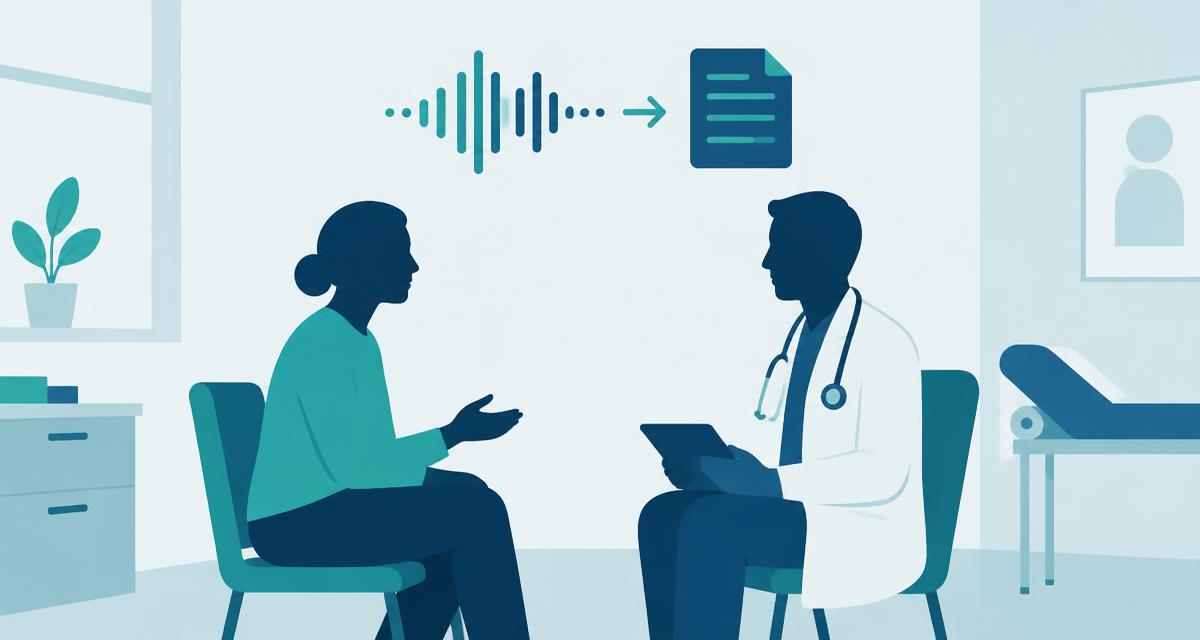
The administrative burden within the NHS has reached a critical threshold. UK General Practitioners now face an average of 15 hours of weekly administrative tasks, a phenomenon frequently described as "Pajama Time" because it forces clinicians to complete documentation late into the evening. This operational overhead is not merely an inconvenience; it's a primary driver of clinical burnout and a significant barrier to patient access. The deployment of an ai clinical scribe nhs system represents a fundamental shift from reactive, manual documentation to proactive, ambient voice technology. Unlike traditional medical transcription services that require clinicians to dictate notes after a consultation, automated medical scribes capture the dialogue in real-time. This allows for the immediate generation of structured clinical notes without interrupting the natural flow of the patient-practitioner interaction.
The Evolution of Clinical Documentation
The trajectory of medical record-keeping has moved rapidly from manual shorthand to digital dictation. We're now entering the era of ambient AI. This transition is supported by the 2026 NHS Digital Health framework, which prioritises the integration of safety-critical technology to streamline workflows. Innovate UK has played a pivotal role in this evolution by funding the development of AI tools that adhere to rigorous clinical safety standards. 2026 marks the tipping point for NHS-wide adoption as the technology moves from experimental pilots to essential infrastructure. This shift is necessitated by the need for interoperability and the reduction of data silos across the healthcare system.
Impact on Clinician Well-being and Patient Safety
Case Study: Implementing an AI Clinical Scribe in an NHS Trust
Successful implementation of an ai clinical scribe nhs solution follows a structured four-phase blueprint. Phase 1 begins with the appointment of a Clinical Safety Officer (CSO). This role is foundational; the CSO conducts a rigorous clinical risk assessment to ensure the technology integrates safely into existing care pathways. Phase 2 involves navigating the Data Protection Impact Assessment (DPIA). This process evaluates how the AI handles patient identifiable information (PII) and ensures total alignment with GDPR and NHS data security standards. Without this governance, technical excellence is irrelevant.
Phase 3 transitions to departmental pilot programmes. High-volume environments like A&E or busy GP surgeries are ideal testing grounds. Data from these pilots often shows immediate operational improvements, such as a 13.4% increase in patient throughput. The final stage, Phase 4, involves full integration with Electronic Patient Record (EPR) systems. Seamless data flow into platforms like EMIS, SystmOne, and Epic is vital. It eliminates the need for clinicians to copy and paste summaries, which reduces the risk of transcription errors and saves significant time during busy shifts.
Navigating the DCB0160 and DCB0129 Standards
The NHS mandates specific safety standards for digital health tools. DCB0129 requires the software manufacturer to provide a comprehensive safety case. Conversely, the DCB0160 standard requires the NHS Trust to document how the tool is used within their specific clinical context. A core requirement of this framework is the "Human-in-the-Loop" protocol. Every AI-generated note must be reviewed, edited, and verified by the clinician before it enters the permanent record. This step is essential for clinical accountability and adheres to the latest NHS England guidance on AI scribes, ensuring that technology supports, rather than replaces, professional judgement.
Measuring ROI: Time Saved and Accuracy Metrics
The return on investment is measured through clinical capacity and data quality. In recent implementations, clinicians reclaimed 180 minutes of clinical time per shift. This efficiency is driven by a drastic reduction in discharge summary turnaround times. Accuracy benchmarks also show that the Doctoria® AI Scribe significantly outperforms traditional speech-to-text tools. By understanding complex medical terminology and diverse accents in real-time, it produces structured notes that require minimal editing. This level of precision is critical for maintaining high-quality patient records whilst reducing the cognitive load on the medical team.

Comparing AI Scribe Solutions: Why Doctoria Leads amongst Competitors
Selecting the right ai clinical scribe nhs solution requires a move beyond surface-level transcription. While many vendors offer ambient recording, most lack the specialised infrastructure needed for high-stakes clinical environments. Standard tools often function as isolated software layers. In contrast, the Doctoria® Documentation and Communication Suite acts as a comprehensive infrastructure partner. This distinction is evident in our security architecture. We employ a "Radical Privacy" framework where data sovereignty is absolute; all clinical information remains hosted within UK-based centres to ensure total GDPR compliance.
Reliability is further enhanced through our strategic partnership with Philips. Doctoria Solutions for Digital Dictation together with Philips integrate clinical-grade hardware with advanced AI, ensuring audio clarity that consumer-grade devices cannot match. The efficacy of such integrated systems is supported by the successful NHS AI-scribe trial conducted across London, which highlighted the transformative impact on clinician capacity and patient interaction.
The Multilingual Advantage: Real-Time Interpretation
Standard scribing tools frequently fail to address the demographic complexities of the NHS. When patients speak English as a second language, or not at all, the risk of documentation error increases significantly. Doctoria Real-time Interpretation for Healthcare bridges this gap. It provides instant, high-accuracy interpretation whilst simultaneously documenting the encounter. This capability is essential for any ai clinical scribe nhs deployment aimed at reducing health inequalities and ensuring that language barriers don't compromise patient safety or clinical data flow.
Summarisation and Advanced Reporting
Clinical value is found in structured data, not verbatim transcripts. Doctoria Summarisation uses advanced logic to distill consultations into concise SOAP notes and referral letters. This system automatically identifies relevant SNOMED codes, which directly improves the accuracy of clinical billing and the capturing of QOF points. By automating these granular tasks, clinicians can move away from manual data entry. For a technical breakdown of these processes, refer to our comprehensive guide on automated medical documentation for doctors. This structured approach ensures that the medical record is both accurate and immediately actionable.
Data Security and GDPR: Addressing the #1 NHS Objection
Data security remains the primary barrier to digital transformation within the NHS. Adopting a "Tech-Forward Guardian" posture, we recognise that clinical trust is predicated on absolute confidentiality and the integrity of the patient record. A common misconception is that AI systems "learn" from sensitive patient data; in reality, enterprise-grade systems use end-to-end encryption where the data remains siloed and inaccessible to the AI model's training set. For any ai clinical scribe nhs implementation, the NHS AVT Supplier Registry serves as a vital validation tool, ensuring that providers meet the baseline standards for clinical safety and data protection. Transparency is maintained through robust consent frameworks. Patients are informed that ambient technology is used solely to assist documentation, not to replace the clinician's professional judgement or compromise their privacy.
De-identification and Data Scrubbing
Maintaining the integrity of the medical record requires the immediate removal of Personally Identifiable Information (PII). Doctoria® employs advanced scrubbing algorithms that anonymise transcripts before they are processed for summarisation. This creates a critical distinction between "processing" data in real-time and "storing" it for future use. Doctoria maintains a strict zero-retention policy where all raw audio files are permanently deleted immediately after the clinical note is generated. By ensuring that no recording persists beyond the session, we eliminate the risk of historical data breaches. This approach aligns with the highest tiers of GDPR compliance and provides peace of mind for both the Trust and the patient. It ensures that the digital footprint of a consultation is limited strictly to the verified clinical note.
Regulatory Compliance: MHRA and Beyond
Safety is not just a feature; it is a regulatory requirement. Our summarisation technology holds Class I Medical Device status, reflecting its role as a safety-critical tool in modern healthcare. This alignment with MHRA standards ensures that the technology is fit for purpose within the high-stakes environment of an NHS Trust. These efforts support the NHS Long Term Plan, which advocates for digital-first primary care and the reduction of administrative friction. Future-proofing for upcoming UK AI regulations is already built into our architecture, ensuring that your investment remains compliant as the legal landscape evolves. This proactive approach to regulation minimises operational risk for procurement officers and clinical leads alike. To secure your department's data flow and improve documentation quality, explore our full suite of secure clinical solutions.
The Roadmap to Adoption: Getting Started with Doctoria
Implementation of an ai clinical scribe nhs solution is most effective when approached as a phased rollout. We recommend starting with a departmental pilot. This allows clinical leads to validate the technology in a controlled setting before scaling to an Integrated Care Board (ICB) level. A pilot provides the data necessary to justify wider investment and ensures that the system integrates seamlessly with local EPR configurations. It's a low-risk strategy that yields high rewards in clinician satisfaction and administrative efficiency.
For enterprise-level users, the Doctoria-Philips hardware-software synergy offers a unique advantage. By combining Doctoria Solutions for Digital Dictation together with Philips, Trusts can deploy clinical-grade microphones that ensure high-fidelity audio capture. This hardware integration is vital for maintaining accuracy in high-pressure environments where consumer-grade devices often fail. It establishes a reliable infrastructure that supports the complex data flow required for modern healthcare documentation.
Onboarding and Clinical Training
Success depends on clinician engagement and proper training. Establishing best practices for audio capture is the first step. Clinicians must ensure "clean" audio by minimising background noise and maintaining an appropriate distance from the capture device. We've developed a comprehensive guide on how to use Scribe AI effectively to assist this transition. This resource ensures that the medical team understands the nuances of ambient recording from day one.
It remains the clinician’s responsibility to review and edit all AI-generated notes. The system is a supportive tool, not a replacement for professional oversight. To maximise efficiency, Doctoria allows for the customisation of templates across various specialities. Whether documenting complex Mental Health assessments or structured Orthopaedic reviews, the system adapts to the specific linguistic and reporting requirements of the department. This ensures that the generated summaries meet the exact needs of the clinical team.
Next Steps for Procurement Officers
Procurement officers should begin by evaluating the specific ROI metrics relevant to their Trust. This includes quantifying reclaimed clinical hours and the reduction in transcription costs. Accessing the NHS England Ambient Voice Technology (AVT) Self-Certified Supplier Registry provides a framework for identifying compliant solutions that meet national safety and data protection standards. This verification is a critical step in the procurement process for any ai clinical scribe nhs project.
We invite clinical leads and administrators to witness the technology in action. Contact our Doctoria Leeds headquarters for a bespoke demonstration tailored to your Trust's specific operational challenges. This session provides a granular look at our security protocols and EPR integration capabilities. Transitioning to an automated documentation framework is a mission-critical step toward a more sustainable and efficient healthcare system.
Securing the Future of NHS Clinical Documentation
Integrating an ai clinical scribe nhs solution is a systemic necessity to protect the workforce from administrative exhaustion. By reclaiming up to three hours of clinical time daily, Trusts refocus resources on direct patient care whilst ensuring full compliance with DCB0160 and GDPR standards. The transition to ambient intelligence ensures that the medical record is both accurate and immediate. It reduces the cognitive load on clinicians and restores the essential face-to-face connection in patient consultations.
As an Innovate UK funded partner, Doctoria® provides the validated infrastructure needed for large-scale digital transformation. Our strategic integration with Philips digital dictation ensures that hardware and software work in unison to deliver superior audio clarity. Supported by our dedicated Leeds-based UK team, we offer the technical and clinical expertise required for successful Trust-wide deployment. Your journey toward a more efficient, safety-first clinical environment starts here.
Book a Clinical Demo of the Doctoria AI Scribe Suite to secure your department's operational efficiency. Reclaim your time and prioritise patient outcomes with a partner you can trust.
Frequently Asked Questions
Is an AI clinical scribe legal for NHS use under GDPR?
Yes, use of these tools is legal provided the supplier complies with the Data Protection Act 2018 and NHS data security standards. Doctoria® ensures all data processing occurs within UK-sovereign hosting environments to maintain absolute data sovereignty. This architecture satisfies the rigorous requirements of a Data Protection Impact Assessment (DPIA) by employing end-to-end encryption for all clinical information flow.
Does the patient need to give explicit consent for ambient scribing?
Explicit consent is a mandatory requirement for ambient recording in any clinical setting. Clinicians must inform patients about the use of an ai clinical scribe nhs and obtain verbal or written agreement before the consultation begins. This process ensures transparency and upholds the patient's right to privacy whilst allowing for more engaged, eye-to-eye interactions during the appointment.
How does an AI scribe integrate with EMIS or SystmOne?
Integration is achieved through secure synchronisation protocols with Electronic Patient Record (EPR) systems. Once the AI generates a structured SOAP note, the clinician reviews the content within the secure Doctoria® interface. The verified data then flows directly into platforms like EMIS, SystmOne, or Epic, which eliminates the need for manual copy-pasting and reduces the risk of transcription errors.
Can an AI scribe handle complex medical terminology and different accents?
Modern clinical AI models are specifically engineered to recognise complex medical terminology and diverse regional accents. Unlike generic voice-to-text tools, Doctoria® uses specialised clinical datasets to ensure high-fidelity capture of technical jargon. This capability is essential for maintaining accurate records in multicultural NHS Trusts where language nuances and diverse accents are prevalent.
What happens if the AI makes a mistake in the clinical notes?
The clinician remains the final authority and is legally responsible for the accuracy of the medical record. The "Human-in-the-Loop" protocol requires every AI-generated summary to be reviewed and edited by the practitioner before finalisation. This safety mechanism ensures that any technical inaccuracies are corrected before the note is permanently saved to the patient's medical file.
Is the audio recording stored permanently by the AI provider?
Audio recordings are not stored permanently under a strict zero-retention policy. Doctoria® deletes raw audio files immediately after the summarisation and note-generation process is complete. This radical commitment to privacy ensures that no sensitive audio data persists on external servers, which effectively removes the risk of a historical data breach or unauthorised access.
How much time can an NHS GP realistically save using an AI scribe?
A General Practitioner can realistically reclaim up to 180 minutes of clinical time every day. By automating the documentation process, the 10 to 15-hour weekly administrative burden is significantly reduced. This efficiency allows for a 23.5% increase in direct patient interaction time, as documented in recent NHS-sponsored technology trials conducted across London.
What is the difference between an AI scribe and a medical transcriptionist?
An ai clinical scribe nhs solution provides real-time, ambient documentation, whereas a medical transcriptionist is reactive. Traditional transcription requires a clinician to dictate notes after the session, which often leads to delayed documentation and increased cognitive load. AI scribes capture the natural dialogue during the appointment, generating structured summaries and SNOMED codes instantly without manual dictation.