Medical Transcription Services vs Software: A Buying Guide for UK Clinicians in 2026
Could a three-hour reduction in your daily administrative burden be the difference between clinical excellence and systemic burnout? For many UK clinicians, the debate over medical transcription services vs software is no longer just about convenience; it's a critical decision regarding operational risk and patient safety. You've likely experienced the friction caused by delayed discharge summaries or the anxiety of ensuring patient data remains within the UK's sovereign borders. We recognise that maintaining 100% clinical accuracy is non-negotiable whilst you face increasing pressure to meet the June 2026 Data Security and Protection Toolkit (DSPT) version 8 requirements.
This guide provides a clinical evaluation of whether human-led services or AI-powered infrastructure offers the best balance of speed and security for your practice. We'll examine the shift from traditional per-minute billing to scalable digital dictation and ambient AI scribes. By the end of this analysis, you'll know how to align your documentation workflow with the latest Medical Devices Regulations 2026 and NHS Digital standards. We'll explore how Doctoria® solutions help you reclaim your time without compromising on the rigorous data flow protocols your environment demands.
Key Takeaways
- Reduce discharge summary turnaround from 24 hours to seconds by transitioning from manual, human-led services to real-time AI generation.
- Evaluate the long-term clinical precision and cost-efficiency of medical transcription services vs software whilst ensuring 99% accuracy for regional British accents.
- Secure your practice against regulatory risk by prioritising NHS-grade infrastructure that mandates UK-based data sovereignty and DTAC compliance.
- Optimise clinical workflows through integrated AI scribing and summarisation to eliminate the three-hour daily administrative burden.
- Transition from recurring operational overheads to a strategic, tech-forward infrastructure partner that prioritises patient safety and data privacy.
The Documentation Dilemma: Medical Transcription Services vs Software
The administrative burden within the NHS has reached a critical inflection point. Clinicians currently spend an average of three hours daily on documentation, a systemic inefficiency that directly impacts patient contact time and operational safety. Choosing between medical transcription services vs software is no longer a simple procurement decision. It's a choice between maintaining a legacy operational overhead or investing in a scalable, tech-forward infrastructure that grows with your practice.
What are Medical Transcription Services?
Traditional models rely on human intervention to convert audio recordings into text. To understand what medical transcription is in its historical context, one must look at the manual process of typing dictated notes. These services typically operate on a 'per audio minute' or 'per line' billing structure. This creates a recurring and often unpredictable financial burden for Trusts and private practices alike.
Turnaround times for these human-led services often range from 24 to 48 hours. This delay creates significant bottlenecks in discharge summaries and outpatient letters, directly affecting the continuity of care. There's also the persistent concern regarding data sovereignty. When audio files leave the clinical centre for external processing, the risk of data exposure increases, challenging the strict standards set by the Data Security and Protection Toolkit (DSPT) version 8, due by June 2026.
The Rise of Medical Voice Recognition Software
The 2026 clinical environment has moved beyond simple speech-to-text. Modern medical transcription services vs software comparisons now focus on ambient intelligence. Medical voice recognition software is a tool that converts spoken clinical narratives into structured data using Natural Language Processing (NLP). Unlike traditional services, AI-driven platforms like Doctoria® process complex clinical terminology in real-time. This technology doesn't just transcribe; it generates comprehensive, structured documentation ready for the EHR.
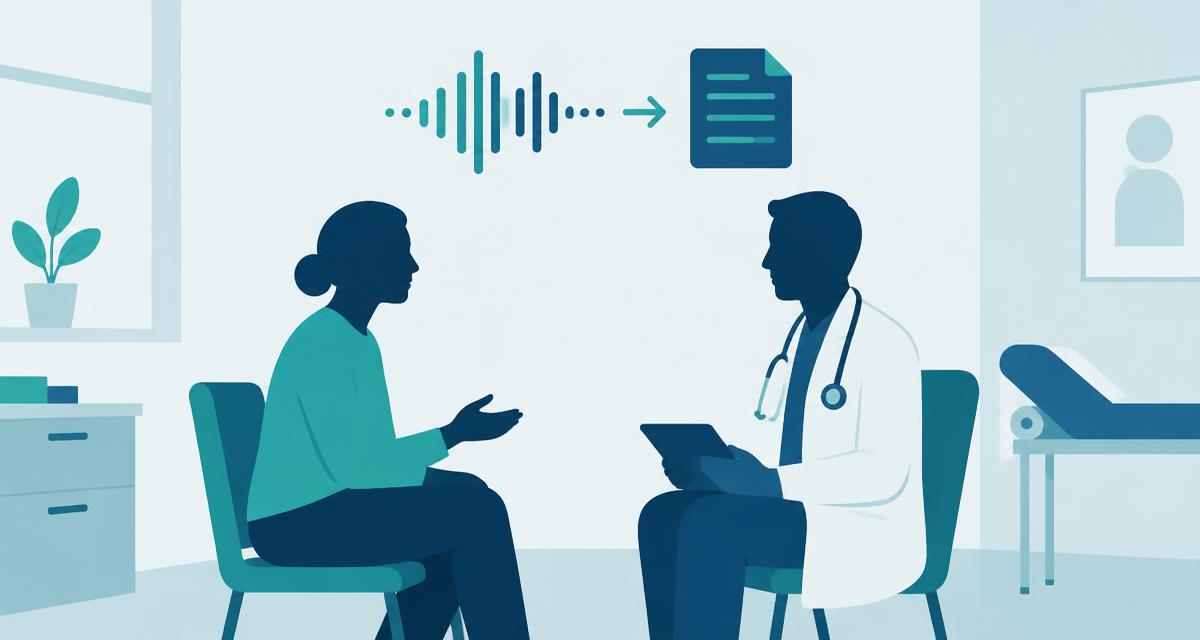
The emergence of ambient clinical intelligence represents a paradigm shift. Tools like the Doctoria AI Scribe® listen to the patient-clinician interaction and automatically produce structured notes. This eliminates the need for clinicians to spend their evenings catching up on admin. The status quo of manual typing or waiting for outsourced transcripts is no longer sustainable under current operational pressures. By adopting a software-first approach, practices ensure that documentation is completed at the point of care, maintaining clinical accuracy and full compliance with NHS Digital standards.
Transcription Services vs Software: The Comparative Framework
Evaluating medical transcription services vs software requires a shift from viewing documentation as a task to viewing it as a data flow. Traditional services rely on a linear, human-dependent chain. This process typically results in a 24-hour lag between patient encounter and record completion. In contrast, modern AI-powered software generates structured clinical notes in approximately two seconds. This speed is critical during "winter pressures" or periods of high clinical demand where human-led services often reach a ceiling of capacity, leading to backlogs that compromise patient safety.
The financial model also differs significantly. Human services represent a variable operational expenditure (OpEx) that scales directly with volume. For UK practices, this often includes hidden costs such as National Insurance contributions or pension overheads for in-house teams. Software acts as a strategic infrastructure investment. It provides a predictable cost structure whilst absorbing an unlimited volume of clinical documentation without increasing the price per encounter. This scalability ensures that your practice remains resilient regardless of fluctuating patient numbers.
Accuracy and Clinical Safety
Clinical safety is the primary metric for any documentation tool. Manual services are susceptible to human fatigue and typographic errors, whilst early AI models faced "hallucination" risks. We mitigate these risks through a hybrid, clinician-in-the-loop framework. Software like the Doctoria AI Scribe® provides a high-fidelity draft that the clinician verifies in real-time. This ensures 100% accuracy before the note is committed to the record. Achieving this level of precision requires high-quality audio input. We recommend following a specific reference guide for transcribing medical dictation, which highlights the necessity of high-fidelity microphones to capture specialised dialects and heavy British accents accurately.
Workflow Integration and Ease of Use
Legacy service models often necessitate cumbersome file uploads and downloads, creating friction in the clinical day. Modern software integrates directly with NHS EPR systems like EMIS and SystmOne. This creates a seamless data flow where the generated summary populates the correct fields automatically. Following NHS England guidelines on health information technology, our focus is on reducing cognitive load. Ambient technology allows you to focus entirely on the patient. The software listens to the natural conversation, removing the need to dictate into a handset after every appointment. If you are ready to modernise your workflow, you can explore our infrastructure solutions to see how real-time generation outperforms traditional manual models.

Selecting the Best Medical Voice Recognition Software for Your Practice
Selecting the right tool involves moving beyond the software-as-a-monolith perspective. When clinicians evaluate medical transcription services vs software, they often overlook the critical difference between verbatim dictation and ambient clinical intelligence. Generic speech-to-text tools frequently fail in high-stakes environments because they lack the specialised vocabulary required for complex specialties. Medical-grade Natural Language Processing (NLP) is the primary differentiator. It ensures that "hypokalaemia" isn't misidentified as "hypocalcaemia," a distinction that is fundamental to patient safety.
Essential Features for UK Clinicians
A robust platform must address the specific demographic and operational challenges of the UK healthcare system. Real-time medical interpretation is essential for supporting diverse patient populations where English may not be the primary language. This capability ensures inclusive care and reduces the need for expensive, pre-booked translation services. Additionally, automated clinical summarisation is vital for generating discharge letters and referral notes with high precision. For a more granular look at technical specifications, you should consult our medical speech to text software guide, which outlines the performance metrics required for NHS integration.
The Hardware Factor: Philips and Doctoria®
Whilst ambient technology is transformative, traditional digital dictation hardware remains indispensable in specialised hospital environments. Infection control protocols often favour dedicated, wipeable devices over personal smartphones. Our partnership with Philips ensures that Doctoria® solutions integrate seamlessly with professional-grade hardware. Clear audio capture is the foundation of any medical transcription services vs software comparison. High-fidelity microphones eliminate background noise in busy ward settings, ensuring the AI receives the cleanest possible data flow. This integration allows clinicians to move between ambient scribing in the consulting room and traditional dictation in the hospital, all within a single, unified digital workflow.
UK Compliance and Procurement: The Tech-Forward Guardian
Navigating the procurement of medical transcription services vs software requires a rigorous adherence to the NHS Digital Technology Assessment Criteria (DTAC). This framework serves as the baseline for ensuring that any digital health tool meets national standards for clinical safety, data protection, and technical security. Unlike US-centric solutions that prioritise HIPAA, UK providers must ensure total data sovereignty. This mandates that clinical data resides on UK-based servers, a non-negotiable requirement for Trust-level procurement and continued access to the e-Referral Service.
Under UK GDPR, clinicians must maintain the 'Right to Explanation' for any AI-generated clinical notes. This necessitates a transparent documentation process where the AI acts as a sophisticated assistant rather than a primary decision-maker. Aligning with DCB0129 and DCB0160 standards is essential for managing clinical risk. These standards ensure that both the software vendor and the healthcare organisation have conducted thorough safety assessments, establishing a validated environment for patient care.
NHS Data Security Standards
Secure data flow is the cornerstone of our infrastructure. Doctoria® secures all data in AI-assisted consultations using end-to-end encryption, ensuring that patient information remains protected both at rest and in transit. Our commitment to safety-critical AI has been validated through Innovate UK funding, which supports our mission-driven approach to reducing operational risk. Whilst on-premise legacy systems were once the norm, cloud-based solutions are now the preferred choice for secure NHS Trusts. These platforms offer superior patch management and real-time security updates to counter evolving cyber threats.
The Procurement Checklist
Administrators must demand specific evidence of compliance before committing to a new documentation workflow. A Clinical Safety Case Report is essential for validating the software’s performance in live clinical environments. You must also evaluate how the platform handles 'Sensitive Data' during real-time interpretation, especially in multi-lingual contexts where nuance is vital. For detailed implementation strategies, refer to our guide on automated medical documentation for doctors. To ensure your practice meets these high-stakes regulatory requirements, you can review our compliance frameworks to see how we align with the latest NHS Digital standards.
Future-Proofing Clinical Workflows with Doctoria®
Doctoria® operates as a mission-driven infrastructure partner rather than a mere software vendor. Whilst many providers offer fragmented tools, our platform integrates the Doctoria AI Scribe®, Doctoria Real-time Interpretation®, and Doctoria Summarisation® into a unified suite. This vertical integration reduces operational risk by ensuring a consistent data flow across the entire clinical pathway. Automated documentation isn't just about speed; it's about creating a resilient system that handles the complexities of modern UK healthcare without the unpredictability of manual transcription services.
Choosing between medical transcription services vs software is the first step in a broader digital transformation. By moving away from legacy human-led models, your practice gains a scalable asset that handles "winter pressures" and administrative spikes with ease. Our partnership with Philips for digital dictation further ensures that your transition to an AI-led workflow is supported by professional-grade hardware, maintaining the highest standards of audio fidelity and clinical precision.
Furthermore, the integration of specialised software extends to diagnostic departments, where One Health Connect provides cloud-based radiology solutions that streamline image management and reporting, much like AI scribes streamline clinical notes.
The Humanistic Core of Doctoria® AI
Clinical excellence depends on inclusive care. Our technology addresses demographic complexities through instant language translation, supporting languages such as Farsi and Welsh. This capability ensures that language barriers don't compromise patient safety or clinical accuracy. By reducing the cognitive load associated with documentation, we allow clinicians to return their focus to the patient rather than the screen. This shift improves the continuity of care across multidisciplinary teams, as structured, high-quality notes are available immediately for the next stage of the patient journey.
Next Steps for Your Organisation
Transitioning to a tech-forward infrastructure begins with a structured pilot programme. This allows your organisation to evaluate the Doctoria AI Scribe® in a live environment, measuring specific time-saved metrics against implementation costs. Most Trusts find that the strategic value of real-time generation far outweighs the recurring overheads of legacy models. When comparing medical transcription services vs software, the long-term return on investment is found in reclaimed clinical hours and enhanced data security.
To begin your deployment and ensure your practice is prepared for the June 2026 DSPT requirements, you should book a consultation with a Doctoria® specialist to request a clinical demonstration tailored to your specific department. We provide the technical evidence and clinical safety case reports necessary to support a seamless enterprise-wide NHS deployment.
Modernising Clinical Infrastructure for 2026 and Beyond
The transition from legacy documentation models to automated workflows is a strategic necessity for the modern NHS. We've analysed the fundamental shift in the medical transcription services vs software debate, highlighting how real-time AI generation eliminates administrative backlogs whilst ensuring clinical accuracy. By prioritising UK-based data sovereignty and NHS Digital standards, your practice can mitigate operational risk and reclaim vital patient contact time.
Doctoria® provides the vital infrastructure needed for this evolution. Supported by Innovate UK and serving as an official Philips Digital Dictation Partner, we ensure full NHS data security compliance across every clinical encounter. Our suite of ambient scribing, real-time interpretation, and summarisation tools is designed to support the high-stakes environments of UK clinicians. It's time to move beyond the limitations of manual services and adopt a system built for the future of healthcare.
Discover how Doctoria is revolutionising clinical documentation with AI-powered software.
Take the first step toward a more efficient, patient-centred future for your practice today.
Frequently Asked Questions
Is medical voice recognition software more accurate than human transcription?
Medical voice recognition software achieves accuracy rates of up to 99% for clinical terminology, often surpassing manual typing by eliminating human fatigue and typographic errors. Our tech-forward infrastructure uses medical-grade Natural Language Processing to distinguish between phonetically similar terms. To maintain absolute clinical safety, we utilise a clinician-in-the-loop framework where the practitioner verifies the generated draft before it is committed to the patient record.
How does Doctoria® ensure GDPR compliance for UK healthcare providers?
Doctoria® maintains total data privacy by hosting all clinical data on UK-based servers, ensuring full compliance with UK GDPR and NHS data sovereignty requirements. We employ end-to-end encryption for all data at rest and in transit, aligning our protocols with the Data Security and Protection Toolkit (DSPT) version 8. This mission-driven approach to security guarantees that sensitive patient information remains within the UK legal jurisdiction at all times.
Can medical transcription software handle complex British regional accents?
Modern medical-grade NLP is specifically trained to process diverse British regional accents and specialised dialects with high precision. The performance of the software is enhanced by our partnership with Philips, which provides high-quality audio capture hardware designed for clinical settings. This ensures that the underlying AI receives a clean data flow, allowing it to accurately transcribe complex clinical narratives across various regions of the UK.
Do I need special equipment to use medical voice recognition software?
Whilst ambient AI scribes can operate on standard clinical hardware, we recommend high-fidelity Philips digital dictation microphones for high-noise environments like hospital wards. These wipeable, infection-control-compliant handsets integrate seamlessly with our software. This hardware ensures optimal audio clarity, which is the foundation of any reliable documentation infrastructure, providing a clean signal for the AI to process without background interference.
What is the difference between an AI Scribe and digital dictation?
The primary difference lies in the clinician's workflow. An AI Scribe uses ambient technology to listen to the natural conversation between a doctor and patient, automatically generating a structured note. In contrast, digital dictation requires the clinician to speak directly into a microphone after the encounter to record a verbatim account. Both methods are supported within our unified suite to accommodate different clinical needs and specialties.
How much time can a GP save by switching from services to software?
GPs can reclaim approximately three hours of their clinical day by moving away from legacy documentation workflows. When evaluating medical transcription services vs software, the primary advantage is the elimination of the 24-hour turnaround lag. Software generates structured summaries in roughly two seconds, allowing clinicians to finalise their notes at the point of care rather than catching up on admin after hours.
Does Doctoria® integrate with EMIS and SystmOne?
Doctoria® provides seamless integration with major NHS Electronic Patient Record (EPR) systems, including EMIS and SystmOne. This creates a streamlined data flow where generated summaries and clinical notes populate the patient record automatically. By removing the need for manual copy-pasting or file uploads, we reduce the operational risk of data entry errors and improve systemic efficiency across the multidisciplinary team.
Is real-time interpretation included in medical transcription software?
Real-time interpretation is a specialised feature included in the Doctoria® infrastructure suite to support diverse patient populations. This capability allows clinicians to communicate effectively in languages such as Farsi or Welsh, ensuring inclusive care. Whilst many generic medical transcription services vs software platforms lack this capability, we view it as essential infrastructure for reducing health inequalities and maintaining clinical safety in multi-lingual environments.